Food

Juneau’s Meals on Wheels program needs more volunteers to keep up with food deliveries

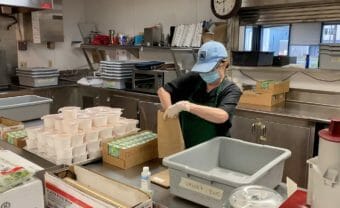
A Meals on Wheels staff member preparing food. (Photo courtesy of Catholic Community Service)

Meals on Wheels is run by Southeast Senior Services, which serves Juneau’s aging population, 60 years and older. The program is low on volunteers these days and is down two kitchen staff positions. To meet the need in Juneau, existing volunteers have picked up extra shifts.

Meals on Wheels is part of Catholic Community Service. The meals can be delivered to anyone who is homebound or has mobility issues. 

Matt Walker, who runs the program, said that while the remaining volunteers are stepping up, he’s worried they may burn out.

“They’ve just taken time out of their own schedules and said ‘the need is greater than my free time,’” Walker said.

Running these meal delivery routes does more for Juneau’s seniors than simply dropping off food. The volunteers also serve as a wellness check on individuals with vulnerable health, and a moment of social interaction each day for those who don’t always get it, especially during the pandemic. 

Walker said that the rising cost of gas may be scaring some potential volunteers from the job; it requires a lot of driving. But that might not be the whole story because the program has struggled to fill volunteer positions since the start of the pandemic.

“It’s one of those things that unless you’re using it or you know someone that uses it, you don’t realize that it’s happening behind the scenes,” Walker said. 

He’s worried that this current lack of volunteers will jeopardize their two-year streak of never missing a delivery. 

People interested in volunteering can call 907-463-6179 or email Catholic Community Service.

FDA announces plans to ease the shortage of baby formula

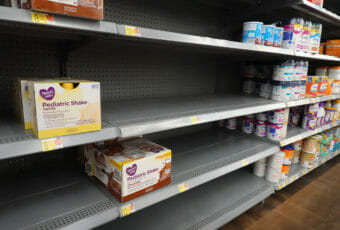
Baby formula has been in short supply in many stores around the U.S. for several months. (Photo by Scott Olson/Getty Images)

Parents struggling to find baby formula could soon find some relief.

Abbott Nutrition, one of the largest formula manufacturers in the U.S., has reached an agreement with the government to reopen one of its closed factories and increase production.

Abbott shut down its facility in Sturgis, Michigan, in February after several babies became ill after drinking formula. Two of them died of bacterial infections.

The Justice Department filed a complaint against Abbott, alleging the factory failed to comply with quality and safety regulations. Now Abbott and the government have agreed to a proposed settlement to resolve the complaint. It requires a third-party expert at the Michigan facility to help restart production and increase the formula supply safely.

In a written statement, Abbott said production at the facility could restart within two weeks, following FDA approval. It would take another six to eight weeks before formula from the plant would be available on grocery shelves.

In the meantime, the FDA is announcing other plans to ease the nationwide formula shortage. FDA Commissioner Robert Califf acknowledged the struggles many parents are facing.

“We know many parents and caregivers are feeling frustrated by their inability to access needed or desired infant formula and critical medical foods,” Califf said at an FDA briefing.

And he announced that the FDA is easing some restrictions on which manufacturers can sell infant formula in the U.S.: “Our new guidance streamlines the ability for companies, including those that do not normally sell infant formula in this country, to make products available to the U.S. market.”

Califf said these flexibilities will mean “additional products can quickly hit U.S. stores.”

“We are casting a broad net,” said Susan Mayne, director of the FDA’s Center for Food Safety and Applied Nutrition. “We are seeking manufacturers around the globe who may have available product that could meet our standards for both nutrition and food safety.”

She said the FDA will help get that product into the United States.

The FDA is also allowing more flexibility for infant formula produced in the United States. Priority will be given to manufacturers that can demonstrate safety and nutritional adequacy and that can get product onto U.S. shelves the quickest.

“We are focused on getting as much product as possible on store shelves,” said Frank Yiannas, the FDA’s deputy commissioner for food policy and response.

“And we won’t rest until the infant formula market gets back to normal.”

Copyright 2022 NPR. To see more, visit https://www.npr.org.

What happened to Juneau’s Taco Bell?

Charles McKenry poses in front of the menu at Juneau's downtown Taco Bell in 1999.
Charles McKenry poses in front of the menu at Juneau’s downtown Taco Bell in 1999. (Photo courtesy of Charles McKenry)

In the late ’90s, Juneau had two Taco Bells. But by the early 2000s, they were both gone. Juneau has a history of fast food franchises coming and going, but the disappearance of the Taco Bells left a lot of rumors in its wake, from “employees were selling drugs” to “wasn’t it hepatitis?”

“Every business is gonna have drama and rumors and this and that,” said Jennifer Solano, who used to work at the Taco Bell in Juneau’s Mendenhall Valley. “To be honest, Taco Bell was a good, wholesome place to work. They taught me enough that I’ve been able to raise a family, continuing my career managing fast food restaurants.”

Solano runs a Subway in Anchorage now, but she started working for Taco Bell in Juneau as a teenager. In the mid-nineties, it sat where the Asiana Garden restaurant is now, across from Super Bear. 

“We were having repeated problems with the [produce] shipments,” Solano said.  “We would have to throw away sour cream, cheeses, lettuce, tomatoes. They were coming in continuously frozen when they were only supposed to be refrigerated, and we were having to waste a lot of money.”

Solano eventually became an assistant manager. She said getting quality produce from the Lower 48 was just one of many problems.

“Everything in the building was just kind of crumbling and falling apart,” Solano said. “There were so many times that the grease trap had to be re-done because the pipes underneath all the flooring were so old and brittle that they were actually collapsing.”

A smaller, Taco Bell Express restaurant shared a space with Subway in downtown Juneau before closing in 1999.
A smaller, Taco Bell Express restaurant shared a space with Subway in downtown Juneau before closing in 1999. (Photo courtesy of Charles McKenry)

Plumbers were called in to try to fix the issue at night, which meant workers the next morning were walking on temporary floorboards.

“It’s not an overnight project,” she said. “So then we tried to keep staffing minimal so nobody was running into each other or getting hurt.”

The maintenance turned into a cycle. A pipe would be fixed, the flooring would be replaced, and another pipe would collapse somewhere else. 

The Valley Taco Bell also went through several different managers. Solano said she often picked up the slack when one of them was attending meetings in Anchorage. At one point, it became a combination Taco Bell and Baskin Robbins.

“They would expect somebody that’s making burritos to go over and make a frappuccino,” Solano said. “You know, you gotta make cakes out of ice cream and you have to be able to decorate them and trying to run a Taco Bell side and trying to make cakes was pretty rough for me.”

Repairs became so expensive that the owners started looking for a new building to move to.

“But there was no good place in Juneau 18-20 years ago to put a fast food restaurant with a drive-thru in it,” Solano said. “So they decided they were gonna cut their losses and just go ahead and close the doors.”

Some workers didn’t even have advance notice that the restaurant was closing. They showed up the next day to a note on the door and were told to pick up their compensation checks.

The Valley location was the last Taco Bell to exist in Juneau, but at one point, the city had two — there was a smaller Taco Bell Express downtown. It shared a space with a Subway in a building where Sealaska Heritage is now.

In 1997, Juneau's downtown Taco Bell won a Golden Bell award. It was named seventh in the nation for quality and service out of 1500 franchise stores.
In 1997, Juneau’s downtown Taco Bell won a Golden Bell award. It was named seventh in the nation for quality and service out of 1500 franchise stores. (Photo courtesy of Charles McKenry)

Charles McKenry started there in 1987 and worked his way up to general manager.

“Taco Bell was doing a competition called the Golden Bell,” McKenry said. “We managed to take that store to number seven in the nation for quality and service out of 1,500 franchise stores.”

But the downtown restaurant wasn’t very profitable. It closed in the summer of 1999 when the corporate office decided to focus its efforts on the Valley location. McKenry was transferred there as a shift manager to try to improve the service.

“The gentleman running the store insisted that no one listen to me because it was his store and he would teach them his way, not necessarily the Taco Bell way,” McKenry said. “He didn’t care about quality or service. It was all about his bottom line, even if it meant not being honest about some of the numbers.”

Eventually McKenry quit because of that manager, but his experience wasn’t all bad.

“We had great people,” McKenry said. “It was a fantastic product. I mean I thoroughly enjoyed working for Taco Bell itself, but you can only take so much.”

Now if you’re craving a Crunchwrap Supreme, the Lunch Crunch Wrap at the Lemon Creek Breeze In is pretty similar.


Curious Juneau

Are you curious about Juneau, its history, places and people? Or if you just like to ask questions, then ask away!

Most paralytic shellfish poisoning cases were among Alaska Natives, but state lacks data for subsistence foods

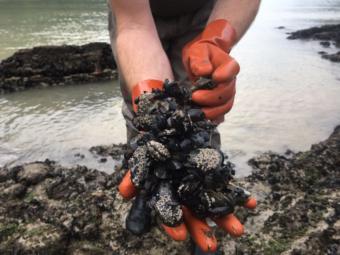
Blue mussels at Nahku Bay. (Photo by Claire Stremple/KHNS)

Kodiak Island had the most cases of paralytic shellfish poisoning in Alaska over the last nearly 30 years, according to a wide-ranging April report by state health authorities.

The state’s latest data dump provides a look at paralytic shellfish poisoning in Alaska between the years 1993 and 2021. Paralytic shellfish poisoning is an illness caused by a marine toxin that’s spread by harmful algal blooms. It’s serious, sometimes fatal, and most commonly found in butter clams and blue mussels, and according to the latest data from the state Department of Health and Social Services, it has started to be more common year-round and not just in warmer months.

Andie Wall, an environmental coordinator at the tribal health nonprofit Kodiak Area Native Association, said commercially harvested shellfish has to be tested for PSP toxins before it can be sold to customers.

“But there’s no state testing program for subsistence harvest,” Wall said.

Statewide, 53% of PSP cases were among Alaska Natives. Wall said the gap in subsistence testing is a big deal in coastal communities across the state — including Kodiak, where digging clams is a popular sunny day pastime and clams are an important food source.

Cases on Kodiak comprised 25% of statewide incidents of the illness. Areas in Southeast Alaska — like Juneau, Ketchikan and Prince of Wales Island — also recorded high case rates.
“Shellfish are an important subsistence resource to a lot of people around the state and to just say ‘don’t collect shellfish, don’t harvest shellfish,’ it’s not feasible,” she said.

KANA was awarded a federal grant from the Bureau of Indian Affairs back in 2018 to monitor beaches on Kodiak Island for high levels of toxins. And the public could send in locally harvested clams and mussels to the organization as part of the program.

KANA would ship the samples to the Southeast Alaska Tribal Ocean Research in Sitka for testing free of charge, and they would let people know if their shellfish was safe to eat — per guidelines from the Food and Drug Administration — based on the levels of toxins detected. But the program’s funding ran out at the end of last year, and KANA hasn’t been able to restart testing since.

Sen. Lisa Murkowski’s office announced in March that $50,000 in federal stopgap funds were included in the omnibus spending package to jumpstart the program. KANA won’t receive the funds and won’t be able to start testing again until September.

Meanwhile, the latest state data also showed a 77% decline in reported cases of PSP across Alaska over the last four years. Wall said that might not paint a full picture of what’s going on.

“The question there is: Is that from people not eating it? Is that from people losing this important resource or is that from increased testing?” Wall said. “I don’t know the answer to that. I hope one day it will be the increased testing.”

Subsistence harvesters on Kodiak Island can still send their local shellfish to SEATOR for $75. Alaska’s Department of Environmental Conservation also provides testing for a fee.

How soaring inflation forces stark choices

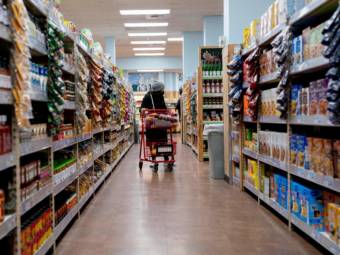
A shopper rolling a cart down a supermarket aisle
A shopper walks through a grocery store in Washington, D.C, on March 13. Surging inflation poses a particular challenge for working-class families, impacting the cost of basic necessities such as groceries. (Photo by Stefani Reynolds/AFP via Getty Images)

From rising rent to higher heating bills, surging inflation impacts everybody, but it poses a particular hardship for people with little extra money to spare.

On Tuesday, the Labor Department reported that consumer prices in March were 8.5% higher than a year ago — the sharpest increase since December of 1981.

While no one likes paying more for haircuts or hamburgers, high inflation is especially painful for low-income families, whose spending is heavily weighted toward necessities such as gasoline and groceries, which have seen some of the largest price hikes.

Gasoline prices have jumped 48% in the last year while grocery prices are up 10%.

These families have little fat in their household budgets to start with, so when inflation cuts into their limited spending power, something has to give.

Take Laura Kemp, a widow in Muldrow, Oklahoma who says that her heating bill last month was $306, more than double the $125 she paid a year ago.

“I live in a two-bedroom mobile home,” she says. “I don’t understand what’s going on. Every month it’s increasing and it’s taking up about a third of my income.”

Kemp feels like she’s losing ground, priced out of even small indulgences like a McDonald’s meal.

“By the 10th of the month, I have $200 left,” she says. “The $200 a month is now going into my gas tank.”

“I’m not making it to the end of the month anymore,” she adds. “Even getting a Big Mac now — a Big Mac meal is $8 — I can’t afford it.”

When the weather warms up, Kemp plans to plant a vegetable garden in hopes of defraying her food bill. She has picked out seeds for tomatoes, zucchini, peppers and eggplants, and she’s eyeing some of the land her brother owns — where her mobile home also sits.

masked women cutting canteloupe
Community volunteers cut and prepare fruit at the Houston Food Bank on Feb. 8. (Photo by Brandon Bell/Getty Images)

From groceries to rent, prices are surging everywhere

Charlene Rye, who retired after 28 years in the poultry industry — much of that time in chicken-processing plants — finds herself having to make hard choices after chicken prices rose sharply over the last year, like everything else in the grocery store.

“You have to be a little more cautious in what you cook and things you make and things you buy,” she says.

Rye has been getting help from a food pantry in Sallisaw, Oklahoma, which has gotten busier as prices have climbed.

“They open at 10 o’clock, and if you’re there at 9, there’s already people in line,” she says.

For Terrie Dean, it’s the cost of housing that really stings. She and her teenage son are living temporarily in a motel in Sallisaw. She relies on disability payments of about $1,600 a month, which for now puts an apartment out of reach.

“They want first month and deposit, not realizing that may be all this family brings in,” said Dean.

Low-income families typically spend about 45% of their income on housing, compared with 18% for upper-income families. Shelter costs have risen 5% in the last year.

A man pumps gas by a sign advertising $4.50 gas
Gasoline prices hover around $4 a gallon for the least expensive grade at several gas stations in Washington, D.C., on April 11. (Photo by Chip Somodevilla/Getty Images)

Gas prices tend to hit especially hard

The disparity for food and transportation is even larger — consuming 9% of high-income households’ budgets but 26% for households that are low income.

After Russia’s invasion of Ukraine, gasoline prices jumped to $4.33 a gallon in March — an all-time high, not adjusting for inflation.

The increased gas prices can impact family ties. Soaring energy prices forced Patricia Bridgmon of Chicago to cut back on visits to her elderly mother in Hammond, Indiana, about 25 minutes away.

“It’s just horrible with the gas,” she says. “I usually go to see her three days out of the week. Now, it’s down to one, because of the gas.”

Kemp, the widow with the increased heating bill, has also cut back on driving to Fort Smith, Arkansas, about 35 minutes from her home in eastern Oklahoma.

“I love going to the art museums and thrift store shopping and just getting out,” she said. “But I can’t even go anymore.”

Meanwhile, Rye, the retired poultry worker, has to weigh the cost of driving to a larger supermarket that’s farther away against shopping closer to home, where prices are higher, even in good times.

""
Federal Reserve Gov. Lael Brainard at her nomination hearing in Washington, D.C., on Jan. 13 after being proposed by President Biden to serve as the central bank’s vice chair. (Photo by Drew Angerer/Getty Images)

The Federal Reserve plans to fight inflation aggressively

Federal Reserve officials are well aware of the toll that inflation is taking, especially on lower-income families, a point that Fed Gov. Lael Brainard highlighted in a speech last week.

“While all Americans are confronting higher prices, the burden is particularly great for households with more limited resources,” Brainard said. “That is why getting inflation down is our most important task, while sustaining a recovery that includes everyone.”

The Fed began raising interest rates last month in an effort to tamp down consumer demand and bring prices under control.

The central bank started slowly, raising rates by a quarter percentage point. But markets anticipate that the Fed will become more aggressive, with a half-point increase now widely expected at the next Fed meeting in early May.

Although forecasters say March could be the high-water mark for inflation, consumer prices are likely to keep climbing at an uncomfortably fast pace for the rest of this year, continuing to put a particular strain on the families that can least afford it.

Copyright 2022 NPR. To see more, visit https://www.npr.org.

A shortage of baby formula is worsening and causing some stores to limit sales

Baby formula — but not much of it — on supermarket shelves
Baby formula is offered for sale at a big-box store on Jan. 13 in Chicago. Baby formula has been in short supply in many stores around the U.S. for several months. (Scott Olson/Getty Images)

A shortage of baby formula is getting worse and leading some retailers to limit how much customers can buy in a given transaction.

During the week of March 13, some 29% of baby formula products were out of stock at retailers across the United States.

That’s according to the product data firm Datasembly, which analyzed more than 11,000 sellers of baby formula in the country.

The out-of-stock percentage for baby formula hovered between 2% and 8% in the first seven months of last year, but it has been growing steadily since then and reached 23% in January, Datasembly reported.

Thousands of young babies across the country rely on formula each year. Just 25% of infants born in 2017 were fed exclusively through breastfeeding in their first six months, according to the Centers for Disease Control and Prevention.

The squeeze on baby formula comes as the U.S. economy continues to grapple with rising inflation and persistent supply chain issues brought on by the COVID-19 pandemic.

Consumers have taken to social media to complain about bare shelves, and the shortages have prompted at least one national chain to ration its baby formula inventory.

Walgreens, the pharmacy giant with more than 9,000 stores across the U.S., is limiting purchases of all infant and toddler formula to three per transaction.

“Due to increased demand and various supplier challenges, infant and toddler formulas are seeing constraint across the country,” a Walgreens spokesperson told NPR. “We continue to work diligently with our supplier partners to best meet customer demands.”

This comes just two months after the health care company Abbott recalled some of its powdered baby formula over consumer complaints related to Cronobacter sakazakii and Salmonella Newport.

The company said none of the distributed products — including Similac, Alimentum and EleCare powder formulas — tested positive for the bacteria. However, it did find evidence of Cronobacter sakazakii in non-product contact areas of its Sturgis, Mich., manufacturing facility.

Abbott later expanded the recall after learning of the death of an infant who had consumed Similac PM 60/40 and tested positive for Cronobacter sakazakii, but it said the cause of the infection had not been determined.

Copyright 2022 NPR. To see more, visit https://www.npr.org.

Site notifications
Update notification options
Subscribe to notifications