Food

Hunker down or happy holidays? How Alaskans are choosing to celebrate this week.

Amy Jackman, her friends and coworkers are gathering for a night of “Crabs and Cannabis” on Thanksgiving, Thursday ,Nov. 26, 2020, in Kenai, Alaska. (Photo courtesy Amy Jackman)
Amy Jackman, her friends, and coworkers are gathering for a night of “Crabs and Cannabis” on Thanksgiving, Thursday, Nov. 26, 2020, in Kenai. (Photo courtesy Amy Jackman)

Alaskans are finding ways to celebrate the Thanksgiving holiday. But they’re having to balance the appeal of spending time with family and friends against the potential of contracting, and inadvertently spreading, COVID-19. 

Some are finding that choice easier than others. 

Amy Jackman, of Kenai, is doing exactly what she would be doing in any other year. She’s meeting with friends and coworkers for an evening she jokingly dubs “Crabs and Cannabis.”

“We bought 20 pounds of this really amazing crab meat… and we’ve all pitched in for it,” she said. 

She doesn’t really support the roots of Thanksgiving but said it’s more of an excuse to get together and find joy in each other’s company. 

“For me, and the people that are going to be gathering together — there was never even a second thought,” she said. “We’re together every week. We spend time having dinners with our families. We work together, we are basically cultivating and preserving this normalcy, right? Where we don’t live our lives in fear.” 

She is frustrated and concerned by the state and federal response to the spread of the virus — especially guidance about public masking and restrictions on the number of people who can gather in one place. 

“And it baffles me how many people are going outdoors or basically begging for tighter restrictions,” she said. 

Jackman worries that impacts like economic harm to businesses and isolation felt by children who are out of school and seniors who are cut-off from contact with the outside world are causing significantly more harm than the virus. 

But state health officials have repeatedly cautioned against gathering and helping to spread the virus. 

As coronavirus cases continue to climb, hospitals all over the state have warned that staffing shortages coupled with a surge in patients could be disastrous. 

The president of the Alaska State Hospital and Nursing Home Association, Jared Kosin, said on Tuesday that Thanksgiving celebrations could make it worse. 

Some Alaskans have changed their plans this year. 

Winter on the Elliot Highway in 2013. (Creative Commons photo by Jason Ahrns)
Winter on the Elliot Highway in 2013. (Creative Commons photo courtesy of Jason Ahrns)

In Fairbanks, Alyssa Enriquez generally hosts something of an orphans’ Thanksgiving, where people who have no other place to go can find company and food. 

But she didn’t feel comfortable doing that this year. She said a friend who is in her bubble is immuno-compromised. 

So Enriquez decided to unplug for the weekend. She rented the Fred Blixt cabin just off of the Elliot Highway, about an hour and a half north of Fairbanks. 

“I just want to be able to disconnect for the weekend, or for a couple of days, and not have to think about the world,” she said.  

Four friends will come to visit, but not all at the same time, and Enriquez says they’ll keep their interactions as safe as they can.

“The stuff we’re going to do as a group is probably going to be outside. And it’s supposed to be really warm. It’s supposed to be in the mid-20s here. It’s not too bad, at least it’s not 20 below,” Enriquez said. 

Even though a lot of things are different this year, Enriquez said it still feels like she’s following her normal holiday tradition of spending quality time with good friends. And in some ways, she thinks planning for a safe holiday might have helped her rethink her Thanksgiving traditions.

“It’s definitely scaled back, really thinking about who’s in my bubble. Really thinking about having a really nice time,” she said. “This is something I would probably do in the future so that it’s just being out in a cabin and enjoying the space and the presence that you’re in.”

Douglas Bridge in Juneau in December 2018 (Photo by David Purdy/KTOO)

In Juneau, Rebecca Smith also found a way to see friends and neighbors on Thursday, but it will be more of a take-home Thanksgiving. 

Her next door neighbor has a carport, and they’ve turned it into a party space. It has enough room to spread out chairs in groups for the three households that are coming. There will be some other stray friends and coworkers stopping by, too. 

“So this past week I had purchased some rope lights, and the next door neighbor had purchased some lights as well …. Then Jesse around the corner has a new propane heater, so he’s going to bring that over,” she said.

They’re all going to bring the dishes they normally eat to celebrate the holiday. Her neighbor is bringing sweet corn and drunken sweet potatoes. Rebecca Smith has smoked a turkey and is bringing cornbread stuffing, Chex mix, smoked cider and several other dishes. She said there will be plenty of pies.

Everyone will show up Thursday afternoon with their food. 

“We’ll socialize with masks on at their appropriate distances for a little bit, and then everybody just gets to pack up whatever food they want from all the offerings. Take it back home, reheat their Thanksgiving dinner so we can all eat the things we normally eat even if we can’t all eat them together. It’s our way of still sharing the holiday but still being responsible,” she said.

Like Enriquez, Rebecca Smith said her holiday tradition still feels intact. It’s still the same people. It’s still the same foods. 

“Oh, the other good thing is that I didn’t have to clean my house,” she said.

Smith said there was an unspoken agreement among her friends and neighbors that they have to make it work. 

“I think just because we are all so isolated at this point in time. We just have to cling to some way to make things as close to normal as we can. Nothing is going to be normal. Nothing is going to be normal for a long time, we’ve all come to that realization I think. And, quite frankly, it sucks,” Smith said. “I think we just all sort of, without even necessarily talking about it, we all just realized that we have to have something to celebrate.”  

Generally, she said she feels pretty comfortable with the group of people she’s seeing this week. They’ve been isolated or working alone, or they’ve been careful. But that’s not something she’s seeing reflected in the whole community.

“I look at the number of people who traveled this week. How full the airports were, having been fuller than they’ve been since March and I’m just like ‘you people are all insane,’ she said. “But clearly there are people who still aren’t taking this seriously. I’m worried because it’s clearly not going away. It’s not fake. It’s not a hoax. People are sick.” 

Eli Smith makes deviled eggs for his family’s Thanksgiving celebration on Thursday, Nov. 26, 2020, in Kenai. (Photo courtesy Todd Smith)

Normally, Todd Smith (no relation to Rebecca) would find a way to celebrate Thanksgiving with his extended Kenai family — parents, grandparents, siblings and their children. 

“You know, everybody ends up at somebody’s house,” he said. “We have family in Anchorage and Kenai, so we’ll kind of pick a spot and everybody meets up. We’ll have dinner, hang out for the weekend.”

And that could still have happened this year, though Smith said they would have had to put some thought into how to keep the parents and grandparents safe. 

But while Smith’s two kids are home for remote school, he and his wife Megan are still working. She works at a school in the Kenai Peninsula Borough School District, and he does plumbing and heating. His sister is a nurse in Anchorage. 

“We’re smart about it, but at the same time, we have more exposure every day, just out being about and working, than we do hanging out with our family,” he said. 

Plans changed when Smith and his family got sick with COVID-19 last week. It’s not clear where they picked up the virus.

“I don’t know, one of us got it. I got sick first, but several of our friends got it at the same time. Went in and got tested, three of four of us tested positive. We all three got sick,” he said.” My 14-year-old now says he didn’t feel good today, so we’ll see if he’s got it too.” 

So far, he said it’s just like a bad cold. But it’s lingering, and they’re tired.

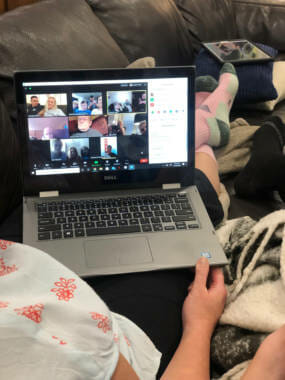
Members of Todd Smith’s family meet up via Zoom to celebrate Thanksgiving together on Thursday, Nov. 26, 2020 in Kenai, Alaska. (Photo courtesy Todd Smith)
Members of Todd Smith’s family meet up via Zoom to celebrate Thanksgiving together on Thursday, Nov. 26, 2020, in Kenai. (Photo courtesy Todd Smith)

“I’m moving around, but I’m by no means completely recovered. It just hangs on,” he said. 

Once they got sick, any ideas they had about gathering with the rest of the family evaporated. And that influenced the rest of the family too. 

“The whole family now is like, ah we’ll just have our own little … We’re going to have a Zoom family Thanksgiving meeting and play a game or something. But I think everybody is probably just going to stay home,” he said. 

For pandemic Thanksgiving, a growing group of Anchorage restaurants are cooking

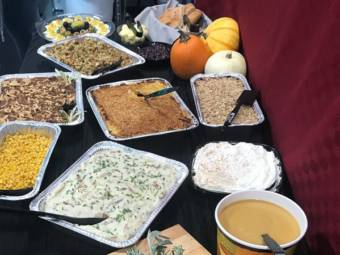
The bake-at-home Thanksgiving dinner from Peppercini’s Deli and Catering feeds 10-12 people (Photo Courtesy Nic Bianco, 23 & Frosty)

As Alaskans prepare to celebrate Thanksgiving amid the COVID-19 pandemic, many are breaking from tradition and ordering meals from local restaurants instead of cooking at home.

Amid months of uncertainty and pandemic disruptions, Anchorage restaurant owners say demand for Thanksgiving dinner to-go has been an unexpected boost for business.
Every year, Patrice Watson cooks a big Thanksgiving meal for her family.

“My mom and I, we always cook. We always cook,” said Watson.

But this year is different. Her husband is in quarantine in their bedroom after testing positive for COVID-19. So far, Watson, her four children and her mom aren’t sick. But she says she wants to be able to serve Thanksgiving dinner no matter what. And this year, that means getting it prepared for her. So she ordered dinner from Davon’s Place House of Soul.

“We just need a 12-14 lb turkey. We want the greens, we want the macaroni and cheese, potato salad, all of that,” said Watson. “And we ordered catfish, so that’s something different than what we were going to do, you know, than what we normally do.”

Davon’s Place is owned by Khanesia Allen. Traditionally, she cooks a big Thanksgiving meal for her family. She and her husband have six kids and 17 grandchildren. But this year, she decided to cook for other families.

“I honestly, truly love to cook,” said Allen. “And my food is, like, really good. So I’m like, why can’t I do it if everybody else is doing it? And the outcome? Oh my god, I have three people to call back today. And if they do want dinner it’s going to put it to like, 20.”

Dozens of Anchorage restaurants are offering Thanksgiving dinner, or elements of it, to go. From pies and rolls to turkey and stuffing to barbeque. And for many businesses, it’s a first.

At Davon’s place, meals are made-to-order, so the cost depends on what customers want and how many people they need to feed. And there are a lot of options.

“Turkey, dressing, ham, collard greens, macaroni and cheese, candied yams, potato salad,” said Allen, listing the items on her Thanksgiving menu. “You have green beans, mashed potatoes, cornbread and rolls. And then I have the cakes, the pies, the cranberry sauce, the tomatoes and onions for the sides. Of course gravy.”

As for her own family, Allen won’t be doing the cooking this year. But she says it’s in good hands.

“My sons, my daughter, they all cook just like me. So I’m very proud, I don’t have to worry about, oh is it going to be good, or anything like that,” said Allen.

And there’s one dish Allen says she’ll always make time for, even if she’s in the middle of cooking 20 Thanksgiving dinners.

“But I do do my ham. I don’t care what, I do my ham,” said Allen.

At Peppercini’s Deli and Catering, Jason Kimmel is getting ready to distribute around 75 take-and-bake Thanksgiving meals. He says the business has never cooked Thanksgiving for the public before, but they started selling bake-at-home meals at various times during the pandemic, and that gave customers an idea.

“People started asking about Thanksgiving,” said Kimmel. “Actually one of our customers sent us a Facebook message asking us if we were going to do it, and that’s what kind of got the ball rolling.”

Once they started advertising on social media, Kimmel says it took less than a week to sell out of orders. Each meal costs $225, and Kimmel says, but it’s a lot of food. Most customers he’s talked to say they’re just feeding their immediate family.

“So we’re gonna have way too much food,” said Kimmel. “When we cooked everything a few weeks ago, we figured it would be enough for ten to twelve people. So we’re sending these really nice fancy logo Tupperware for lack of a better term. And then everyone will have leftovers to pack up and eat it all weekend.”

Kimmel says the idea was hatched this year, but he expects it to become a tradition for post-pandemic Thanksgivings.

Lex Treinen contributed reporting to this story.

Federal judge overrules Dunleavy administration’s objections to Kake’s COVID-19 hunt

Kake Youth Conservation Corps (YCC) help butcher one of five deer obtained under the emergency season
Kake Youth Conservation Corps (YCC) help butcher one of five deer obtained under the emergency season. (Photo courtesy of the Organized Village of Kake)

A judge ruled the feds were within their rights to allow a Southeast Alaska tribe to organize a hunt out-of-season because of the COVID-19 pandemic. The Dunleavy administration has sued to block future hunts, arguing that Kake’s special moose and deer harvest this summer was federal overreach.

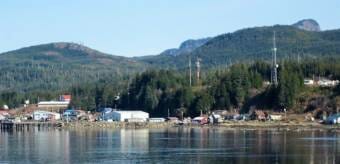
During the early days of the COVID-19 pandemic, a federally recognized tribe on Kupreanof Island was alarmed by the low supply and high price of fresh meat.

The Organized Village of Kake petitioned the Federal Subsistence Board for a hunting party to harvest five deer and two moose out of season and distribute the meat within the community. It was green-lit in June. The State of Alaska filed suit, alleging the feds had illegally pre-empted the state’s rights to manage wildlife.

Assistant Attorney General Cheryl Brooking says there are only narrow reasons for federal jurisdiction to trump state management.

“When Alaska became a state, one of the main drivers of statehood was to get control over fish and game management because the feds were making a mess of it,” Brooking told CoastAlaska on Friday. “But since statehood, the state has been the manager of fish and game.”

There are notable exceptions, such as when a species is listed under the Endangered Species Act and Marine Mammal Protection Act. But she argued in court filings that the food security issue was never proven, and the federal government exceeded its authority in allowing the hunt.

“So that’s what the state’s primary concern is,” she added.

District Court Judge Sharon L. Gleason denied a preliminary injunction that would have prevented special hunts in the future.

In a 46-page order issued on Wednesday, Gleason wrote that federal officials had taken both conservation and public safety concerns into account when it reached its decision. She also noted that when federal officials reached out to state wildlife managers, they didn’t respond.
Judge Gleason says state attorneys had warned that absent the court’s intervention, more special COVID-19 hunts could be authorized by federal authorities behind closed doors and without transparency.

“Yet the court is only aware of a single emergency hunt authorized by the [Federal Subsistence Board] — the Kake hunt — and that was authorized at a public meeting,” Gleason wrote.

It’s not the end of the case. The lawsuit will continue to move forward with both sides filing arguments before a final ruling. But the upshot is that federal officials aren’t blocked from authorizing out-of-season hunts in special circumstances.

Tribal leaders in Kake don’t see that likely in the near future.

“We just got done with our moose season and our deer season — so I think we’re good for now,” Kake’s Tribal President Joel Jackson said in an interview.

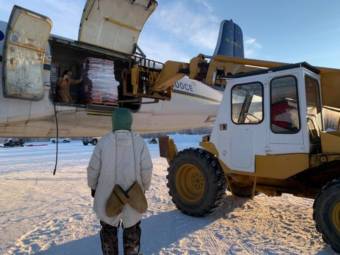
He notes that the village’s groceries are mainly shipped on the occasional state ferry or barge.

“Anything happens to those cranes down there, where they load all the stuff coming to Alaska — we’d be in a world of hurt,” he said.

He says Alaska Natives never voluntarily ceded their hunting and fishing rights on their traditional homeland. And he sees it an issue of tribal sovereignty.

“Of course, if we’re in a real bad situation, I wouldn’t hesitate to get a hunting party together, go out and get what we need,” he added. “But I want to stay within the law.”

It’s the state’s second legal setback in the case. The judge earlier blocked the state’s motion to open a federal subsistence hunt for big game hunting near the Glenn Highway to all state licensed hunters.

The Native American Rights Fund has joined the lawsuit on behalf of Kake’s tribe and the federal government.

Anchorage-based staff attorney Erin Dougherty Lynch welcomed the court’s ruling.

“The Federal Subsistence Board was well within its authority to approve the Organized Village of Kake’s emergency hunt, and we are pleased the court recognized that the state’s claims otherwise are unlikely to succeed,” she wrote on Friday. “Alaska Native communities are experiencing myriad hardships caused by the COVID-19 pandemic, and we encourage the State of Alaska to treat Tribes as partners, not adversaries.”

It’s unclear if any future special hunts are being considered. Federal wildlife officials declined to comment, citing the state’s litigation.

The case State of Alaska, Department of Fish and Game v. Federal Subsistence Board continues.

Fish and Game closes highly successful Afognak Island elk hunt by emergency order

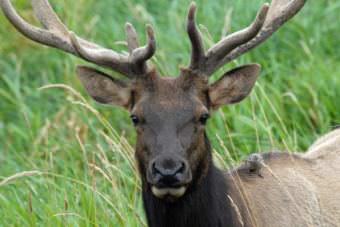
Roosevelt elk, the type of elk found on Afognak Island. (Creative Commons photo by Dan Dzurisin/Flickr
A Roosevelt elk, the type of elk found on Afognak Island. (Creative Commons photo by Dan Dzurisin/Flickr)

After a successful season of elk hunting on Afognak Island, the Alaska Department of Fish and Game has closed elk hunting in the East Afognak hunt area by emergency order.

Nathan Svoboda, area wildlife biologist with the Alaska Department of Fish and Game in Kodiak, says that the unusual closure of the entire island may not be entirely coincidental.

“We typically close down, you know, certain portions of the registration hunt during any given year, this year was kind of interesting. We closed down pretty much the entire island, which I don’t think we’ve ever done before. At least not that I can remember. So that seems to suggest that there’s quite a few hunters out there. And not only that, but they’re also being pretty successful,” said Svoboda.

“I think people are getting tired of being cooped up. So a lot of people are driving down the field, and we were seeing the same thing with our goat hunts, you know, we’re reaching our harvest quarters a little bit earlier than we had in previous years.”

The goal for the hunt is to take about 10% of the overall population, with that demand being lightened across the herds depending on their size, according to the Alaska Department of Fish and Game. A particularly small herd may have little to no harvest quota, while larger herds will have large harvest quotas.

There are eight elk herds on Afognak Island. As of October 30th, hunters reported taking 18 elk from a quota of 24 in East Afognak. A harvest that exceeds objectives could have the adverse effect of reducing future hunting opportunities.

Registration hunts remain open for a portion of the Remainder hunt area on Kodiak and Shuyak islands. Only hunters with drawing permits may hunt elk on Raspberry Island.

Piglets escape Kodiak farm, run wild in street

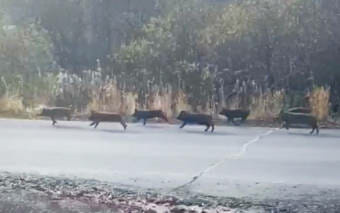
Screenshot of black-and-brown piglets trotting down Salmon Berry Drive in Kodiak. (courtesy Renee Esham)

Eight little piggies cried “wee, wee, wee” all the way home — back to their Kodiak farm in Bell’s Flat. But not without first generating some excitement on the Friends of Kodiak Facebook page.

Footage of eight black-and-brown piglets trotting down Salmon Berry Drive (at first glance they looked like an unharnessed dog team) had people asking, “Who do those little piggies belong to? And from whence did they make their escape?”

The video gave rise to all kinds of speculation. Were they training for the Idita-hog? Were they being hunted? Or were they just having the times of their lives?

Brittany Keplinger quickly put an end to the guessing game when she posted, “Pig situation is under control. Thank you everyone.”

Keplinger said she got several calls at the Rendezvous restaurant, where she works, saying her pigs were on the run. But by that time, her husband Jacob was close to ending the adventure.

“They’ve never traveled that far,” Keplinger said, “so they were a little out of sorts when they saw a car for the first time and probably a dog or two.”

The 12-month-old piglets are Kodiak born and bred, the offspring of a local sow and boar. As it turns out, Jacob didn’t have much trouble luring them home. He knows what it takes to get a pig’s attention.

“He gives them marshmallows every morning so that they come up close to him,” Keplinger said.


And the old marshmallow tricked worked. Jacob and a friend were able to corral the escapees into a pen.

But how is it that the eight little piggies broke out in the first place? Normally, they’re penned in with an electric fence. But they’ve learned that if they dig and pile enough dirt up against it, they can knock it out of commission.

“They can smell when the electric fence is hot and on, so if they can smell and realize it’s down, because they’ve piled so much dirt on it, they know that they can just run through the netting,” Keplinger said.

Young though these piggies may be, you might say they’re still on the run — from someone’s future dinner plate. Friends and neighbors have already placed deposits to buy them when they’re fully grown.

Researchers warn of elevated toxins in shellfish from several Gulf of Alaska beaches

Blue mussels and sea stars clustered together on a beach on May 3, 2020, on Douglas Island. (Photo by Rashah McChesney/KTOO)

A lot of people know it’s not a good idea to eat shellfish in the summer. It has long been thought that eating shellfish this time of year is safer — but that’s just not true anymore. 

Researchers at an environmental lab run by the Sitka Tribe of Alaska have flagged shellfish on several Alaska beaches for high levels of potentially lethal toxins. 

Lindsey Pierce is an environmental technician with the Central Council of Tlingit and Haida Indian Tribes of Alaska. She’s based out of Juneau. And she’s the point person for their shellfish program. 

That means part of her job is to go out to beaches where people are harvesting shellfish and gather some for testing.  And they’re looking for a few different kinds: Cockles, butter clams, littlenecks if they can find them.

And they pry blue mussels off of the rocks — those are something of a super-filter, going through several gallons of water each day. Researchers say they can be an early warning sign that there are toxins in an area. 

Sometimes, when she’s not working. Pierce heads back out to the beach to collect some for dinner. Generally, she’s looking for cockles and she has a lot of ideas about how to cook them.

“You can put them in the pan whole and then steam them open. Or, you can shuck them, you know, pry them open and get the meat out … it’s all in your preference,” she said. “You can do like a butter garlic sauce.”

Hungry yet?

Pierce isn’t. She laughed and said, “I collect them for my family, but actually, I don’t like eating clams.” It’s a texture issue.

So Pierce’s team collects samples from Point Louisa and Amalga — beaches in Juneau where they know people harvest shellfish. Other people in town have recommended they test Eagle Beach and Pt. Bridget too, but Tlingit & Haida hasn’t added those ones yet. 

The shellfish samples that Pierce’s team collects get sent to a lab operated by the Sitka Tribe of Alaska. It’s part of a group called Southeast Alaska Tribal Ocean Research, commonly known as SEATOR. That lab tests shellfish for a group of 17 tribes in communities across the Gulf of Alaska. 

“Each tribe has identified a beach or two that they feel their community members go to primarily for subsistence harvesting,” said Naomi Bargmann who runs the lab in Sitka.

She says the ultimate goal of the shellfish testing is to help tribes manage their resources. It’s a food security issue. But they also make the data available to the general public. And right now, they’re the only ones doing that. The state only tests commercially harvested shellfish.

Despite the regular testing, Bargmann makes it clear they are not certifying any beaches as safe. 

“We never say a beach is safe because there’s always a risk when consuming wild shellfish,” she said.

You can’t cook or freeze the toxins out. You often can’t see the algal blooms that cause them. You can’t taste them, and sometimes shellfish from the same spot on the beach will have wildly different levels of toxins in them. It’s basically an invisible killer. 

Still, deaths from paralytic shellfish poisoning in the state are rare. A fatal case in Dutch Harbor this year was the first in a decade.

The data is meant to help tribal citizens, and others, make educated decisions about where and when they’re harvesting.  There are some ways to be safer. First, all commercially harvested shellfish in the state are tested. So you can always just buy them. In fact, that’s what the state suggests doing. 

If you do want to collect them for yourself, you can pay to send samples of your haul to the state’s lab. Or, for about $50, you can send them to the lab in Sitka. 

The Sitka Tribe of Alaska’s lab put out its latest test results on Wednesday. Researchers are warning about toxins in butter clams harvested in Craig, Ketchikan, and Kodiak — and for all species they tested from beaches in Hoonah, Juneau

Site notifications
Update notification options
Subscribe to notifications