History

In Arizona and Utah, the boarding school round-ups live with survivors to this day

""
J.D. Reeves / High Country News

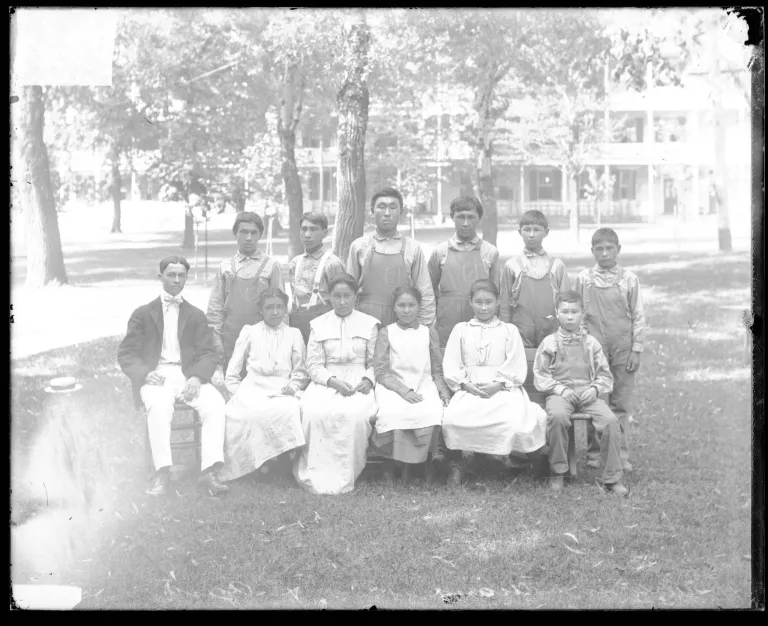
They told Willie Grayeyes (Diné) to sleep in his clothes — to not even take off his black shoes. At any moment, the Tuba City Boarding School staff members said, the 7-year-old would be called upon. Not knowing what that meant, he obeyed, and, in the middle of the night, they woke him. Staffers drove Grayeyes 11 miles to the junction of U.S. Highway 89 and Highway 160 near Tuba City, Arizona, in the Western Agency of the Navajo Nation. There, in the red dinosaur land, he boarded a Greyhound bus. He rode it all night long until early morning, when they arrived in Richfield, Utah for a year in the mid-1950s. He did not go back his second year because the residential hall was full and he was transferred back to Tuba City for another Greyhound bus to the Santa Fe Indian School in New Mexico.

“We were treated in Tuba City like we were in the military,” Grayeyes said, remembering the boarding school system that tried to assimilate him and many thousands of other Indigenous children. “We were marched; we were physically abused by being kicked. I did not know anything at the time of the decree.”

The decree in question was the compulsory attendance mandate employed by the federal boarding school system, which often resulted in the physical, emotional, sexual and spiritual abuse of Indigenous children. The boarding school staff at the Navajo Mountain Boarding and Day School, built between 1934 and 1946 by the Civilian Conservation Corps, had notified the local trading post announcing that Diné children would be rounded up. Any parents, guardians or clan relatives who resisted were punished by law. Grayeyes, now a San Juan County commissioner, was just 6 years old when he first entered the boarding school system in 1953.

“That was my first encounter with an Anglo, a white lady, by the name of Elizabeth Eubank, who was a schoolmaster and teacher,” Grayeyes said. “Ms. Eubank arranged everything, as far as who is going to be transferred and so forth.”

After that first year at the Navajo Mountain Boarding and Day School, he was transferred to the Tuba City Boarding School, established in 1903. He loaded up his suitcases and rode in the flatbed trailer of a government vehicle to get there, 93 miles away from his homelands in Paiute Mesa in the community of Naatsis’áán, San Juan County, Utah. After just a few months at Tuba City, his luggage was returned, and they woke him in the middle of the night so he could take that Greyhound bus to Richfield Residential Hall in Richfield, Utah.

This was life as a boarding school student in northern Arizona and southern Utah — constantly being shuttled around on Greyhound buses or flatbed trailers, never told where you were going or who would be waiting for you when you finally arrived. The only stability to be found was in the black shoes on their feet and the Greyhound buses that trafficked them from school to school.

Grayeyes survived his boarding school experience. Not everyone did. Some students never returned; they went missing or were buried at unmarked graves at various boarding schools across the country. The survivors’ accounts of their experiences — along with the grisly discovery of bodies at residential schools in Canada and the reports of similar discoveries at schools in the U.S. — have finally prompted a federal investigation by the Department of Interior, led by Secretary Deb Haaland (Laguna Pueblo) under the Federal Indian Boarding School Initiative. Earlier this spring, Haaland and Assistant Secretary of Indian Affairs Bryan Newland released the first volume of their investigation. The initial report laid the groundwork, noting that 408 federal schools operated between 1819 and 1969, and that the report’s authors have found unmarked burial sites at 53 different boarding schools, a number that is expected to rise.

Newland and other Interior officials made it clear that this first report was never intended to be conclusive; rather, it should be seen as merely the first step in a long review, with a follow-up report slated for 2023. Meanwhile, there remain countless untold histories — experiences that could be lost if the federal review process doesn’t reach the survivors in time to hear their stories. As investigators listen to survivors and try to map the lingering impact of the boarding schools in the Southwest, one shared experience comes up over and over: the memory of being lined up to board one of those infamous Greyhound buses.

“I remember everybody on a certain day would go up to the local day school, and there would be these Greyhound buses parked up there,” said Leigh J. Kuwanwisiwma, a Hopi historian, former director of the Hopi Tribal Historic Preservation Office and a Christian boarding school survivor. “There used to be just piles of suitcases out on the sidewalk, and they would be loading that (bus) up.”

Hopi students from the villages of Hotevilla and Bacavi boarded buses that took them to the Phoenix Indian Industrial School, more than 200 miles away. Kuwanwisiwma had spoken to other students and felt somewhat prepared for boarding school. His older sister was forced to attend the Ganado Mission School, and her experience there helped him navigate not just school but also the strange customs and fashions, such as the blazer and tie that he wore to Sunday church.

“I remember just kind of going on the road and staring out of the back, just thinking, ‘Man, I’m leaving the rez,”’ Kuwanwisiwma said, recollecting riding in his parents’ 1955 pickup on his way to the Ganado Mission School. “I had this inner feeling of uncertainty inside as we drove through the villages.”

Kuwanwisiwma often felt lonely at the school, but he enjoyed some of the extracurricular activities — becoming a student-athlete at the Hopi Mission School and later at the Ganado Mission School, both Presbyterian-run institutions. He says his experience differed greatly from that of his ancestors, who endured the trauma of compulsory attendance, military discipline and having their hair cut, back in the days when Hopi leaders were jailed for resisting Bureau of Indian Affairs roundups of their children. That was years before the Greyhounds came.

The Greyhound generation remembers more than just the buses and their polished shoes. They also remember the stories of those who went before them.

Kuwanwisiwma’s father and grandfather both went through the BIA boarding school system. His father was forced to attend the Albuquerque Indian School, where he was punished for speaking the Hopi language with other Hopi students. Kuwanwisiwma’s father wanted to protect his own children from the BIA boarding school system, so he encouraged them to go to the mission schools instead, for their primary and secondary education.

As early as 1875, the BIA focused on recruiting Hopi students, often around 4 and 5 years old, from various Hopi villages. In the early 1900s, Kuwanwisiwma’s grandfather was rounded up by U.S. soldiers and forced to attend Keams Canyon Boarding School. His grandfather said that he was out herding sheep when he saw other young Hopi children crying for their parents, and the parents crying for their children. He stood there watching, believing that since he was older, he would not have to go. But the BIA agents told him to come with them anyway. Kuwanwisiwma’s grandfather resisted, running away. He fled from the agents until they fired warning shots into the air. Then he froze, surrendering.

The soldiers took him and the other Hopi children to a small building in Kykotsmovi Village, where the children cried all night while their mothers wept, calling out their Hopi names. The next morning, his grandfather’s long black hair was shaved off. “All their hair was being snipped off, girls and boys. Of, course, long hair was culturally important to both the Hopi boys and men. Long hair meant spiritual strength and courage to face the enemy,” Kuwanwisiwma said. “That’s what long hair means to the Hopi people.”

When his grandfather arrived at Keams Canyon, at the Hopi BIA Agency, the administrator told the soldiers that the boy was too old to attend the school. They let him go, but Kuwanwisiwma said, ashamed of his newly shaven head, hesitated to go home. His parents wondered why he was missing, although he soon came home.

“I tell this story, because around that time, around the turn of the century, there was a big division among the villages of what to expect from the white men,” Kuwanwisiwma said. “The white man was imposing education, and some of the people, the conservatives, the traditionalists did not want that. There was a big conflict developing.”

Ultimately, Kuwanwisiwma’s grandfather sided with the traditionalists and vowed to fight against the white men forever, he said.

“He became a die-hard conservative and traditionalist throughout his life, and those are some of the values I grew up with,” Kuwanwisiwma said.

Kuwanwisiwma holds the same values and is proud that his Hopi people held on to their language, ceremonies and agricultural lifeways. As a historian, he said, he knows that many tribes were less fortunate than his people — the Paiutes, for instance, who were nearly exterminated by the forced boarding school system. For the Paiute Indian Tribe of Utah, as well as Shivwits Band of Paiute Indians and Kaibab Band of Paiutes, the trouble started at the former Panguitch Boarding School, which operated from 1904 to 1909. Superintendent Walter Runke — who started his career as a disciplinarian at Tuba City Boarding School — believed in compulsory attendance, meaning that attendance was enforced at gunpoint, according to a news clipping of the Coconino Sun in the Arizona Memory Project. Historical records from an independent researcher show that at least 12 Paiute children were buried at the Panguitch Boarding School. The site is now part of Haaland’s federal investigation.

Corrina Bow, chairwoman of the Paiute Indian Tribe of Utah, said that a memorandum of understanding between the tribe, the two bands and Utah State University, which leases the former school’s land from the state, has been under negotiation for the last year. The conversations, first reported by the media in August 2021, sparked the investigation of USU’s agricultural lands in the predominantly ranching Mormon community of Panguitch. On behalf of her people, Bow said that she is pleased to have the former boarding school included in the ongoing federal investigation by the Department of Interior. Before the publicity, Panguitch was an unknown residential school.

“As a Tribe, we continue to address the former Panguitch Boarding School and are still saddened by the treatment of our little ones at that school,” Bow said in a statement. “We thank you for respectfully honoring our wishes to address this heartbreaking piece of our history privately following our cultural practices and beliefs.”

Steven Lee, an independent researcher who assisted the tribe, says that the overall narrative around Indigenous boarding schools, including Haaland’s federal report, confirms what he has learned so far: that some Paiute children never returned home, and that the story of the former administrator, Runke, did not end with his tragic stints at Panguitch and the Tuba City boarding schools. Runke went on to oversee a Navajo boarding school, and in 1916, was arrested for killing a Diné man, Taddy Tin, who resisted his recruitment tactics. Runke was acquitted by an all-white jury and later served two terms as an Arizona state senator.

Lee has worked with Bow to find out whether children were buried at the school, studying the school’s old records. He first learned about the traumatic history of Panguitch when he was the town’s events and marketing director. His discovery that a schoolteacher had died from an opium overdose back in 1905 inspired him to do more research, and that led him to the death records of at least 12 Paiute children. But city officials discouraged his research, and he resigned from his job working for the town.

The Interior Department’s first report, Lee said, confirms his own findings: Indigenous children were highly sought after by townspeople, who used them as cheap labor. The report said that USU is waiting for tribal approval to investigate the possible remains of Paiute children, according to Judson Finley, anthropologist and archaeologist at Utah State University.

Meanwhile, Haaland and her team are hosting listening sessions for their second report. Earlier this month, they held a second listening session in the Midwest, giving boarding school survivors the opportunity to tell their stories, some for the first time in their lives. Another listening session for survivors is slated for Arizona later this fall or winter. For the survivors, at least it’s a start.

Despite those memories of the endless Greyhound rides, Grayeyes takes pride in the resilience he and others showed in the face of a system designed to strip him of his cultural identity, starting with cutting off his hair. Today, he proudly wears his tsiiyéél, a Diné hair bun, as he fulfills his various leadership roles — including as the sitting board president of the Navajo Mountain Boarding School.

In his efforts to reclaim the school for the community, Grayeyes has relied on his own experience as a boarding school survivor to inform his decisions about how the school should serve its students. He believes in the importance of parental involvement, something that his generation and the ones before him were denied by the boarding school system. Grayeyes thinks parents need to get involved in their children’s education if they want to help shape the minds of their children in a healthy way.

This same line of thinking informs his beliefs as to what tribal nations and boarding school survivors should get out of the ongoing federal review. The survivors’ needs — their mental health, first and foremost — must be centered. But they deserve more than simply the chance to be heard; they deserve justice and an actual sense of closure. The first report fell short, in Grayeyes’ opinion, who thought it “should have had more depth.” But achieving that depth, as well as any justice or sense of closure, may require more litigious methods than a review process whose continuation depends on a favorable presidential administration. 

“If it were up to me,” Grayeyes said, “I would go for a lawsuit (against the federal government). The treatment of Native American students — with the idea to extinguish their lifestyle, their songs, their language — is pretty well planned out.”

Until that happens, however, Grayeyes, like so many others from his generation, will hope for the best from Haaland and her agency, and he’ll continue to work to provide a stable, healthy educational environment — one free of Greyhounds, guns and polished shoes.

Alastair Lee Bitsóí is Diné from Naschitti, Navajo Nation, New Mexico. An award-winning journalist, he formerly reported for The Navajo Times and The Salt Lake Tribune and now works as a correspondent for High Country News and other outlets. 

This story was originally published by High Country News and is republished here with permission.

Remembering Marilyn Loden, who gave a name to the glass ceiling

Woman hold a banner for equal pay during the women’s march against against US-president Donald Trump’s sexism in Munich, Germany, on 20 January 2018. (Photo by Alexander Pohl/NurPhoto via Getty Images)

When Marilyn Loden first uttered the phrase “the glass ceiling” in the 1970s, and even as it became an increasingly permanent fixture of the lexicon, she hoped the invisible barrier it described would soon become a thing of the past.

Instead, it outlived her. Loden — who died in August at age 76 after a battle with cancer in — was saddened to know that would be the case, according to a recent obituary in the Napa Valley Register.

“I thought I would be finished with this by the end of my lifetime, but I won’t be,” Loden told The Washington Post in 2018. “I’m hoping if it outlives me, it will [become] an antiquated phrase. People will say, ‘There was a time when there was a glass ceiling.’ ”

While the glass ceiling may be Loden’s most memorable contribution to society, it’s far from her only legacy.

After her early years in human resources, Loden went on to become a management consultant and workplace diversity advocate who worked with a wide variety of entities, from Citibank to the University of California to the U.S. Navy. Her work at the Navy led to policy changes increasing leader accountability for sexual harassment and lifting the ban prohibiting women sailors from serving on submarines, and she received its civilian Superior Service Medal in 2016.

Loden authored three books, the first of which — called Feminine Leadership, or How to Succeed in Business Without Being One of the Boys — was deemed one of the 50 best business books of 1985 by the Library Journal and has been published in six languages.

Loden was also a benefactor of numerous causes including global health, animal rights and democracy. She was predeceased by her husband, and leaves behind a sister, two nephews and grand-nieces and many close friends, according to the obituary.

“Friends and family often described her as ‘the smartest person I know,’ and she could be wickedly funny,” it added. “Throughout her many years as a consultant, speaker, and author, she attracted many women who were inspired and motivated by her own story and passion.”

Loden gave an impromptu name to a pervasive problem

This particular chapter of Loden’s story began at the 1978 Women’s Exposition, a feminist conference in New York City.

Loden, then 31 and working in the HR department at New York Telephone Co., was invited to join a discussion panel about women’s advancement (after the company’s only female vice president couldn’t make it, according to The Post).

The panel was called “Mirror, Mirror on the Wall” and focused on “messages of limitation which confront women and the effect on aspirations,” as Loden recalled in a 2008 blog post. She happened to be the last speaker, meaning she had time to listen to — and reflect on — the other panelists’ comments.

“It was a struggle to sit quietly and listen to all the criticisms,” she wrote.

The speakers focused on generalizations and stereotypes about women — that they weren’t properly socialized for success, they limited their own career aspirations due to low self-esteem — that bore very little resemblance to Loden’s own observations and experiences in the workplace.

“True, women did seem unable to climb the career ladder beyond the lowest rung of middle management and there were certainly moments when I had seen capable women managers filled with self-doubt about their own abilities to ‘do the job,’ ” she wrote. “However, while the general lack of advancement was evident, it seemed to me the causes were very different from the ones enumerated by my fellow presenters.”

When it was finally Loden’s time to speak, she chose to talk about concrete, cultural barriers to women’s professional success, like the biased attitudes of male managers, unequal pay and a lack of role models and emotional support for women. And she gave those obstacles a name: the invisible glass ceiling. She later told The Post that the metaphor came to her in the moment, and didn’t seem like a big deal.

“These comments drew some surprised looks from the other panelists but the response from the audience made it clear that my words had struck a familiar cord,” Loden wrote in her blog post. “Until that moment, it seemed we were relentlessly blamed for our lack of progress because, as women in a man’s world, we didn’t ‘dress for success’ or ‘play games mother never taught us.’ ”

Loden later recalled some of her own experiences with the glass ceiling, telling the BBC in 2017 that her male boss often told her to smile more and “made a point of commenting on my appearance at literally every meeting.”

She was told repeatedly that the advancement of women within middle management was “degrading the importance” of those positions. And she lost out on a promotion to a male coworker despite her better performance record, because, as her employer told her, the coworker was a “family man” who was his household’s main breadwinner and therefore needed the money more.

Loden left the company after working there for 12 years, when she was ordered to take a job that she didn’t want.

Despite relative strides, the problem and the phrase have persisted

While Loden is widely credited with creating “the glass ceiling,” a sprinkling of archival bread crumbs suggest a few others started using the phrase around the same time.

The phrase first appeared in writing in a 1984 AdWeek profile of Gay Bryant, who was then the editor of Working Women magazine (Merriam-Webster lists its origin as that same year). The Wall Street Journal has reported that the phrase may have originated at a dinner conversation between two female employees of Hewlett-Packard in 1979, and also noted that it appeared in a headline in its own pages in 1986.

Whatever its origins, the “glass ceiling” made its way into print, popular culture and politics in the 1980s and has maintained its status as a reliable shorthand in the decades since.

In 1991, Congress created the Glass Ceiling Commission to address the advancement of women and minorities in business: Its final report, issued in 1995, found that women held only three to five percent of senior management positions in Fortune 500 companies, and that in those rare cases, their compensation was lower than that of their male counterparts..

The phrase has popped up in significant speeches by women leaders in fields such as business, entertainment and politics, including in several speeches by Hillary Clinton, the 2016 Democratic presidential nominee and first woman to be nominated by a major party. From the late former Secretary of State Madeleine Albright’s shattered glass brooch to a glass portrait of Vice President Harris (the first woman, the first Black person and the first Asian American to be elected to that role), the imagery is still pervasive.

So too is the problem it represents. According to the 2021 Women CEOs in America report, just 8.2% of Fortune 500 CEOs are women, and less than one percent are women of color.

While there’s much room for improvement, there has been some progress in the years since Loden first addressed that feminist panel. She reflected on that in 2017, as one of the BBC 100 Women.

“Over the past four decades women have closed the education gap, moved into non-traditional jobs at remarkably high rates, simultaneously managed families and challenging careers, and demonstrated their ability to innovate, inspire and manage effectively in every sector of the global workplace,” she said. “We need only remove the blinkers to appreciate and leverage all that they have to offer.”

Copyright 2022 NPR. To see more, visit https://www.npr.org.

Cargo ship snags very old anchor in Bristol Bay

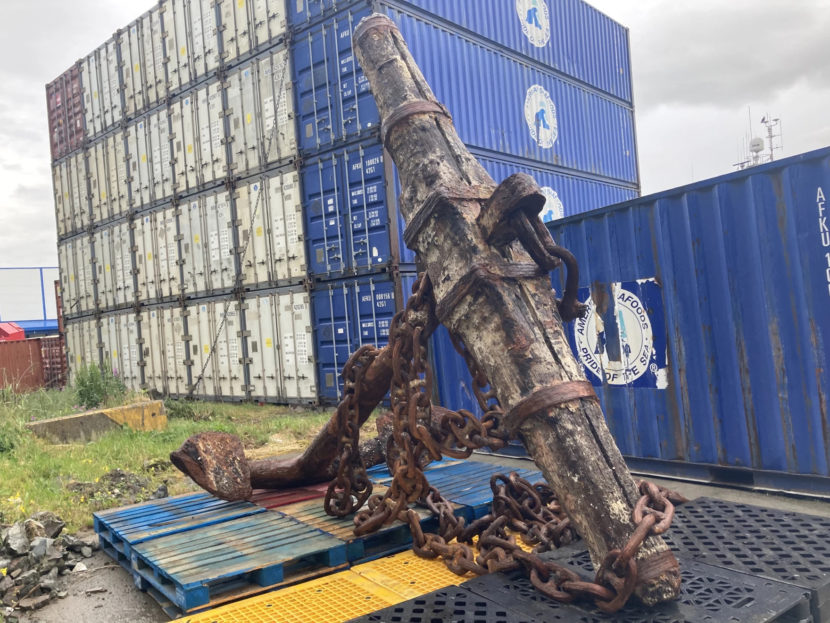
A big, rusty, old iron-and-wood anchor sitting on pallets next to a stack of shipping containers
Anchor dropped off by a cargo ship in Unalaska. (Photo by Laurelin Kruse/KUCB)

A very old anchor showed up at the dock in Unalaska on Saturday. A cargo ship accidentally pulled it up while in Bristol Bay for the salmon fishery. Now someone in Unalaska has to figure out when and where that anchor came from, and how to preserve it.

Andy Pillon is the terminal manager for the cold storage company Kloosterboer, where the anchor was dropped off on Saturday. He says the refrigerated cargo ship Orange Sea had been anchored in Bristol Bay, taking on salmon. And when it heaved up its own anchor, another one came up attached to it.

“We knew they were coming with an anchor fouled on their anchor, because that’s not unusual,” said Pillon. “We just didn’t know this would be the anchor that was coming.”

By Pillon’s estimate, the anchor weighs close to 6,000 pounds. It’s made of iron and wood, and though a few barnacles are attached here and there, it’s been well preserved by the ocean water.

When Pillon and others at the dock first researched the anchor with a quick Google search, they thought it might date back to the 1600s. Pillon has since been in touch with an expert at a maritime salvage company who, at first glance, said the anchor likely dates somewhere closer to 1850.

No one from the salvage company was available for an interview on Thursday.

Pillon says the anchor is a piece of history and wants to preserve and showcase it here in Unalaska.

“We became the custodians of a really neat maritime artifact,” said Pillon. “So let’s take care of it. We’ll put it somewhere around here [where] people can come to look at it. And hopefully, in that process, we’ll learn more about it.”

For now, Pillon says the anchor is going back in the water. He was told by a preservation expert that’s the best way to keep it in shape until he can make plans to preserve it on land. After all, the water has kept this anchor intact for more than a century already.

Roy Jones flew to Ketchikan 100 years ago Sunday, bringing commercial aviation to Alaska

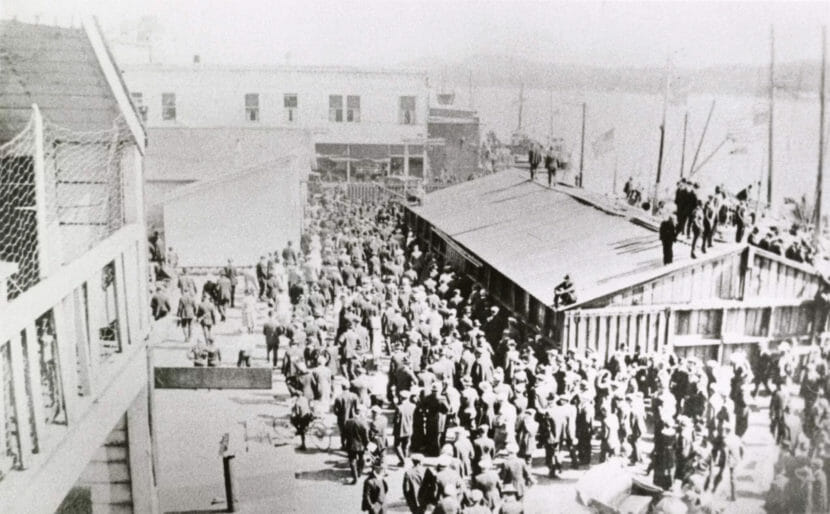
A black and white photo of a crowd in Ketchikan
Crowd Greets Roy Jones and the Northbird, July 17, 1922 (Photo and caption courtesy of Ketchikan Museums).

Sunday marks the 100th anniversary of the arrival of commercial aviation in Alaska. In 1922, pilot Roy Jones landed his amphibious plane Northbird in Ketchikan’s Tongass Narrows. Jones went on to take passengers all around Southeast Alaska.

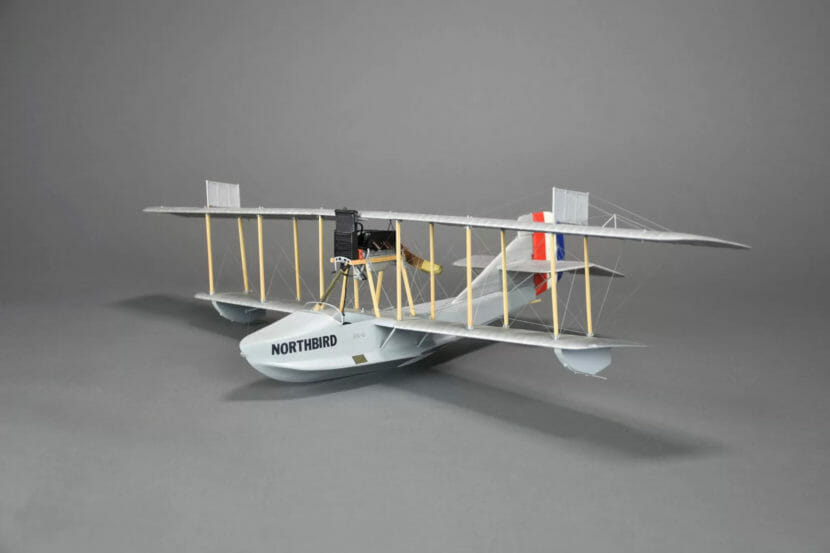
The Northbird was a sight to behold. The open cockpit biplane looked a little like a cross between Wright Brothers’ famous aircraft and rowboat. The Navy surplus flying boat featured two wicker seats and an engine scrounged from a World War I fighter plane.

And its pilot? Roy Jones, an Army Air Corps veteran who saw opportunity in Ketchikan, and, on July 17, 1922, landed in the Tongass Narrows with plans to start the state’s first commercial air service.

“He had a dream,” said, Don Dawson, an amateur historian tracking Alaska aviation history. “And his dream was to bring aviation, commercial aviation, to serve Alaska. “

Dawson is even restoring the first Grumman Goose amphibious plane operated by the mid-20th century carrier Ellis Airlines.

Dawson said Jones arrived from Prince Rupert at exactly 2:02 p.m. He flew over the ballfields before making his landing in front of a crowd that had gathered on Ketchikan’s waterfront. The newspaper at the time ran a feature commemorating the event: “The weary aviators were given a tumultuous reception by the populace, jamming the dockfront’s rooftops with all the town sirens, church bells, horns and steam whistles playing a loud welcome home. After they tied up, the two Birdmen were lifted upon the shoulders of Jones’s friends, and ceremoniously paraded through the cheering crowd along the street. Even the rain was held in check for the celebration.”

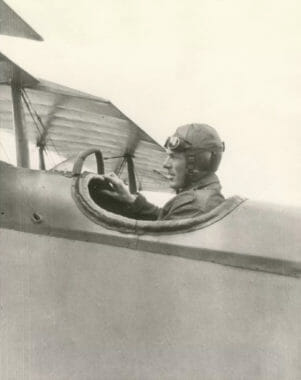
An old sepia-toned photo of a pilot in an open cockpit
Flying Cadet Roy F. Jones, in a Curtiss JN4D (“Jenny”) in 1918, at Marsh Field, California. (Photo and caption courtesy of Ketchikan Museums).

McHale said the arrival of commercial aviation marked the start of a new era.

“And since then, flight has been essential to life and Ketchikan, from those first flights and milestones to the establishment of regular scheduled routes,” McHale said. “Aviation continues to be an integral part of our island’s living.”

Jones stayed in Ketchikan and opened up Northbird Aviation Company, offering trips to Petersburg, Wrangell, Metlakatla and Prince Rupert, and eventually Juneau and Skagway.

Dawson says the office was in the old Talbot Building on Ketchikan’s waterfront and noted that Jones went to college with then-resident Jack Talbot.

It was challenging at first, but Dawson said eventually, the business took off.

“But they had lots of business right off the get-go for flying,” he said. “Joy riders, flight-seers, but also business people, the fishing industry and aerial timber survey and, and mining, geology, that sort of thing.

Dawson said that Jones even flew a Fox Films videographer over Metlakatla, to capture footage of former President Warren G. Harding laying a wreath at the grave of Metlakatla’s founder.

But the Northbird also ran into its share of challenges.

Once, near Juneau, Jones’ engine failed. He and his mechanic ended up in the water. When a boat came to pick the Northbird up with a boom, it fell back down into the water, crippling the upper wing.

The Northbird’s last flight was on Aug. 5, 1923, just over a year after that first landing in Ketchikan.

Dawson explained that Jones had been attempting to lift off from Heckman Lake near Loring and make the roughly 17-mile trip back to Ketchikan.

“They encountered downdraft,” Dawson said. “He had one passenger with them and they couldn’t get out of the little bowl there, the downdrafts were coming down the mountain. So he kept losing altitude, so he elected to try to re-land on the lake, wait it out to look until the downdraft conditions abated, and ended up clipping the trees there at the outlet and the Northbird crashed into the lake. And he and his passenger, George King, were okay, but the plane was a wreck.”

After that, Jones announced he would rebuild the plane — along with a pontoon plane he bought from a Juneau man — but Dawson said he never did.

A model of a biplane flying boat
Image of plane model by Terry Richardson, 2001. Northbird, Curtiss Mf-6-K Seagull. (Photo and caption courtesy of Ketchikan Museums).

The last time Jones was in Ketchikan was Aug. 3, 1973, for the opening of the Ketchikan International Airport. He died a year later, in 1974.

“He just wanted to have his place in history,” Dawson said. “You know, that he set all the precedents and was the first one.”

And Dawson said that’s what he did — all in just one year of operation.

And what can Alaskans do to remember Jones on Sunday? Dawson has an idea.

“Well, definitely can start by raising a glass, 2:02 on Sunday in the afternoon.” he said. “Cheers to Roy Jones and the Northbird.”

A small exhibit honoring the occasion is set up in the lobby at the Tongass Historical Museum.

Gambell National Guard members to receive Alaska Heroism Medal for 1955 rescue

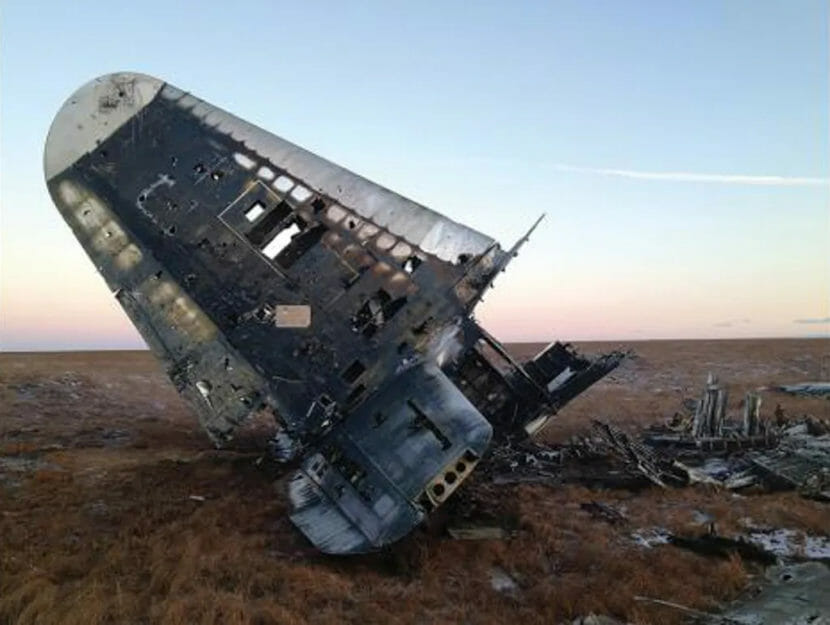
The broken-off tail of an old plane lying on the tundra
Part of the Lockheed P2V-5 Neptune wreckage still remains in Gambell. (Photo courtesy of Gay Sheffield/UAF Northwest Campus and Alaska SeaGrant)

The Alaska National Guard and the Alaska Office of Veterans Affairs plan to award the Alaska Heroism Medal to the families of 16 members of the Alaska National Guard in Gambell. The awards are being presented for the rescue of a downed Navy air crew almost 70 years after the event.

On June 22, 1955, a U.S. Navy patrol plane took off from Kodiak with a crew of 11.

The crew’s mission was to patrol U.S. airspace, check navigational aids and document sea ice, according to Verdie Bowen, director of the Alaska Office of Veterans Affairs.

About 200 miles west of Nome, the crew encountered two Soviet MiG-15 fighter jets, which fired on them. They attempted to hide in the cloud cover, but the MiGs managed to disable one of the patrol plane’s engines, and the crew crash-landed on St. Lawrence Island about 9 miles south of Gambell.

David Assard, the navigator, described the landing in an interview with Alaska Dispatch News in 2015.

“The landing was as beautiful as you could imagine, with the notable exception that, because we had no wheels and there were a lot of boulders and rocks on shore, they ruptured the center tank,” Assad said.

He said the fuel ignited, causing a fire inside the plane.

“As the plane decelerated, the fireball didn’t, and it rolled forward and burned everybody,” Assard said.


June Walunga, daughter of one of the National Guard members who responded to the crash, remembers being in Gambell and watching the plane come down.

“I was seven years old, and I remember the sound and the plane going over Gambell,” she said. “It was thundering to us. You know, we never heard that kind of sound back then. And it’s right there very close to your head. And shortly after that, I saw smoke.”

None of the crew died in the crash, but all of them sustained injuries, including burns, shrapnel and bullet wounds.

Staff Sgt. Clifford Iknokinok and three other members of the Gambell First Scout Battalion were seal hunting nearby and made their way to the crash site despite the Soviet fighters continuing to circle overhead. Upon realizing that they didn’t have the necessary equipment to help the air crew, Iknokinok set off for Gambell to gather additional assistance. Before he made it to Gambell, though, he ran into several of his fellow National Guard members, who were already on their way to help.

The National Guard members used umiaks to transport the injured air crew back to Gambell. June Walunga remembers them arriving in town.

“I remember I was holding my mother’s hand, and we were walking towards the beach where the boats were coming in, and they were carrying these people on stretchers going up the beach. Some had bandages wrapped on them and their arms; some of them were halfway up on their shoulders,” Walunga said.

After arriving in Gambell, the crew’s injuries were treated. A team from Elmendorf Air Force Base retrieved them two days later. Bowen says it was only due to the quick action of the Gambell First Scouts that all 11 members of the air crew survived.

But if this all happened in 1955, why is the National Guard awarding medals in 2022? There’s a simple reason, according to Bowen.

“In 1955, there (were) no peacetime medals in the active military or in the National Guard,” he explained.

Brigadier General John Noyes presented the members of the Gambell First Scout Battalion with letters of commendation for their actions.

“For that time, that was appropriate for 1955 and, in reality, that was the only thing that he really had in his awards branch to provide,” Bowen said.

In November of that year, the U.S. Navy also recognized the Gambell First Scouts by awarding Honorary Naval Aviator Designations to Master Sergeant Willis Walunga and Staff Sergeant Clifford Iknokinok, the senior members of the unit. The other members received letters of appreciation from the Navy.

After a review by Major General Torrence Saxe, the current adjutant general of the Alaska National Guard, the awards were upgraded to the Alaska Heroism Medal, currently the highest award for heroism in the Alaska National Guard. The medals will be presented to the families of the members of the Gambell First Scout Battalion and Cpl. Bruce Boolowon, the only surviving member.

The full list of recipients is as follows:

  • Master Sgt. Willis Walunga
  • Staff Sgt. Clifford Iknokinok
  • Sgt. Herbert Apassingok
  • Sgt. Ralph Apatiki Sr.
  • Cpl. Bruce Boolowon
  • Cpl. Victor Campbell
  • Cpl. Ned Koozaata
  • Cpl. Joseph Slwooko
  • Pfc. Holden Apatiki
  • Pfc. Lane Iyakitan
  • Pfc. Leroy Kulukhon
  • Pfc. Woodrow Malewotkuk
  • Pfc. Roger Slwooko
  • Pfc. Vernon Slwooko
  • Pfc. Donald Ungott
  • Pvt. Luke Kulukhon

The award ceremony was originally scheduled for July 9, but due to inclement weather, personnel from the Office of Veterans Affairs and the Alaska National Guard were unable to land in Gambell that day. The National Guard and the Office of Veterans Affairs say they will work with the community and family representatives to reschedule the event.

Click here to watch the full Strait Science presentation focusing on the Gambell National Guardsmen and their heroic rescue mission from 1955.

Remains of Alutiiq girl taken from Kodiak more than 100 years ago will return to Old Harbor

A very old, black and white group photo taken outside
Anastasia Ashouwak, pictured third from right in the bottom row, was part of a group of Alaska Native children, pictured here, sent to the Carlisle Indian Industrial School in 1901. (Photo courtesy: Lara Ashouwak)

An Alaska Native girl who died more than 100 years ago at a boarding school in Pennsylvania will return home to Kodiak Island. Earlier this summer, the U.S. Army began the process of returning the remains of eight Indigenous children from the school to their families across the country.

According to records, Anastasia Ashouwak was taken from an orphanage on Woody Island in the Kodiak Archipelago and sent to the Carlisle Indian Industrial School after her mother died in 1901. Alutiiq Museum executive director April Laktonen Counceller says Ashouwak was part of a group of Alaska Native children sent to the school.

“There were 11 students that went on that journey,” Counceller said. “There’s records of their steamship travel, and the remainder of their travel once they hit the West Coast was by train.”

Indian boarding schools like Carlisle stripped Indigenous children of their culture and had notoriously poor conditions. Just last summer, the Department of the Interior announced it would be looking into the “troubled legacy” of Indian boarding schools in light of the discovery of 215 graves near a boarding school in Canada. It released its first report on the schools in May.

Ashouwak spent the next three years at the school before dying of tuberculosis at the age of 16.

She was buried alongside other children in the school’s cemetery. For more than a century she remained buried under a headstone inscribed with the name Anastasia Achwack.

Counceller says records indicate that Ashouwak was Sugpiaq/Alutiiq and had ties to the former village of Kaguyak on the southern tip of Kodiak Island, which was washed away in the 1964 tsunami. Her family then moved to the village of Old Harbor, where many people still share her last name.

Cassey Rowland is an Alutiiq artist from Kodiak and one of Ashouwak’s descendants. Her father, Ted Ashouwak, who is from Old Harbor but now lives in Maine, is Ashouwak’s great-nephew and closest living relation. Rowland says she never heard about the boarding schools from village elders when she was growing up.

“They just didn’t talk about it, it was just too painful for them,” she said.

Rowland has a daughter the same age as when Ashouwak left Kodiak Island for the Carlisle School, and she’s been honest with her daughter about what happened at Carlisle and other schools like it.

“We’ve been learning about the Indian boarding schools before we even learned about our ancestors being a part of it, and she’s been asking questions and I’ve been telling her the whole truth. I’m not the type of parent that’s going to hide away,” Rowland said.

Rowland and her daughter flew to Pennsylvania earlier in July where they gathered with other members of their family as Ashouwak’s grave was dug up in preparation for her reburial in Alaska. Members of the Alutiiq museum and a Russian Orthodox priest from Kodiak also joined the family.

Rowland said she brought paint to decorate the box that will carry the remains of Ashouwak home — she planned to incorporate Alutiiq and Russian Orthodox designs for the casket.

“And then the bright colors of the island just to bring her home — lots of bright greens and blues, oranges, pinks, so, just trying to make it look like a little girl,” she said.

In June, the Alutiiq Museum repatriated the remains of four Alutiiq ancestors through the Native American Graves Protection and Repatriation Act, or NAGPRA.

Rows of identical graves in graveyard
The U.S. Army is in the process of identifying the children buried at Carlisle, and repatriating them to their families. (Photo courtesy of Lara Ashouwak)

Counceller said Ashouwak’s return to Kodiak is different. The U.S. Army oversees the cemetery at the Carlisle Indian Industrial School. It’s in the process of returning the remains of children who can be identified to their communities.

The Alutiiq Museum knows of another girl from Kodiak buried at Carlisle and hopes to bring her home next summer, Counceller said.

When Ashouwak returns to Kodiak, Counceller said she’ll receive services at the local Russian Orthodox church in the city of Kodiak and an Alutiiq ceremony at the museum. The Alutiiq Dancers — including Rowland’s daughter — also will perform. Ashouwak and her family will then be flown to the village of Old Harbor for a graveside service followed by a potluck.

Counceller says there’s a sense of relief among the community that Ashouwak will finally return home.

“As many of us Native people know, we’re kind of all related around the island so, although this is one individual, it’s a moment for all Alutiiq people to think about how important this kind of work is,” she said.

Rowland says a part of her will also be at peace when Anastasia is finally alongside members of her ancestors in Old Harbor.

“She’s gonna be where she is wanted. We need her home. And she’s gonna feel that, we believe. Her spirit will finally be at rest,” said Rowland.

Rowland says she’ll be processing why it took so long for Ashouwak to return to Old Harbor for the rest of her life.

Services and burial for Anastasia Ashouwak will be Saturday, July 9th, in Kodiak and the village of Old Harbor.

Site notifications
Update notification options
Subscribe to notifications