History

Anchorage woman searches for family at former boarding school: ‘The rest of me is still in Pennsylvania’

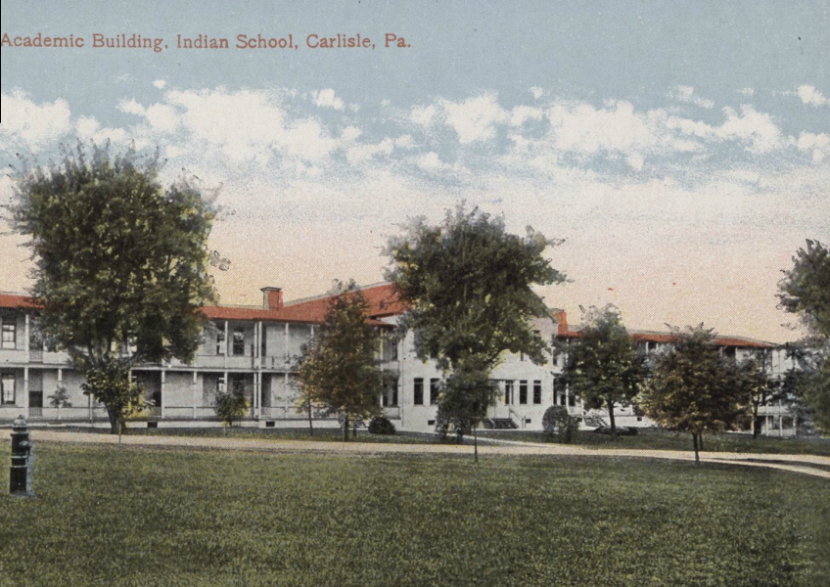
The caption on this artwork reads Academic Building, Indian School, Carlisle, PA. (Public Domain image from National Archives and Records Administration)
The Carlisle Indian Industrial School in Carlisle, Pennsylvania. The school was open from 1879 to 1918, and Native children from across the country went to the school to be assimilated into Western culture. (Public Domain image from National Archives and Records Administration)

An Anchorage resident is trying to find her great-aunt, who went to a boarding school for Native children and never returned. 

Mary Kininnook was from Ketchikan. While she wasn’t forcibly taken to boarding school, the government heavily persuaded her parents to send her to one. She never came back.

Kininnook’s family has been looking for her for decades. Kininnook is Eleanor Hadden’s great-aunt, and she said the search for Kininnook started in the 1960s.  

“My grandmother, probably in 1960, either late ’66, early 1967, and made a comment to my mother kind of in passing,” Hadden said. “My grandmother’s sister Mary had gone to school and died there. And that was basically the entire conversation.”

After Hadden’s mom heard that, she started to research what happened to Kininnook. Her mom first looked at Chemawa Indian School in Oregon, but there was no record of her. 

Then, in the early 1980s, Hadden went on a trip to Pennsylvania. Her mom told her to stop at Carlisle Indian Industrial School to see if there was a record of Kininnook and if she’s buried there. 

Hadden went to the graveyard and looked at the headstones. She didn’t find a headstone with Mary Kininnook’s name on it, but there were a lot of unknown graves.
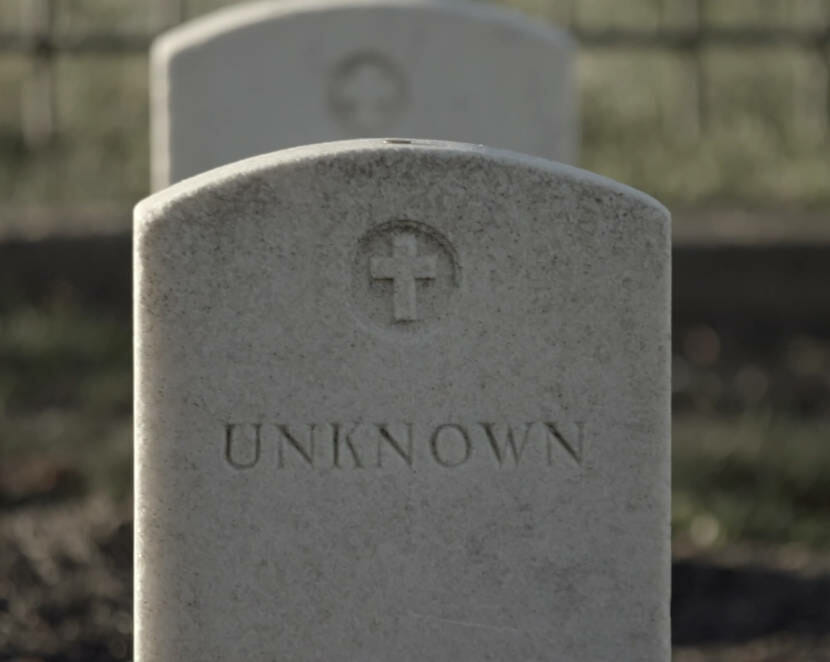
A gravestone at the Carlisle Indian Industrial School marking the grave of an unidentified Native child. (Production still from Al Jazeera’s “Fault Lines”)

Then she went to the archives. There was nothing there, either. There were photos of children, but those didn’t help Hadden because she had no idea what Kininnook looked like as a child.

“That night I called my mother to tell her that we had looked and then we didn’t find her. And we both cried, and it felt like we had lost her even though we never knew her,” Hadden said. “It was just an incredibly sad evening because we thought we might find something. Found nothing.”

Hadden and her mom didn’t give up. They contacted an anthropologist and a historian in Pennsylvania, and they went through records. The researchers found the records messy and incomplete — which is common for records at boarding schools for Native children.

Eventually they found a record of Kininnook — an admission card to the hospital. It had her name, age, birth date and what she was in the hospital for.

“Just below her name, handwritten, it said ‘Died December 28,’” Hadden said.

Kininnok had just turned 14 when she died. She had been away from home since she was nine years old. 

Once more of the school’s records were digitized, they found another. It was a letter written from the school to Kinannook’s father, saying that she wanted to stay one more year at Carlisle.

Kininnook didn’t make it that full year. Hadden said she likely died of tuberculosis six months after that letter was sent. 

It’s been more than 100 years since she died, and Hadden is trying to bring Kininnook home to Alaska. That’s not easy because no one knows where she is buried. 

The Carlisle Indian Industrial School now belongs to the U.S. Army, and Hadden has been working with them to try and find Kininnook’s body. 

A forensic anthropologist who can identify the sex and age of a child by looking at bone structure will look at the unknown graves to see if they can find bones of a 14-year-old girl.

“So they’ll go through, and they’ll do the first one, and examine it. And she’ll take all the measurements and give her conclusion as to whether this is a male or a female or a boy or girl, or undetermined or whatever. And if it doesn’t seem to look like a 14-year-old girl, then they’ll go to the next unknown spot,” Hadden said.

The Army was supposed to do this two summers ago for Hadden’s family, but it was delayed because of the pandemic. The family hasn’t heard from them since.

They may not find Kininnook after looking at the unknown graves either. Hadden isn’t sure if there are plans to use ground-penetrating radar to find bodies, like they did at the Kamloops Indian Residential School in Canada.

Hadden said that because she doesn’t have family in Ketchikan anymore, the family will need to decide where to lay her to rest if they find her at Carlisle. But it’s hard to make plans when Hadden doesn’t know if they will find her.

She says the boarding schools had a lasting impact on her family — that it damaged their ability to connect with each other. She says that her grandmother, Kininnook’s sister, came home from boarding school and didn’t know how to be motherly. The schools were run military-style and without a lot of affection. 

Hadden said that affected her mom, who wanted her own children to learn how to connect with each other. 

“So it was her desire to make sure that her children knew they were loved, and knew that she was proud of whatever we did,” Hadden said. “We keep saying, break that cycle. Because mom knew she didn’t get the words of love and she wanted to make sure her children got it. So she broke that.”

Hadden thinks she feels connected to Kininnook because they share the same Lingít name – Aankeenaa. 

“The rest of me is still in Pennsylvania,” she said.
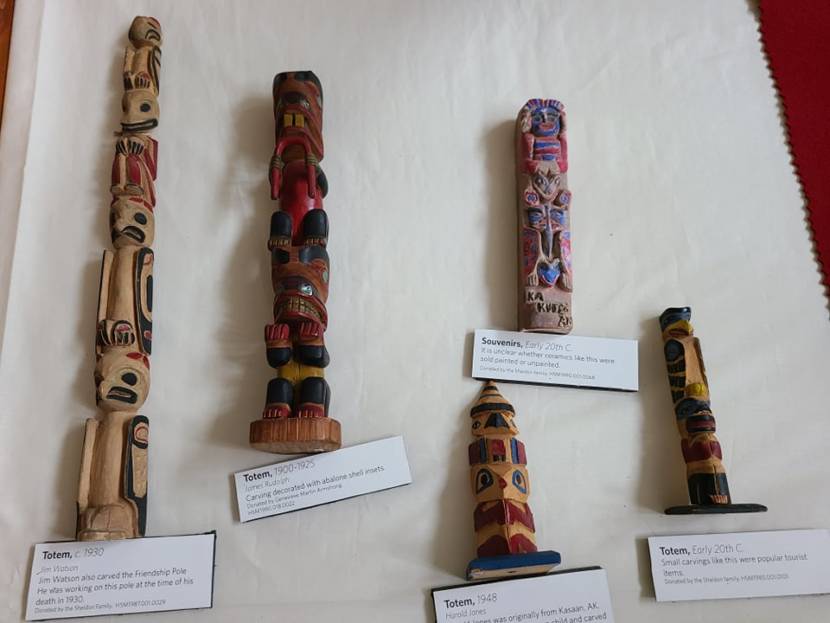
Haines Sheldon Museum to open Lingít miniature exhibit

Miniature totem poles were carved in the early 1900s as popular items for tourists, but some replicated full-size totem poles and are the only record of the original today. (Photo by Corinne Smith/KHNS)

The Haines Sheldon Museum will feature a new exhibit of Lingít miniatures. It will showcase not only the artistic works but also stories of Lingít people forced to adapt to the rapidly changing times of the late 19th and 20th centuries.

The Lingít miniatures come from the museum’s 23,000 item collection. It includes small-scale items like totem poles, canoes and dolls, which were popular as children’s toys. Items were both artistic and practical, says museum collections coordinator Zachary James.

“Small spiritual figures, kind of talisman-like objects, amulets, rings,” James said. “And then halibut hooks too.”

James is Lingít, with ancestry in the Chilkat Valley, Wrangell and Stikine Basin. He pointed out a doll with a stone face and calico dress. With the introduction of Western culture, he says the designs and materials used show how Lingít people took them and adapted them to new art forms.

“After Western contact, and the fur trade, there was a real explosion of art from Southeast Alaska and just Northwest Coast,” he said. “Because increased wealth, more trade, new materials, steel became widely available. And so it was easier to produce more carvings, and new ideas were coming in too. And within the old traditions, they would take these new ideas and make new things.”

With the onset of Russian, European and American traders in Southeast Alaska throughout the 1800s, Lingít people traded and adapted new materials into cultural practices, clothing and art.

“The people were still living totally in a Native economy, you know, Native society, Native principles, Native ideas,” he said. “But they would take what they wanted from the newcomers, the new ideas, new materials, and then make it their own. Same thing with regalia. Beads traditionally, it was porcupine quill beads or shells, but with the new materials, a whole new set of ideas, a whole new set of patterns, a new art form was created, just from, just from the introduction of new materials.”

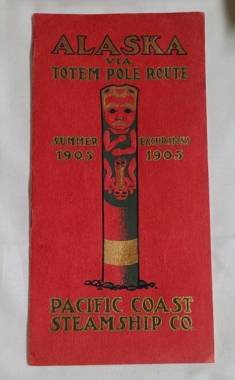
Steamship tourism kicked off in the late 1800s, with mostly wealthy European and American tourists making the long journey to Southeast Alaska. James points to a 1905 pamphlet advertising ‘Alaska via the Totem Pole Route’ where ships visited different villages to see original totem poles.

Booklet published by the Pacific Coast Steamship Company (Photo by Corinne Smith/KHNS)

“Either Native people needed to assimilate to a cash economy or they would disappear. But either way their old traditions wouldn’t survive,” James said. “That was how they promoted it, as ‘see the Native in their natural habitat before they disappear,’ which we know that to be not true now, but it was the thought at the time.”

James says starting in the late 1800s with the Klondike Gold Rush and massive influx of missionaries and settlers, fish traps decimated salmon runs and harmed traditional Native livelihoods. So Lingít artists began producing miniatures for tourists.

“So all of these things were going on. It compromised the traditional economy and the Lingít people here. So a lot of people turn to producing souvenirs for steamship travelers as a way to supplement their income,” James said.

Lingít people, mostly women, would set up on the docks and sell to tourists.

“We have a lot of old photographs from steamship travelers, and it’s almost always women who would be selling their wares,” James said. “And amongst the baskets that the women weave, they would have small totem poles and small carvings that the men made.”

James says Lingít people may have moved into small-scale art for sale as an act of economic survival, but at the same time the style and craft was exquisite. And, miniature totem poles are sometimes the only surviving record of full-sized totem poles in existence today, representing important stories and crests of the 30-foot originals.

“A lot of the model totem poles were based off of real totem poles that existed, that had stories and were owned by someone,” he said. “So sometimes, the model totem pole, based off the real one, the model is the only one that exists today. Because, it’s easy to store, it lasted longer than the original. So that’s the only record of that totem pole existing, is in that miniature version.”

James says the exhibit will showcase stories of the known carvers and provide the public an opportunity to learn more about Lingít people of the early 1900s in a time of cultural oppression and change.

“Understand the time period, and what people were going through at that time. What kind of pressures the culture and the art was under at that time period, what they had to do in order to keep making the art,” he said.

The exhibit on Lingít miniatures opens at the Haines Sheldon Museum on Friday, March 25 and will run for eight weeks until the end of May.

Historian details Alaska’s legacy of racial segregation

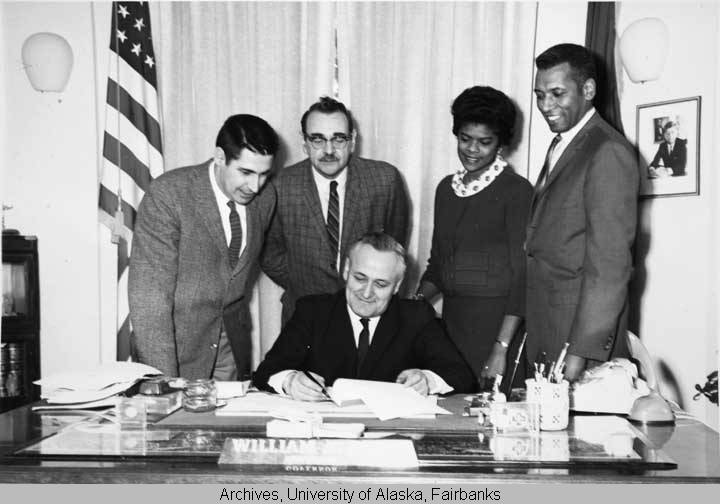
Photograph of Governor Egan signing the Human Rights Act. Identified are left to right Sen. Mike Gravel, Dick Hedberg-AFL-CIO, Maria G. Bowman and Willard Bowman-NAACP. (Photo courtesy of the William A. Egan Papers, Elmer E. Rasmuson Library, University of Alaska Fairbanks, (UAF-1985-120-555)

Photograph of Governor Egan signing the Human Rights Act. Identified are left to right Sen. Mike Gravel, Dick Hedberg-AFL-CIO, Maria G. Bowman and Willard Bowman-NAACP. (Photo courtesy of the William A. Egan Papers, Elmer E. Rasmuson Library, University of Alaska Fairbanks, (UAF-1985-120-555)

Stories of housing discrimination in the 20th century are often set in the lower 48, but Alaska has its own legacy of racial segregation. In his book “Black History in the Last Frontier,” Ian Hartman outlines how racial segregation looked in Alaska compared to the rest of the country.

For example, housing covenants in Anchorage and Juneau prohibited the sale of houses to anyone who wasn’t white. In some instances, they were specifically written to exclude Black Alaskans and Alaska Native buyers. And in some areas, those historical boundaries impact the ways that neighborhoods look today.

“In Juneau, again, with with the largest minority population being Alaska Natives, you’d probably find very explicit references forbidding the sale of a home to anyone who was not of quote ‘Caucasian extraction’ or whites only are able to sell or whatever the case would be. And then there would be these exclusionary clauses that would encapsulate the various minority populations,” he said.

Black History in the Last Frontier
Book cover of “Black History in the Last Frontier” by University of Alaska Anchorage history professor Ian Hartman.

Hartman is a history professor at the University of Alaska Anchorage. He said it took him some practice to know what to look for while he was looking through historical documents because the racial language was often extremely outdated.

“You have to kind of train your eyes to read these documents, but entire neighborhoods in Anchorage really bear the imprint of racially exclusive buying,” he said.

In 1948, the Supreme Court ruled that racial covenants like these were unconstitutional. That opened the door for Black families to move in. Hartman’s book details that in Anchorage, white supremacists burned down the homes of those pioneering Black families. Those fires, and the pushback from Black activists, led to the NAACP opening its first branch in Alaska in 1951.

In November of 1969, Ebony magazine printed an article saying Alaska’s prospects were open to Black Americans who were willing to work hard. However, the magazine also acknowledged that Black men were excluded from the fishing industry in Ketchikan, and Black Americans and Alaska Natives talked about encountering housing segregation in Juneau, Anchorage and Fairbanks.

Hartman’s book also details instances where Black Alaskans faced further discrimination and racial hostility in the 1970s and 80s as more and more white people moved to Alaska from the South and brought white supremacist views with them.

“I think that there’s a belief among Alaskans, right? The famous line, we don’t, we don’t care how they do it Outside, or, you know, we’re going to do it our own way. And that can have quite a costly impact on communities of color who may be steamrolled by the process — particularly again, in the Cold War era when Alaska really boomed in terms of its population. Then, of course, again, with the with the establishment of the trans-Alaska pipeline in the oil boom in the 70s,” he said.

But the 70s were also the time when Alaskans elected their first Black politicians.

The first Black state representative pushed for a committee to develop a survey on discrimination in Alaska — the group focused on Southcentral Alaska. Hartman details that final report, which showed high levels of housing segregation. It concluded that white residents had deliberately locked minorities out of the housing market and pushed them onto the least desirable land.

Hartman says he wrote the book after years of reading the same stories of the history of Alaska, which left out whole communities of people. And he says that while there’s a historical era of racial tension that has to be confronted, it’s also important to be realistic about the present.

“If you were to look at life expectancy, access to health care, access to quality education, generational transfers of wealth, things like that, I mean, you know, Alaska still does bear the imprint of the historical legacy of, of racism and racial inequality,” he said.

Hartman says he wants people who read his book to see the value in the state’s diversity. He’s expanding on his 2020 book with a new edition set to come out in the fall of 2022 “Black Lives in Alaska: A History of African Americans in the Far Northwest.”

The Pacific cod fishery likely started a decade earlier than previously thought

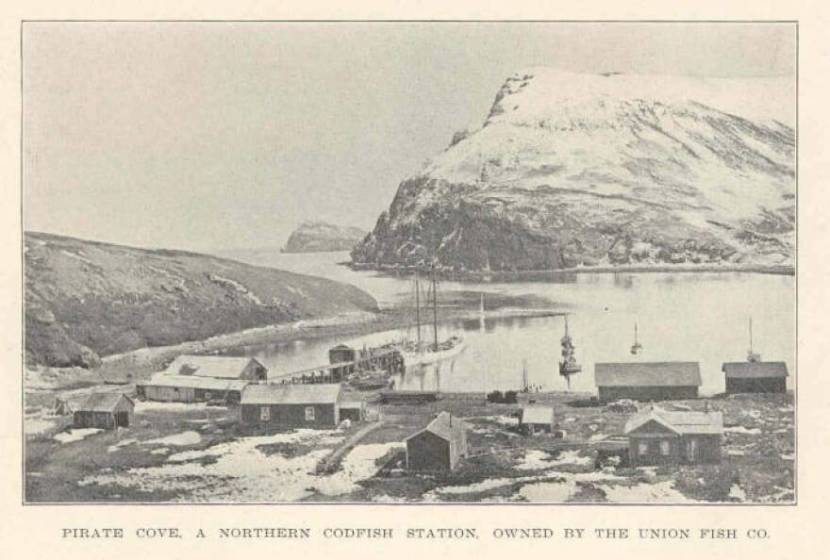
Photo of Popof Island, Alaska taken in 1905. It’s considered to be the state’s first codfish shore station. (University Of Washington Libraries/Freshwater And Marine Image Bank)

The Pacific cod fishery may have started about ten years earlier than originally thought, at least on a small-scale level, according to a recent peer-reviewed study published in the Journal of Anthropological Research.

Currently, Pacific cod landings bring in over $100 million each year, and a majority of that comes from Alaska. But it hasn’t always been that way. For a long time, Atlantic cod is what most Americans ate.

In the mid 1800s, before the Pacific cod commercial fishery was thought to begin, Atlantic cod was sent thousands of miles — from ports like Boston or New York, across the Isthmus of Panama or even around Cape Horn in Chile — all the way to San Francisco, where it helped feed the hordes of people moving to the city during the California Gold Rush of 1849.

During the first year of the gold rush, the population of San Francisco sky-rocketed. People were hungry and rapidly exploiting local food sources, said Cyler Conrad, a co-author of the study.

""
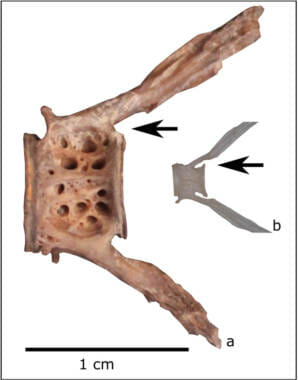
A caudal vertebra from an Atlantic cod found at Thompson’s Cove pictured on the left, and a Pacific cod caudal vertebra from a contemporary comparative collection. (Photo courtesy Of Cyler Conrad)

Newspaper excerpts show massive amounts of Pacific cod being delivered to San Francisco around 1863, when the fishery is considered to officially have taken off. One account from the Daily Alta California in September of that year depicts a delivery of 15 tons of Alaska cod by famed Captain Matthew Turner, considered by many to be a “pioneer” of the Pacific cod commercial fishery. The study suggests that that cargo radically changed the San Francisco Pacific cod market.

But there are also older records that show smaller deliveries of Pacific cod — some dating as far back as 1853, according to Conrad.

An 1857 article in the San Joaquin Republican suggests that Washington state’s cod fishery could pose competition to that of Cape Cod.

“People were aware of those fish populations,” Conrad said. “There were clearly fisher people, likely fishermen, that were traveling to the northwest coast, traveling to Alaska, and they were already fishing cod 10 years prior to the establishment of this large-scale fishery.”

Evidence of a small-scale Pacific cod fishery is important, in part, because it’s likely there’s more Pacific cod bones out there, Conrad said. And now there’s new questions to be asked about how that cod got there and whether it’s from the Atlantic or Pacific ocean.

And it just so happens that one scientist on the team figured out a pretty efficient way to distinguish between Atlantic and Pacific cod, Conrad said.

“He took a detailed look at the caudal vertebrae from each of [the] comparative specimens … and found this sort of notch in this feature that seems to identify Pacific versus Atlantic cod,” Conrad said. “And that all came from the work focused in this study.”

The pieces of cod vertebrae they used were found during a regulatory archeological dig of a building in downtown San Francisco about 10 years ago. It was led by Kale Bruner, another co-author of the study and also a researcher who now spends some of their time working for Unalaska’s Museum of the Aleutians.

Bruner and the team pulled random samples as contractors gutted and renovated the hundred-year-old building, which sat above a former Gold Rush site known as Thompson’s Cove.

It was chock full of historic artifacts,” Bruner said. “The fact that we uncovered like a handful of cod bones in there — I happened to pick up a handful of cod bones — is pretty remarkable.”

It was a long, messy job. Bruner worked underground for roughly two years, reaching about 16 feet below sidewalk level. But, piece by piece, that work paid off: they collected over 65,000 artifacts, from things like a Galapagos tortoise bone to bottles of liquor, to almost 20 cod bones.

“We recognized that this was too important to just pack up and put in a warehouse and go and write a final report that nobody but the state archeologist would ever look at,” Bruner said.

The research team visually identified all 18 cod bones as Atlantic cod. Then they analyzed five bones using ancient DNA. Four of the five were confirmed to be Atlantic cod, but all of them are likely Atlantic cod based on their morphology, Conrad said.

They didn’t find any physical evidence of Pacific cod bones at that site. But their purpose was really to understand Gold Rush-era populations: what they hunted, imported and exploited.

And one major takeaway from this study is that they found a new way to identify between the two cod species, Conrad said.

“Now that we have these techniques available, and we’ve confirmed it in San Francisco, and we can identify these cod fish, I think we need to go back to these other records and try and understand what’s going on,” he said.

And in light of the discovery that the Pacific cod trade is nearly 10 years older than originally thought, that also raises a lot of new questions.

“What does this mean, perhaps for those initial populations, those initial stocks of fish, you know, for the Pacific cod fishery, especially out of Alaska?” Conrad said.

Conrad guesses there’s more Pacific cod bones out there, waiting to be excavated and analyzed, and with them even more questions to be asked.

Stories from Gulf of Alaska fishermen are headed to the Library of Congress

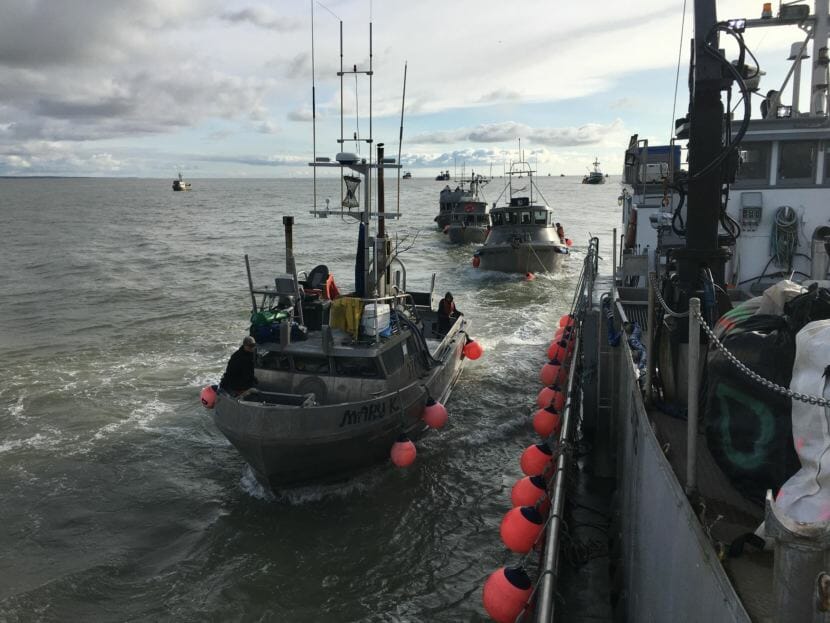
Fishing boats line up at the salmon tender the F/V Muskrat to drop off their catch. (Photo by Mitch Borden/KMXT)

A fisherman from Seldovia is collecting stories from fellow Gulf of Alaska fishermen. The oral history audio project will eventually be sent to the Library of Congress.

It was in the mid 1990s when Josh Wisniewski landed in Kachemak Bay as an 18-year-old. Today, he’s a set netter and still fishes halibut out of Seldovia. That’s also where the inspiration for his current audio project was born.

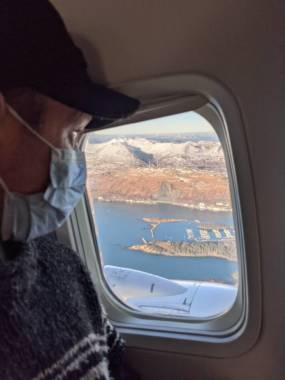
A man in a surgical mask looking out an airplane window at a harbor
Wisniewski visited Kodiak in January for the project and plans to return later this spring. (Photo courtesy of Marissa Wilson)

“When I was a kid and came across the bay here and started, you know, meeting and fishing for Alaskan Native elders who have been here forever – but as well as other people who had been fishing here since before statehood,” he said, “I was just amazed by peoples’ stories for one, but also the depth of peoples’ knowledge.”

The Library of Congress’s American Folklife Center hands out grants annually to document the oral histories of tradespeople across the country. They’re then sent to the Library’s archive. Wisniewski was one of six awarded the grant last year through the Alaska Marine Conservation Council.

This year’s audio contributions include stories from mail carriers in Appalachia and healthcare workers in New York’s Hudson River Valley. Wisniewski’s recordings will be the first stories from Alaska.

“It’s just a really wide range of people that reflect the diversity of the United States,” he said.

He started recording stories last fall and plans to talk to 20 fishermen. He’s been to Homer, Seldovia, the southside of Kachemak Bay and Sitka. He was also in Kodiak last month and will visit again later this spring. He said many of the stories touch on the changes in commercial fishing’s technology over the years.

“I find a common theme of just an intrinsic value people have on the experience of it, whether it’s pivotal experiences on the ocean and opportunities to see yourself and test yourself as you push yourself physically and mentally and emotionally sometimes, in complex situations. And just an overall evaluation of the camaraderie among fishermen,” said Wisniewski.

Wisniewski plans to whittle down his recordings and submit them to the Library of Congress this summer. He said he’ll continue the project after that though, and hopes to release a podcast from the stories.

Sitka’s abandoned Fort Babcock to be cleaned of PCB pollution

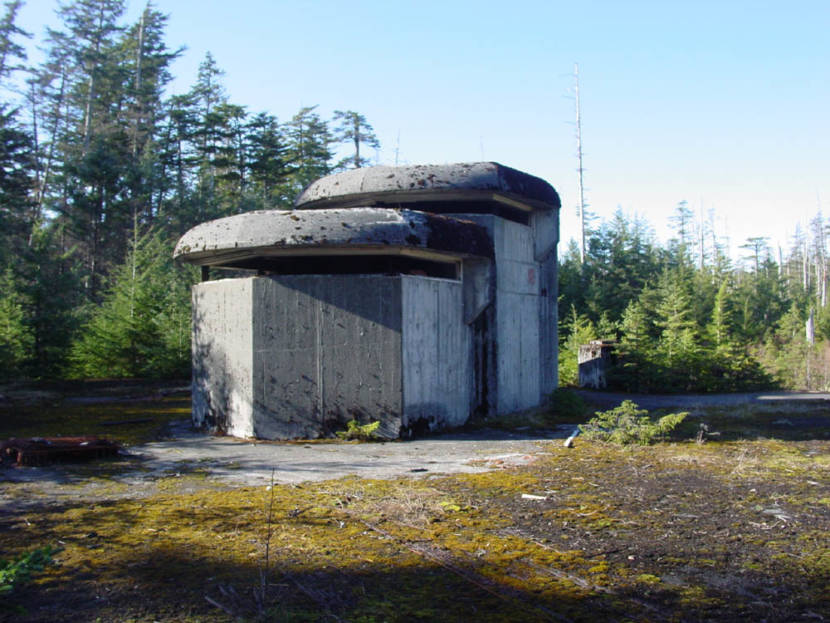
A small, concrete building with horizontal slits instead of windows, surrounded by trees
A 2004 photo of a former observation point on Shoals Point, where defenders would help triangulate the battery’s six-inch guns. Fort Babcock, plus two other gun batteries on Biorka and Makhnati islands, were designed to defend against enemy ships or submarines entering Sitka Sound. (Photo courtesy of Matt Hunter)

Eight decades after the fact, the federal government plans to spend $2.2 million to clean up a contaminated former army site on Kruzof Island near Sitka. It isn’t going to happen overnight — the Army Corps is still designing the effort. Actual work and removal of the PCB-contaminated soils isn’t expected until 2024.

But to understand how and why Fort Babcock came to be requires a 20th Century history lesson on the rise of Imperial Japan as a Pacific power. And few people in Sitka know as much about the area’s military history as high school teacher Matt Hunter.

As an amateur historian, Hunter curates a website on Sitka Harbor’s WWII-era military sites. He says that when Japan invaded its neighbors in the 1930s, the United States realized it had few Pacific defenses outside of Hawaii and the Panama Canal zone.

But Alaska, sort of the third vertex of a strategic triangle, was completely undefended,” he said.

A critical part of Sitka Sound’s defenses

Fort Babcock was designed to be a keystone in the defense of Sitka Harbor, which during World War II hosted a significant military presence to counter the threat from Imperial Japan.

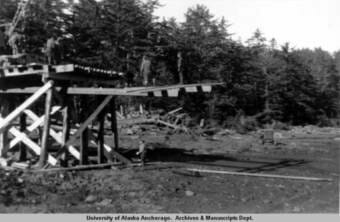
A black and white photo showing two men building a dock
A view of sailors constructing a dock facility at Fort Babcock at Shoals Point on Kruzof Island circa 1941-1943. (Photo courtesy of Alaska State Archives via John Carroll Benton papers, Archives and Special Collections, Consortium Library, University of Alaska Anchorage.)

But today its legacy today is little more than abandoned buildings and contaminated soil near the shores of Sitka Sound.

Naval air stations were established on Kodiak Island, Dutch Harbor and Sitka. Defense of those naval bases fell to the U.S. Army which installed a battery of six-inch guns capable of striking an enemy ship from 12 miles away.

But as the tide of the war shifted, the threat from Imperial Japan receded, and by 1944 the military canceled the defense project.

And then as soon as they finished, they abandoned them and locked the doors and left,” Hunter said.

Today the site is heavily overgrown. But among the ruins there’s still evidence of the efforts of thousands of men.

“There’s even some notes on some of the work benches, and they’re written by the men who are in the construction battalion,” he said.

A nonagenarian veteran returns in 2010

One member of that battalion came back for a visit more than a decade ago.

A faded old photo of a soldier standing in a snowy forest, holding a rifle on his shoulder
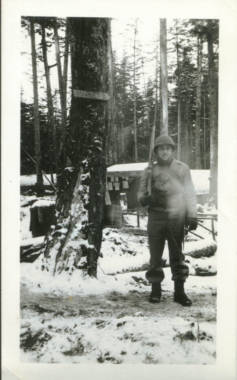
Pvt. Gerald S. Warren on guard duty at Fort Babcock in 1942 or 1943. (Photo courtesy of Matt Hunter via the Ted Gutches collection)

I’m just like MacArthur wading ashore,” 93-year-old Bob Vollmer laughingly told KCAW during a visit to Kruzof Island in 2010. “MacArthur said, ‘I shall return!’”

“I didn’t like that guy, though,” he added.

KCAW’s Ed Ronco shadowed Vollmer and filed a story for the Alaska Public Radio Network about the Indiana man, who’d spent most of 1943 helping build Fort Babcock.

Vollmer passed away earlier this month at the age of 104. But in an interview with KCAW some 11 years back, he expressed surprise by how much nature had taken over what had been a bustling observation post during the war.

I’m real happy to know, like places like this, they are still environmentally sound,” he said as he took in the thick foliage that had reclaimed the former fort site.

But Fort Babcock is not as pristine as it may have appeared to Vollmer in 2010. The U.S. Army Corps of Engineers, which is tasked with cleaning up the hundreds of potentially contaminated former military sites in Alaska, discovered serious contamination several years later.

Beth Astley is the Army Corps’ project manager overseeing cleanup of the site. She says investigators knew about the old oil tanks. But in 2012 and 2013 they dug deeper.

“That’s when we discovered that there was PCB contamination at the former power plant,” she told CoastAlaska in a recent interview.

In a 259-page decision document filed last August, the Army Corps announced plans to remove about 559 cubic yards of PCB-contaminated soil and place them in what Astley calls “super sacks.”

“Which are large sacks that are specially made to hold contaminated soil. And then those bags would then be put on to a barge and then they would be taken to a port and then to the landfill (in the Lower 48),” she said.

PCBs are highly toxic and carcinogenic and can build up in the human body over years.

“They don’t seem to go away very quickly,” Astley said. “They can persist for a really long time.”

Sitka tribal officials assess cleanup plan

Sitka Tribe of Alaska has been pushing for the cleanup of Shoals Point. People hunt, fish and gather traditional foods on Kruzof Island, just a 10-mile skiff ride across the sound from Sitka.

“The Tribe is pleased that … the Army Corps is going forward with cleaning up the site, because it’s long overdue,” said Helen Dangel, a biologist who works as a natural resources specialist for the Sitka tribe.

Dangel says the Army Corps’ priority seems to be the most hazardous waste at the former Fort Babcock site.

But that doesn’t mean that all of the contaminants will be cleaned up,” she said. “In the document, there’s a lot of talk about cleanup levels, and if there’s a complete pathway to humans, through air through, through drinking water, through skin contact, or through eating. And so if they determine that there’s not a complete pathway, then some of the contaminants aren’t getting cleaned up.”

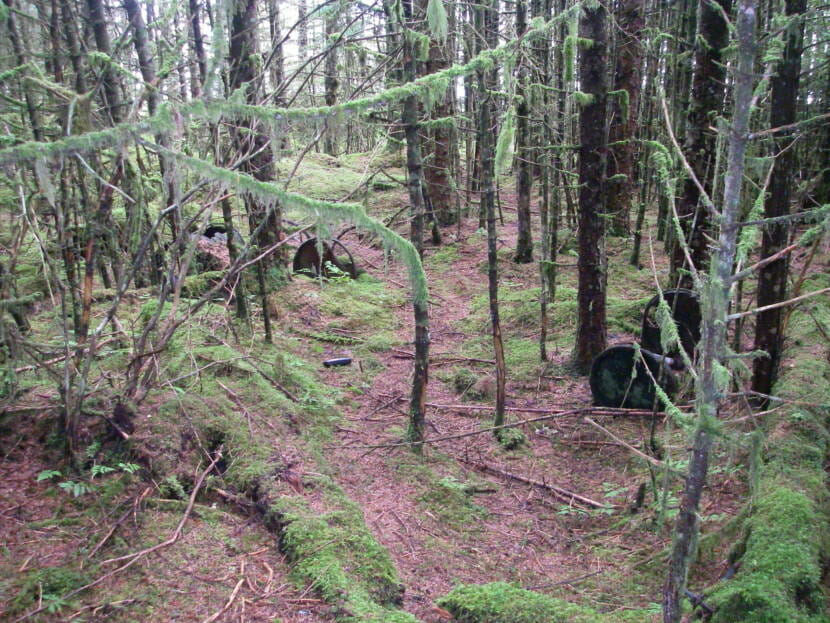
Decayed 50-gallon drums in the Fuel Storage Area on Kruzof Island where Fort Babcock stood before it was abandoned in 1944. Regulators are more concerned about PCBs in the soil around the fort’s former power plant. (Photo courtesy of U.S. Army Corps of Engineers)

The Army Corps says it plans to remediate the area to residential standards and that no additional environmental monitoring would be required.

Matt Hunter, the math and physics teacher at Mt. Edgecumbe High School, says Shoals Point is a fantastic place to visit — especially for anyone interested in Alaska’s early 20th century history when Sitka was a hive of military activity on what’s now an uninhabited island.

It’s not like a park or something that’s had interpretation and doors locked. Everything’s wide open,” Hunter said. “And it’s also a very unique place. Being on this volcanic island with all the surf coming in, and the open ocean is absolutely beautiful.”

Site notifications
Update notification options
Subscribe to notifications