Northwest

Native-owned Nome business makes traditional garments with modern materials

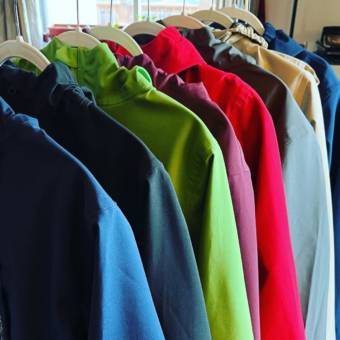
Various Atmiks, Sikus, and Qaspeq jackets made by Naataq Gear in Nome. (Courtesy of Naataq Gear)

Alice Bioff’s designs merge traditional and cultural Alaska Native values with modern materials. She says her approach comes from her background as an Inupiaq woman living in Nome.

“I was surrounded by women who sewed atikluks, qaspeqs. I was around that all my life,” Bioff said.

Naataq Gear — named after one of Bioff’s daughters — makes qaspeqs with a water-resistant hard-shell.

“Traditionally the qaspeq or atikluk is an overshirt that went over garments to protect them,” Bioff said. “Some of them were made out of seal gut to make them waterproof, made with traditional materials.”

Bioff says some of her inspiration came from her foster mother.

“I haven’t told this part of it, but I was also in foster care growing up, and my foster mom was also an avid sewer. That was Agnes Pagel,” Bioff said. “She sells Atikluks here locally.”


View this post on Instagram


A post shared by Naataq Gear LLC (@naataq_gear)

Bioff’s garments include versions of the qaspeq that can be worn by both women and men. There is the Atmik jacket, the Siku jacket and now a brand new product.

“This is the Anugi, which is a wind-breaker,” Bioff says. “We offer it in three colors. It also has the zipper pockets like the Siku and the Atmik jackets.

Despite recent growth, Naataq Gear is still operating out of Bioff’s home, located in one of the more remote cities in Alaska. Bioff was hoping to target visiting tourists for her clientele, but COVID-19 forced her to look elsewhere.

“We were scheduled to go to a few events, fashion shows — Trend Alaska was planned,” Bioff said. “We were invited down to Southeast Alaska for another fashion show. Those were definitely canceled. That put a big dent into our sales, and we had to pivot. We had to focus on online sales and start really pushing marketing that way.”

In large part due to social media sites like Instagram and TikTok, Naataq Gear is now reaching thousands of customers all over Alaska and outside of the state. According to Bioff, around 98% of her sales are generated through social media.


View this post on Instagram


A post shared by Naataq Gear LLC (@naataq_gear)

The internet’s importance to Naataq Gear’s model cannot be overstated. Bioff says businesses that share Alaska Native culture through the merging of traditional products with modern methods — like the Trickster Company in Juneau, Naataq Gear and others — can attract both Native and non-Native people.

“I think that is great. I think it’s opening up a whole new industry for our culture and to show and share who we are here in Northwest Alaska. If done right and done respectfully, I think that is important,” stated Bioff.

But she hopes to get her garments into more physical shops in Alaska, and even scale up production in Nome.

“Having our products offered in, I hope, ANICA stores or AC stores, maybe even the cruise ships if that works out. And there was also a hope to bring manufacturing back here [to the region.] There was some discussion about that. You know, learning this whole industry and what it takes to produce something on a larger scale,” Bioff said.

Marine debris is washing up again on Bering Strait shores

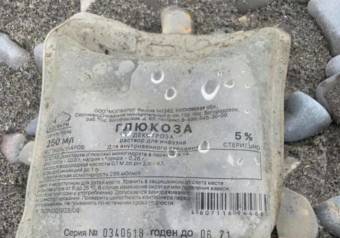
An IV bag with Russian labelling lying on a beach
A Russian IV drip bag found washed up on the beach in Shishmaref in September, 2021. (Courtesy of Tim Nayokpuk)

For the second year in a row, Bering Strait residents are finding foreign debris on their shores — and they’re still looking for the source.

The first reported piece of trash, one of numerous plastics with Russian and Korean writing, appeared in mid-August.

Last year, community members found well over 300 pieces of trash. This year, only 17 have been reported so far. Even this seemingly small amount is a serious cause for concern, according to Austin Ahmasuk, Kawerak’s marine advocate.

“Well, this year, again, it’s just the tip of the iceberg. So we don’t know, again, none of us are being funded to do this. So we don’t know how extensive this year’s debris event is,” Ahmasuk said.

Ahmasuk and Gay Sheffield with UAF and Alaska Sea Grant received the foreign debris reports. Sheffield said that the condition of the debris is a cause for concern.

“It’s very pristine, it’s not weathered. The 17 or so items that have come in look like they just came right off the shelf … The little flimsy plastic thing is still there. The pictures are still on, clear as can be, not even faded, not even scratched. They’re just pristine containers for the most part,” Sheffield said.

That “off-the-shelf” look implies that these pieces of trash were dumped recently and close to the shore.
Among the food and fishing debris, Sheffield said someone found the first instance of medical waste.

“And then the most unusual, which we have not seen before, was a pristine IV drip bag,” Sheffield said. “And it had Russian writing that it had a 5% glucose solution. That’s medical waste. That’s a whole other category. And that’s a whole other concern.”

Under the MARPOL Convention, it is illegal for vessels to dump garbage in the sea. Because the trash is being dumped from foreign vessels, it can be difficult to pinpoint exactly where and from whom the trash is coming. Getting in touch with foreign entities requires help from federal agencies.

a shampoo bottle with Russian labeling lying on a piece of driftwood
An empty body wash container found on the beach in Shishmaref in September, 2021. (courtesy of Tim Nayokpuk)

Peter Murphy, an affiliate with NOAA’s Marine Debris Program, said that NOAA has made contact with international entities, and an official report on the debris event will come out this fall.

However, Ahmasuk felt that NOAA’s response was not enough.

“NOAA handled the situation now really hands off. They received reports from us. They undertook an internal review of the information that we supplied,” Ahmasuk said. “But in terms of collaboration, we will call it true collaboration or partnership, there was much to be desired.”

Murphy explained that NOAA recognizes the disappointment and the effort locals have made in responding to the event.

“We certainly understand that people are frustrated,” Murphy said. “Most funding vehicles for marine debris work through grants that have long lead times. And there aren’t dedicated resources like funding or assets, you know, people equipment, boats, that sort of thing to deploy when there’s an influx of debris. And this event really illustrated a lot of those challenges.”

Ahmasuk echoed those challenges, emphasizing that without federal funding and resources, foreign debris could very well continue to collect in western Alaska.

“What we really needed was action from the federal agencies to get funding or resources to reimburse us for time or, in the case of this year, funding should have been in place so that we can pay our people to clean up our beaches. Because no one else is going to clean our beaches except us,” Ahmasuk said.

Ahmasuk praised residents who collected garbage all across the region and reported it to him and Sheffield.

“The better question is, ‘Who responded to this event?’ And that was us, we did it on our own. And again, I’m tremendously thankful for all the people who were just merely going to camp, living our subsistence lifestyle. And coincidentally, we reported our findings, findings that were terrible, illegally dumped trash, which impacted our environment, impacted our lifestyle and of course, impacted our habitat,” Ahmasuk said.

New Inupiaq and Yup’ik glossary is ‘one small step’ toward Indigenization of knowledge

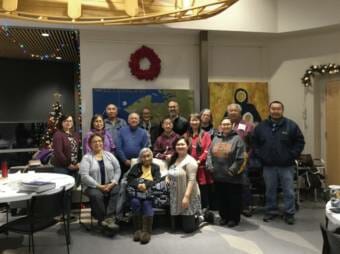
The language experts gather together for a group photograph. (Photo courtesy of Kawerak Social Science Program)

Bering Strait regional nonprofit Kawerak has published a language glossary that provides research, science, policy and resource management terms in English, Inupiaq, St. Lawrence Island Yupik and Yup’ik.

The glossary is part of Kawerak’s “Knowledge Sovereignty and the Indigenization of Knowledge” effort.

It’s “one small step” in the work of the Indigenization of knowledge, said Kawerak Social Science Program Director Julie Raymond-Yakoubian. With a glossary available, she said, researchers can better collaborate with Indigenous knowledge and culture.

“Indigenous knowledge, traditional knowledge, Indigenous languages are often not forefronted,” she said. “So Kawerak staff wanted to take an opportunity that we had to bring language experts together to put down on paper a lot of the terms and phrases that are relevant for the work that Kawerak staff and others are doing.”

Raymond-Yakoubian emphasized the relevance of Indigenous knowledge today and said she wants to ensure Indigenous voices are heard.

“What knowledge sovereignty and the Indigenization of knowledge means is really bringing to the forefront tribal knowledge,” she said. “It’s important, it’s value. And ensuring it is used in all the appropriate contexts where it can be used — which is basically everywhere. And making sure that Indigenous voices are being heard and taking a lead in matters that impact Indigenous people.”

There are many ways to continue the process of the Indigenization of knowledge, said Raymond-Yakoubian. Expanding the glossary to include more dialects and terms is one step. Kawerak is also working on a toolkit to help provide communities with guidance so they can engage more with researchers.

Raymond-Yakoubian thanked the contributors for making the publication of the glossary possible. Especially, she said, she thanks the language experts.

“They are the ones who contributed their time and their knowledge and their language expertise to this work,” she said.

Kawerak hopes its work with the Indigenization of knowledge will be something other organizations partake in and keep in mind when completing other projects.

‘Today is about her, and only her’: Kotzebue man sentenced to 99 years for sex abuse and murder of 10-year-old Ashley Johnson-Barr

Ashley Johnson-Barr’s grave marker in the Kotzebue graveyard, May 2019. (Photo courtesy of Scotty Barr)

An Alaska judge sentenced the man who killed 10-year-old Kotzebue girl Ashley Johnson-Barr in 2018 to a 99-year sentence Tuesday.
The sentence ensures that Peter Vance Wilson will likely spend the rest of his life in prison and ends the criminal legal case in one of the most notorious recent homicides in Alaska.

Wilson kidnapped 10-year-old Ashley Johnson-Barr from a Kotzebue playground on a September evening three years ago, sparking a frantic citywide search in the Northwest Arctic community. The fifth grader’s body was found eight days later. Police said she had been sexually assaulted and strangled to death.

Johnson-Barr’s death attracted national attention and sparked a new level of public conversation about sexual violence in Alaska.

Tuesday’s sentencing was held in Kotzebue, with Utqiagvik judge Nelson Traverso presiding.

In June, Wilson had entered into a plea agreement with prosecutors that called for a total 198-year sentence with 99 years suspended and 99 to serve, according to state attorney Jenna Gruenstein, who prosecuted the case and is now the head of the Office of Special Prosecutions.

The court also found four aggravating factors: that Wilson demonstrated deliberate cruelty, that the victim was vulnerable due to her age, that the murder was among the most serious in the class of offenses and that Wilson had engaged in other sexual offenses with other victims.

Gruenstein wrote that the defendant’s behavior was “among the most vicious and predatory” of cases seen in Alaska courts, she said.

Tuesday’s sentencing was about Ashley, her father, Scotty Barr, said in an interview.

“Today is about her, and only her,” Barr said.

This undated photo provided by Scotty Barr shows his daughter Ashley Johnson-Barr, who was killed in Kotzebue in September 2018. (Courtesy of Scotty Barr via AP)

Family members attended, and Barr brought along a large blown-up photo of Ashley from her funeral, he said. Everybody wore purple, her favorite color.

During his statement to the court, Wilson asked for forgiveness, according to Barr.

Barr’s own statement in court talked about forgiveness, too.

“I said, ‘I’ve asked Jesus Christ and Father God to help me forgive you for what you’ve done to our daughter,’” Barr said.

Barr said he accepted the sentence. It was a tough day, but the criminal case against Wilson coming to an end is a step toward one kind of closure, Barr said.

“I feel a heavy burden off my shoulders, off my heart.”

This story was originally published by the Anchorage Daily News and is republished here with permission.

Dead seabirds are washing ashore in Western Alaska for the fifth straight summer

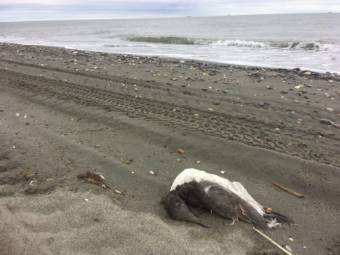
A dead seabird on a Nome beach. (Photo courtesy Gay Sheffield, UAF & Alaska Sea Grant)

Communities all over Western Alaska are finding dead seabirds on their shores for the fifth consecutive summer.

Researchers and federal scientists still have no definitive explanation for the cause.

Gay Sheffield, a wildlife biologist with the University of Alaska Fairbanks and Alaska Sea Grant, collects dead seabird samples each year from communities across the Bering Strait region.

“I would say the scope of this bird die-off is regionwide, and reports have come from Gambell, Savoonga, Koyuk, Shaktoolik, Golovin, the Solomon area, East Beach, West Beach (near Nome), even around Diomede and actually at Shishmaref as well,” said Sheffield.

The numbers total in the hundreds, and that’s only what’s been reported so far.

The National Park Service recently conducted a survey in the Bering Land Bridge Preserve and reported to Sheffield that they found upwards of 100 dead birds every two-and-a-half miles on some stretches of the beach.

According to Kathy Kuletz, seabird section lead for the U.S. Fish & Wildlife Service, the die-off is significant but not as large as the thousands found in Bristol Bay in 2019. Her team is responsible for managing seabirds across Alaska and sending any carcasses onto the appropriate testing labs like the National Wildlife Health Center in Madison, Wisconsin.

And so far in this die-off, Kuletz told KNOM, no infectious diseases or toxins related to harmful algal blooms have been identified in the seabirds’ tissues.

“The last I’ve heard, in most cases, the birds are emaciated, so they’re starved. And so far there’s been no evidence of disease or toxins from harmful algal blooms or anything like saxitoxin,” said Kuletz.

“So if you cross off toxins and you cross off disease, what’s left? And I am left thinking the birds actually cannot find the proper foods,” said Sheffield.

After five years of consistently documenting dead, adult seabirds of multiple species in the Bering Strait region, more and more evidence supports Sheffield’s claim: Seabirds are not eating.

UAF researcher Alexis Will recently released a study that ruled out food shortages as a cause for the 2018 seabird die-off documented on St. Lawrence Island. Since their usual food source — various benthic prey — was available for the birds at the time, Will cited the potential for another unknown factor that was preventing murres, specifically, from catching their prey.

Savoonga residents like Punguk Shoogukwruk have also seen distressed and dying chicks once again this summer. Shoogukwruk has been collecting seabird samples for Will’s research and continues to observe low numbers of nesting birds, similar to what he saw last year.

Meanwhile further south, Will said a major kittiwake die-off is occurring in the Gulf of Alaska but is unrelated to what’s happening in the Bering Strait region this summer.

The unanswered question remains, however: What is causing these seabirds to starve to death?

“The Bering Sea’s ecosystem is in serious, serious trouble, and my fear is that it’s on the verge of collapsing,” said Iyaanga Delbert Pungowiyi.

Pungowiyi, a tribal member of the Native Village of Savoonga, is urging leaders to take action to reduce the effects of climate change in the Arctic. What’s happening to the seabirds cannot be reversed he said, and he wants these die-offs to be taken seriously.

For the U.S. Fish & Wildlife Service’s part, biologist Robb Kaler said its options beyond testing more birds and monitoring the die-offs are limited.

“In terms of what the agency can do about it, is well… remain vigilant, continue asking for community members to share reports and observations and then continue to work with our other colleagues to try to figure out if it’s a food issue?” said Klaer. “Is it food as well as exposure to saxitoxin or a harmful algal bloom event?”

Fish and Wildlife said it does not have plans to conduct a research cruise or do in-person seabird surveys in the Bering Strait region this year.

While more dead birds are studied, and unanswered questions remain, subsistence users across the region are feeling the impacts of the die-off.
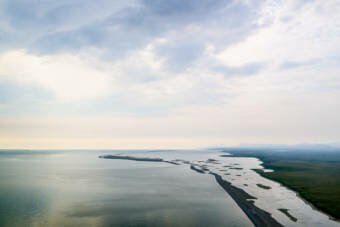
In Savoonga, Pungowiyi said, fewer seabirds are nesting, fewer eggs are available and fewer healthy birds are around to eat, which has significant food security implications.

“Since time immemorial,” he said, “over 90% of our food security has been from the Bering Sea itself with the bowhead whales, walrus, seals, seabirds and ducks.”

One Savoonga elder even sent his dinner of seven auklet chicks to Sheffield, wondering if it was safe for him to eat as he normally would. He also reported observing seabirds eating the wrong type of krill based on his own traditional knowledge of seabirds’ diets and behaviors.

Pungowiyi, Sheffield and many others believe the five straight years of seabird die-offs are connected to an ecosystem-wide shift that’s been occurring in the Bering Sea since the cold pool barrier was removed in 2018.

Bottom temperatures in the Bering Sea (NOAA Fisheries)

Keeping with this trend, scientists with NOAA Fisheries documented extremely warm temperatures in the Northern Bering Sea on Aug. 21. According to data from this summer’s bottom trawl survey, sea bottom temperatures in the Eastern Norton Sound and other waters around Nome reached 8 degrees Celsius, or just over 46 degrees Fahrenheit.

According to climatologist Rick Thoman, these significant temperature changes are a sign of what’s yet to come.

“That is undoubtedly going to be important for commercial fisheries,” he said. “And in the long run, that is going to, I’m sure, impact the kinds of fish species that show up and wind up taking residence in the Northern Bering Sea as well.”

But in terms of what caused these significantly warm sea bottom temperatures, Thoman said, he doesn’t have enough information yet to explain that.

Border with Russia to open for Bering Strait Festival in 2022

The coast of the Seward Peninsula near the community of Wales. (Laura Kraegel/KNOM)

Next year, Alaska’s international border with Russia will open for the Bering Strait Festival.

The seven-day festival is an effort to bring together residents of the high north from both sides of the strait, some of whom are relatives, and to honor their shared culture. It will include a cultural summit, an Indigenous peoples’ forum, traditional sports competitions and then a 43-mile boat crossing from Uelen in Russia’s Chukotsky District to Wales, on Alaska’s Seward Peninsula.

The festival’s head U.S. coordinator in Alaska, Mille Porsild, who is also an Iditarod veteran, says the hope is that the border will open every year for these seven days.

For the first crossing, set for the first week of August 2022, Porsild says people and boats of all kinds are welcome, but there’ll be an important frontrunner.

LISTEN HERE:

The following transcript has been lightly edited for clarity. 

Mille Porsild: The first boat that will go across will be a skin boat. And that skin boat will be built by the hunters (in Chukotka) and supported by hunters from St. Lawrence Island, from Savoonga. And that is a very strong statement to the meaning of the Bering Strait and the crossing of this piece of water. Because the people that first came to North America, they actually came via this route, but before there was water. They walked across the steppe — the Beringia steppe. And then eventually water came and then they started traveling by skin boats. And still today, skin boats are a very important part of life in Chukotka, and it’s also a very important part of their sport. They have skin boat races. We’ll start out this whole historic event by having them go across first — that’s absolutely of tremendous importance. Then, following, will be literally anything or any way that people want to try and cross the Bering Strait. It’ll be open for all.

Casey Grove: I’m curious, as somebody who grew up in the ‘80s and had kind of this vague idea of what the Soviet Union was. How different is this now? I mean to even have the borders opened up for this limited amount of time, it seems so different from the past, of the Cold War.

Mille Porsild: I mean this is a really, really significant event and initiative to do this. I really can’t emphasize that enough. If you had asked me two years ago if this was going to happen or be possible, I would have looked at you with a smile and said, “I wish it was different, but I don’t think that’s going to be happening.” It’s really a result of the Arctic Council and the fact that the Russians now have the chairmanship, and they hold it until 2023. And so there has been this opening and this push that they should really look at: How can this forum —  the council — support the need for collaboration across countries and the opening up of borders? How can it support and facilitate events that really support that? We can’t talk about an opening Arctic and not also look at the need to make sure that it’s open for people to travel and meet.

Casey Grove: In some ways, it’s almost like it’s going to be a family reunion for some of those folks that have relatives just on the other side of the border, right?

Mille Porsild: It is, it absolutely is a family reunion. Traditionally, there were people living on Big Diomede and Little Diomede, and they will be in the path of this 43 miles. Today, there’s a Russian military base on Big Diomede, and there’s a community of Alaskan Siberian Yupik on Little Diomede, and their families will live on the land and along the coastline there in Chukotka, and they will now be able to go back and forth by boat.

Site notifications
Update notification options
Subscribe to notifications