Subsistence

How do you revive an almost ghost town in remote Alaska? Ask the 20 residents of Red Devil who are betting on Donlin mine.

This is a three-part series reported from a village of 20 people on the Upper Kuskokwim River that stands to gain the most from the proposed Donlin mine. Red Devil was built by mining almost 100 years ago, and now carries a toxic legacy of mine pollution. But to its residents, the Donlin Gold mine represents hope. Like so many communities in Alaska, resource extraction is at once a lifeline and a risk.

Red Devil, Alaska, Part III

Rebecca Wilmarth can see the empty school building across her lawn in Red Devil, Alaska. It shut down in 2009, and for a while, willows and alders shrouded it from view. Wildland firefighters recently cut them back to reveal a brown building with blue trim. For a place that’s been abandoned for ten years, it appeared in remarkably good shape.

For Wilmarth, it’s a symbol of what was lost after the Red Devil mercury mine shut down in the 1970s.

“It was like a domino effect of things that made this place so deserted. The school closed. Families had no other option but to relocate or send their kids somewhere else.” Wilmarth said.

Red Devil is a tiny town with about 20 remaining residents. A mercury mine that built the town used to operate 3 miles away. But once it shut down, people started leaving for other jobs. Now Red Devil has no health clinic and no store. It doesn’t have a tribal council or city government. A handful of residents are fighting to get basic services back.

And to do that, they need to revive Red Devil’s city government. Wilmarth is working with Glen Morgan and a few others to make it happen.

“If we get a clinic and you know get road services … (people) can stay and you know have something to look forward to,” Morgan said. His parents are buried in Red Devil, right across the Kuskokwim River where he lives.
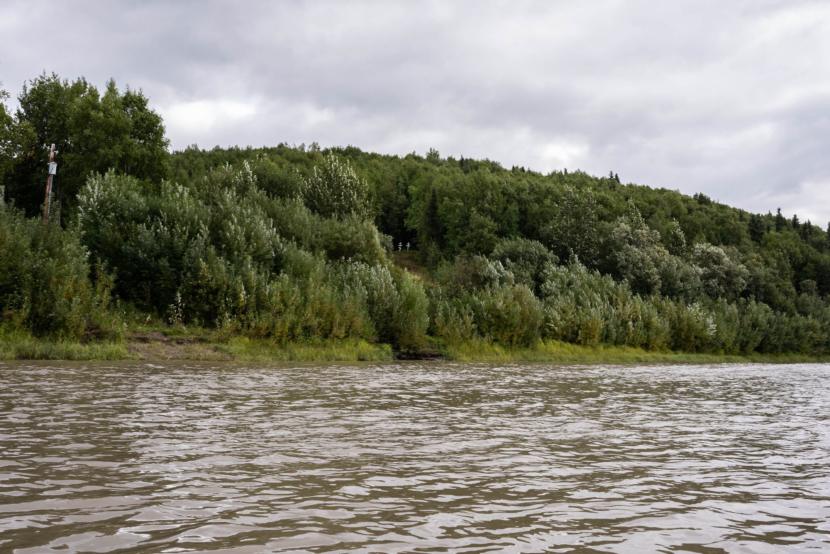
Joe Morgan and Glen Morgan’s parents are buried across the river from Red Devil, Alaska, on land still owned by the family. Aug. 17, 2019. (Photo by Katie Basile/KYUK)

Morgan’s niece, Leann, is 21. She wants to return to Red Devil to work as a health aide.

“If I could build a house here in Red Devil, I’d build it across the river where my grandparents are and where they used to live,” Leann said.

Red Devil has never been recognized as a municipality. But they did have a community association up until  2009 and through that, accessed state funds.

A community association is a nonprofit organization that unincorporated communities, like Red Devil, can form to apply for state funding and enter into contracts. But all that officially dissolved in 2013.

Red Devil residents held a casual community meeting over the summer and elected Glen Morgan as president, his brother Joe Morgan as vice president and Wilmarth as secretary and treasurer of a city council. They aren’t sure what comes next.
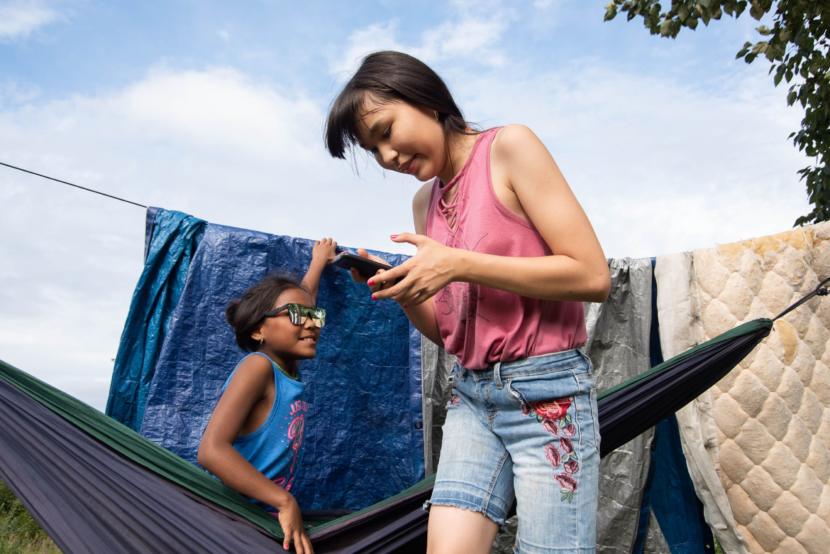
Tamara Stern-Morgan and Desirae Morgan play outside their grandparent’s home in Red Devil, Alaska, on Aug. 16, 2019. The girls spend summers in Red Devil, and Desirae Morgan would like to stay year-round with her grandparents and legal guardians, but the school is closed, forcing her to relocate to Sleetmute every August. (Photo by Katie Basile/KYUK)

They are all pitching in on phone calls, Wilmarth says.  Red Devil is too small to be recognized as a municipality — that requires 25 people for that and Red Devil has less than 20. And there aren’t enough tribal members in town to revive a tribal council. But that hasn’t stopped residents here from dreaming of building a bigger community.

“I think the Donlin Mine is a great possibility for jobs. I hope Donlin goes through; it would enable my family to stay,” Wilmarth said.

Most of the jobs for Red Devil will likely come with the proposed Donlin Gold mine. If completed, the mine would be one of the biggest in the world, just 50 miles down the river. It needs several more state permits, finish its dam safety certification and complete a feasibility study to reduce construction costs. But Donlin has said it expects to bring 800 jobs just for its mining operations.
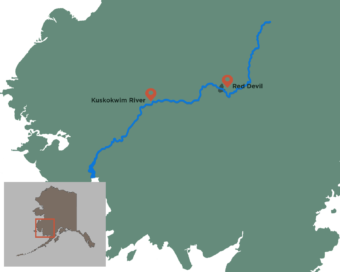
(Image courtesy Hannah Lies/Alaska Public Media)

But it’s unclear when the mine will begin operating. And Red Devil still needs a health clinic and a school.

Rebecca’s older daughter is going to school in Palmer where Rebecca’s mother lives. Rebecca talks to her every morning just before she goes to class.

“It’s hard seeing her, you know, away from me, but it’s good that she’s socializing with more people,” Wilmarth said.

And Rebecca knows she’s got a hard choice coming soon.

“(It’s) going to be a point where I will have to make a decision on homeschooling her again or relocating myself and not looking forward to that,” Wilmarth said.
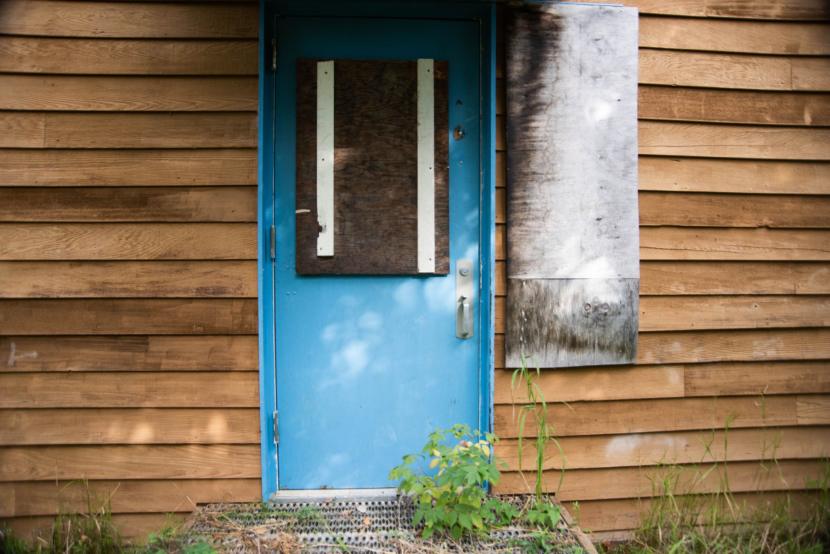
The back door of the school in Red Devil, Alaska, stays boarded up ever since the school closed when enrollment fell below the required quota. (Photo by Katie Baslie/KYUK)

Right now, residents have plans for that empty school building. If they can buy it back from the state or even lease it, they plan to open it up as a community center. It might even hold the health clinic.

Other jobs could come from tourism and fishing.

“There’s not really any too many places I think on earth that you can have you know two airplanes parked in your yard and just have a jump in your plane from your front door and take off or jump in the boat or on a snow machine and just go,” Wilmarth said.

And Red Devil residents hope to hang on to that just a little while longer.

Read and view the other parts of this series here.
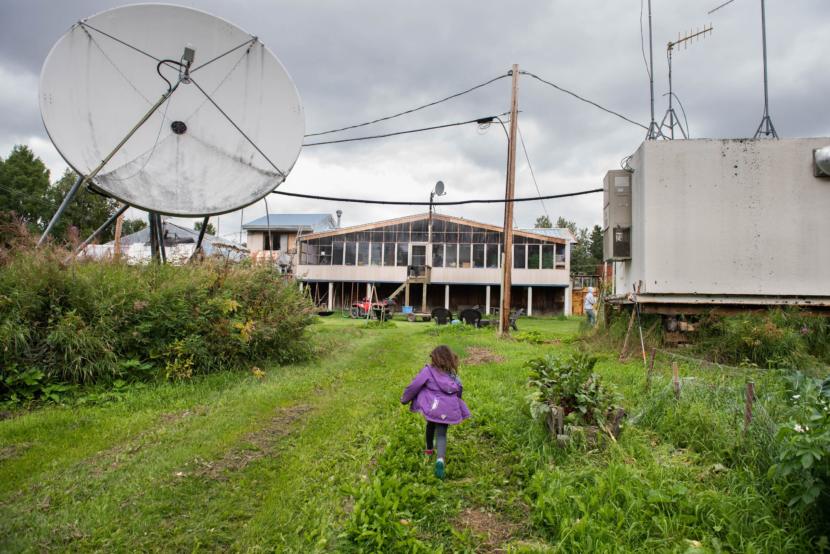
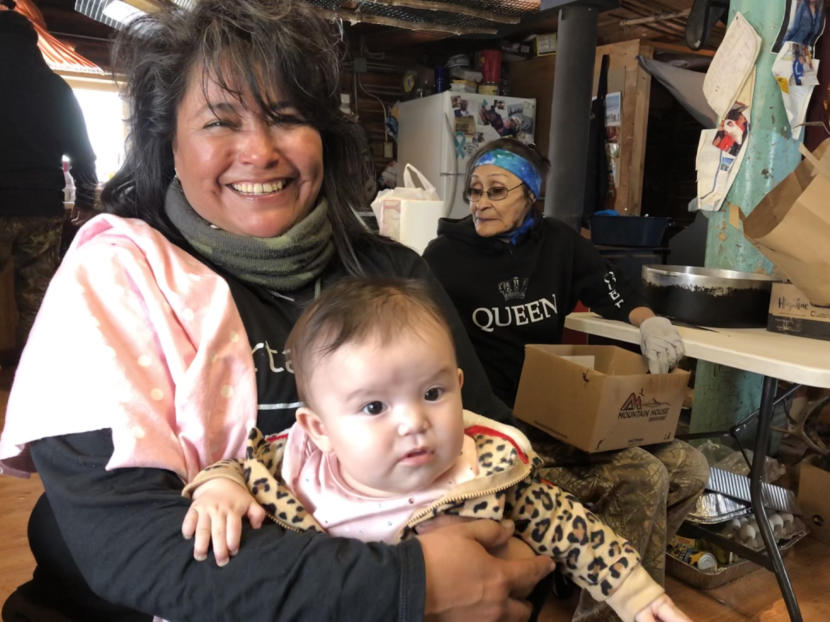
Coryn Nicoli runs through her backyard in Red Devil, Alaska, on Aug. 16, 2019. Nicoli lives with her parents in Red Devil but when she starts school, she will either have to be home-schooled or leave the village since there is not a school in Red Devil. (Photo by Katie Basile/KYUK)

ConocoPhillips’ next big oil project in Alaska takes another step forward

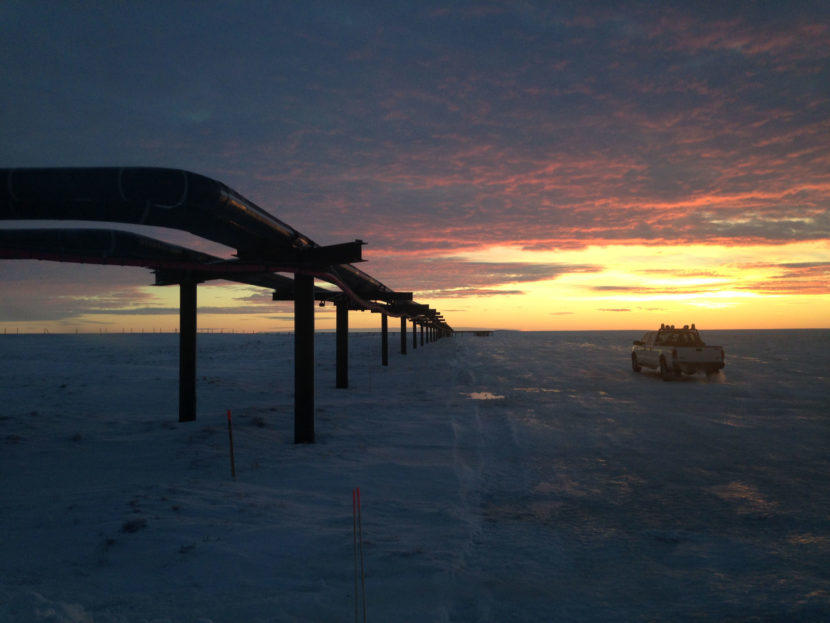
Pipelines stretch toward the horizon in the National Petroleum Reserve-Alaska. (Photo by Elizabeth Harball/Alaska’s Energy Desk)

The federal government today made another move toward advancing a major new North Slope oil project.

The Bureau of Land Management released a draft of its environmental analysis for ConocoPhillips’ Willow project.

The Willow oil development would be located in the federally-managed National Petroleum Reserve-Alaska, west of Prudhoe Bay and the village of Nuiqsut.

It would be a significant addition to the region, where ConocoPhillips already has built a series of other oil developments. The company hopes to construct a new oil processing facility, up to five drill sites, about 40 miles of permanent roads, a gravel mine and hundreds of miles of pipelines and seasonal ice roads.

ConocoPhillips estimates Willow could produce up to 130,000 barrels of oil per day. That would be a notable boost — this year’s average daily throughput down the trans-Alaska pipeline has been just over 500,000 barrels per day.

Natalie Lowman, a spokesperson for ConocoPhillips in Alaska, said the company is “encouraged” by the release of the draft analysis, calling it “a key milestone in the environmental permitting process for the project. ”

BLM anticipates the project would support hundreds of jobs — an estimated 350 direct positions once completed, and well over 1,000 during peak construction — and provide billions in tax dollars to the state, the federal government and the North Slope Borough.

But the draft analysis also concludes Willow “may significantly restrict” use of the land for the village of Nuiqsut, which relies heavily on subsistence hunting and is close to a number of other existing and planned oil developments.

“Nuiqsut’s core subsistence use area has shifted west over time due to the development in Prudhoe Bay,” the BLM’s draft analysis states. “The BLM expects that limitations to subsistence access and the reduced resource availability attributable to development of the Project would result in an extensive interference with Nuiqsut hunter access.”

Additionally, conservation groups are worried about environmental impacts. The Teshekpuk Lake Special Area is northwest of the proposed oil development and is prized habitat for migratory birds and other species. The Trump administration is currently considering opening more land in the area to oil development.

“BLM will be allowing development that is likely to pose a serious threat to critical and irreplaceable habitat,” Karlin Itchoak, Alaska state director for The Wilderness Society in Anchorage, said in a statement.

Itchoak also criticized the length of the public comment period, which ends Oct. 15.

“That is not enough time,” Itchoak said.

In hot water: How warmer years might affect salmon populations

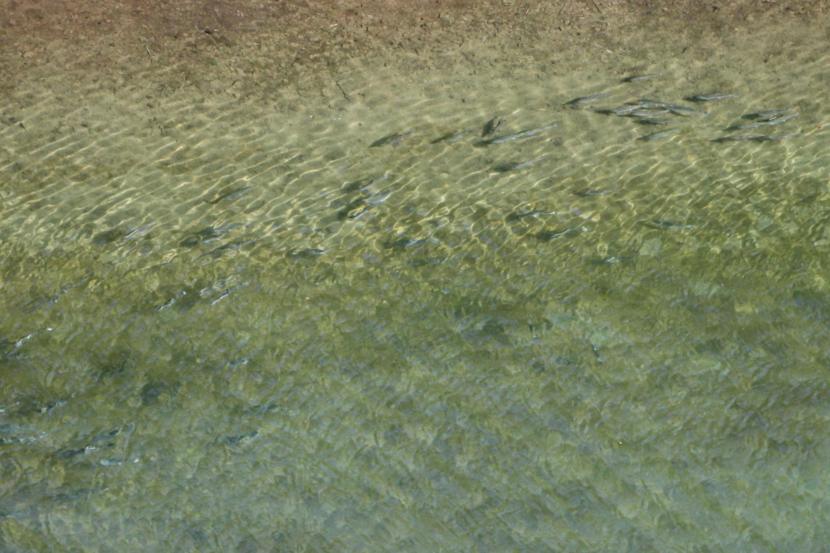
Salmon in the Nushagak District's Wood River in June 2019. (Photo by Isabelle Ross/KDLG)
Salmon in the Nushagak District’s Wood River in June 2019. (Photo by Isabelle Ross/KDLG)

There is a lot of worry and speculation about hot weather affecting sockeye runs on the east side of Bristol Bay this summer. But despite some of the hottest air and water temperatures on record, every district is meeting — or exceeding — expectations, both for escapement and harvest.

As the water temperature trends continue to rise over the years, the question at the fore is how warming water will impact salmon health, and whether it shapes the runs from year to year.

Jerri Bartholomew, Director of the Aquatic Animal Health Laboratory at Oregon State University, set the baseline for a discussion on the long-term effects of heat on salmon.

“When you try and predict what’s going to happen in an ecosystem, things just get complicated,” she said.

Trying to peer into the future of Bristol Bay salmon is a bit of a shot in the dark. Without actual data, it’s a lot of guesswork: trying to find places with ecosystems similar to the bay, then extrapolating conclusions based on what we already know.

Still, there are three pressing questions when it comes to salmon in warmer waters.

The first, basic question, is how temperature affects the fish — in both the short and long term.

“Temperature has a non-linear effect on salmon at all stages of the life cycle,” said Daniel Schindler, a professor in the University of Washington School of Aquatic and Fisheries Sciences and a principal investigator for their Alaska Salmon program.

According to Schindler, warmer temperatures have actually increased survival rates among salmon.

“There’s a very clear observation from the warming trend of the past decades,” he explained. “Juvenile salmon are growing faster in fresh water and spending more time in lakes and oceans.”

Schindler said the record-breaking runs of the past few years are likely due to the fact that warmer water has increased the survival rates of salmon smolt, because warm water increases food supplies for the young salmon.

The second issue is whether parasites in salmon are more widespread in warmer conditions. Studies conducted in the United Kingdom have found that fish parasites can grow up to four times as quickly in warmer waters. Bristol Bay fishermen have talked in recent years about a higher prevalence of parasites in local salmon.

However, Schindler said his studies have not shown that to be the case. One of his students recently looked at parasite infestation data from smolt leaving Bristol Bay rivers in 2010 and compared it to data from the 1950s, and found almost no difference in the number of incidences of parasite infestation.

“The expectation is that warmer waters lead to higher parasite infestation,” he said, “But the data we’ve looked at just don’t suggest that’s the case.”

This isn’t to say that there aren’t parasites around in Bristol Bay, or that there won’t be more as water gets warmer. But Schindler said that at this point, research doesn’t show that steadily warming waters have ballooned the parasite populations. That might be because of some of Bristol Bay’s unique water qualities — runs here are shorter and fish don’t have to swim as far.

Finally, fish diseases can be very temperature dependent. The third question regarding salmon health is whether salmon in Bristol Bay see more diseases as conditions heat up.

“Warmer waters have the potential to increase disease risk,” said Bartholomew of OSU. “If fish are migrating and then congregating, pathogens can be transferred from fish to fish and that can be bad.”

Bartholomew added that an increase in temperature does not equal a disease outbreak.

There are a multitude of factors that affect the spread of fish disease, and each differs based on the watershed and river system.

“In the last 50 to 70 years, The warming trend has translated into an increased abundance of salmon,” Schindler said. “The concern is where you tip off the other side, but we haven’t seen that, even in the last few warm years.”

In his estimation, only time will tell what’s too hot for the salmon.

Bartholomew provided an example of a place that might be exemplary of what years of hot, dry weather could do to Bristol Bay salmon. Although Bristol Bay may be different, she says we can draw conclusions from other places that have warmed and seen changes to their salmon populations.

“The emergence of whirling disease in Alberta, Canada, is probably a good demonstration of what we’re looking at,” Bartholomew explained.

“They went through a warm, dry period of a few years, and then saw clinical whirling disease after having never even thought they had it in Canada … You see habitats being permissive to things they haven’t been permissive to before.”

Salmon diseases can be more deadly in changing aquatic environments, but so far that hasn’t been the case in Bristol Bay.

For the time being, scientists seem reticent to say too much about what might happen as things get hotter. They know that when things get too hot for salmon, in the upper 70s Fahrenheit, they start to physiologically break down. But Bristol Bay hasn’t reached that point yet. In the past decades, salmon have come back stronger even in warmer waters.

Just as fisheries around Alaska are still discovering the effects of the unusual warming event of 2014 in the Pacific, also known as “the Blob,” Bristol Bay may not see the effects of this abnormally warm summer for years to come.

It’s up in the air — or rather, down in the water.

In Arctic Village, Gwich’in leaders say the fight to stop drilling in the Arctic Refuge isn’t over

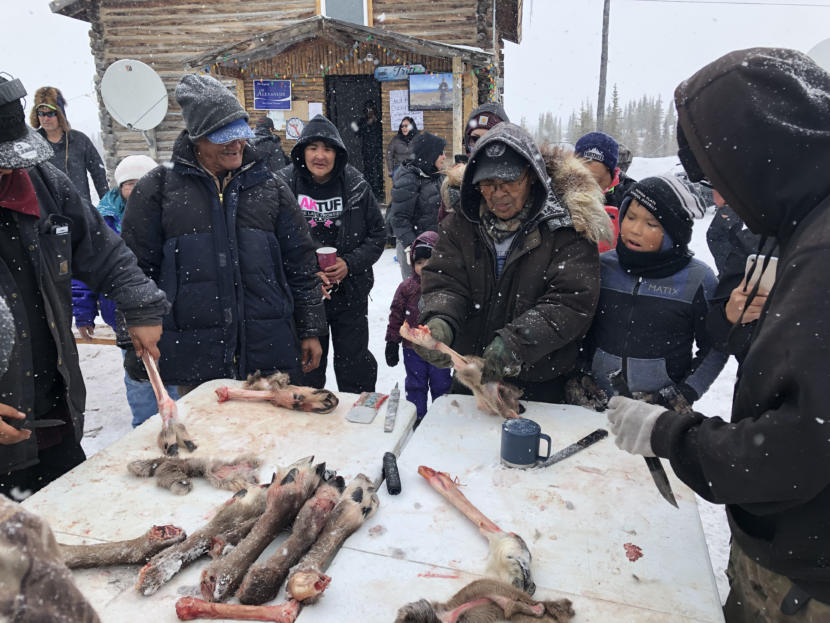
Arctic Village residents and visitors gather for a caribou leg skinning contest during the community’s annual spring carnival in April. (Photo by Elizabeth Harball/Alaska’s Energy Desk)

One thing lies at the heart of Gwich’in tribes’ opposition to oil development in the Arctic National Wildlife Refuge: caribou.

At Arctic Village’s annual spring carnival in April, men gathered around a plastic folding table for a contest to see who could skin a caribou leg the fastest. Their knives worked swiftly from knee to cloven hoof, hands tugging meat, tendon and hide from bone.

Second place went to David Smith Jr., 22. Smith is a leader — the second chief — in Arctic Village. And like most everyone here, Smith believes oil development in the refuge that borders their tribal lands will endanger the caribou his people hunt.

“And that’s going to change our very lifestyle,” Smith said. “The reason we’re here is for the caribou.”

Until recently, the residents of 15 Gwich’in villages scattered across northeast Alaska and northwest Canada were on the winning side of the drawn-out political battle in Washington, D.C., over oil development in the refuge. They helped fight repeated attempts in Congress to legalize drilling in the refuge’s 1.6 million-acre coastal plain.

Then, in late 2017, Congress opened the coastal plain to oil development. So Gwich’in tribes are now taking unprecedented steps to try to protect a resource they call vital to their culture and survival.

Caribou are a primary source of subsistence food in Arctic Village — more than that, they’re part of the tribes’ cultural identity. And today, some 200,000 caribou in the Porcupine herd travel past Arctic Village and other Gwich’in communities every year.

Smith said the caribou they harvest allow Arctic Village residents to continue their traditional way of life, on their traditional land.

“I would say this is like no other place on earth, so we shouldn’t be treated like any other place on earth,” Smith said. “I can drive in any direction and hunt freely. I can drive in any direction and go trapping.”

David Smith Jr. is the second tribal chief of Arctic Village. Smith, who opposes drilling in the refuge, doesn’t think the fight is over: “I believe everything is going to come out on top for us,” he said. (Photo by Elizabeth Harball/Alaska’s Energy Desk)

Smith, like many other Gwich’in leaders, hasn’t given up on the idea of blocking drilling in the refuge. He recalled a story he heard at a recent meeting, about a prediction made by an Elder in years past:

“They said, ‘Later on in the future, there’s going to be a war between the south and the north — the south being the U.S. government, and us being the north. It’s going to be a war of paper, not of weapons.’ And they said, ‘As long as we stick through, the north will always win.’”

Pro-drilling Alaskans often point out that Arctic Village and the area set aside for oil exploration are separated by about 100 miles and a mountain range. The Gwich’in say their link to the place is the caribou, because the Porcupine herd gives birth in same part of the refuge where drilling is now legal.

Scientists say predicting exactly how oil development will affect the caribou herd’s population or migration patterns is tricky. It’s not yet known what future oil development in the refuge may look like, in terms of size, location or design. And in other parts of Alaska’s Arctic, calving caribou were able to shift their movements away from oil infrastructure and still access similar habitats.

But the calving area in the refuge is narrower, hemmed in by a mountain range and the Arctic Ocean, so some biologists worry the impacts will be greater.

In Arctic Village, those fears are more acute. As she bounced a relative’s baby on her lap, village council member Faith Gemmill said when Congress legalized drilling in the refuge in 2017, it shifted the ground beneath the Gwich’in — and galvanized them, too.

“It’s put our tribe in the position of defense. And we have to work hard – harder than we’ve worked before to try to defeat that,” Gemmill said.

This led to an historic shift. For decades, engagement on the issue of oil development in the refuge was led by the Gwich’in Steering Committee, a nonprofit with members from each of the Gwich’in villages in Alaska and Canada.

Faith Gemmill, a member of the Arctic Village council, looks after a relative’s baby during the community’s annual spring carnival. Gemmill says Congress’ vote to legalize drilling in the Arctic Refuge in 2017 “put our tribe in the position of defense.” (Photo by Elizabeth Harball/Alaska’s Energy Desk)

But now that the federal government is advancing the formal process to open the refuge to oil leasing, the Gwich’in people’s tribal governments have asserted their legal right to be directly involved in that process. Those are separate entities from the steering committee — Arctic Village has its own tribal government, for example, as does the village of Venetie.

Each of those tribal governments are now having regular meetings about the oil leasing plans with the Bureau of Land Management and top Trump administration officials.

But Matt Newman, an attorney with the Native American Rights Fund who represents the tribes, said there are limits to their ability to influence Trump administration policy.

“No one has any blinders on, or any illusions,” Newman said. “There’s no secret that they wish to see oil drilling and this environmental review process completed. On the flip side, the tribes are equally open about the fact that they oppose it.”

Additionally, while some Alaska Native corporations stand to benefit financially from drilling in the refuge, the way the Gwich’in see it, they have nothing to gain, and everything to lose. Gwich’in tribes in Alaska refused to participate in the Alaska Native Claims Settlement Act of 1971, in favor of maintaining ownership of 1.8 million acres of their traditional land. It’s a choice they’re still proud of.

Newman put it this way:

“Even if the state or the federal government somehow said, ‘One percent of oil royalties from the refuge will go to an account for Venetie and Arctic Village,’ that money is going to sit untouched until kingdom come,” Newman said. “Because for the people in these villages, this isn’t about money.”

In addition to the government-to-government process, the Gwich’in continue pushing back every other way they can. Gwich’in activists maintain strong alliances with environmental groups, they give interviews to reporters from all over the world and they regularly make their case before Congress in Washington, D.C., as Arctic Village’s first chief, Galen Gilbert, did in March:

“Development in the coastal plain is a direct attack on our Gwich’in culture. Just the idea of development is causing stress and fear in my village,” Gilbert told a House committee.

This stance has drawn ire from many in Alaska.

“I’ll tell you Mr. Chairman, I want to believe the people. Not the Gwich’in, because they’re not the people. They’re 400 miles away,” Republican U.S. Rep. Don Young said at the same hearing.

Young repeated things often said about the Gwich’in. He accused them of protesting against oil development as a way to make a living, and of stealing the national narrative from other Alaska Native people. Young blasted the introduction of a bill to restore protections to the coastal plain, which made no mention of the Iñupiat people who live in the Refuge — many of whom do support drilling.

Such arguments have been going back and forth for decades. But as drilling moves closer to reality, the edges have gotten sharper.

“Think about that when you say, ‘We want to save the culture,’” Young said, addressing the other members of the committee. “Save the culture of the people! Not those that are foreigners or living away from the area. These are not the Natives directly affected.”

This year’s spring carnival in Arctic Village could be the last before oil companies bid on leases in the Refuge. Still, there were many moments of joy. One evening, families gathered at the community hall for a dance.

Gilbert, the first chief, was there with his family, wearing a baseball cap and occasionally making his way to the dance floor — a very different scene than the month before, when he testified before members of congress. In an interview later that night, Gilbert said being part of the Arctic Refuge controversy is part of being a Gwich’in leader.

Galen Gilbert, first chief of the Arctic Village Council, said even if he wasn’t a leader, he would work to fight oil development in the Arctic Refuge. (Photo by Elizabeth Harball/Alaska’s Energy Desk)

But Gilbert added, “Even if I wasn’t chief, if I had the opportunity to fight against it I would do it — totally.”

Gilbert said while he was in Washington, D.C., to testify, it was hard for him to listen to arguments from oil development supporters.

“I hate it when people say, ‘The caribou will be all right, even if they did open it.’ I heard that multiple times,” Gilbert said. “You know, ‘They’ll be OK.’ No!”

Gilbert has three young daughters. He said they’re growing up the way he did, witnessing caribou wandering near their home.

“I wouldn’t want to lose that,” he said. “Never.”

Read and listen to more stories from our series The Future of the Arctic Refuge: Riches or Ruin?

Time for Murkowski to take a stand on Pebble? She says not yet.

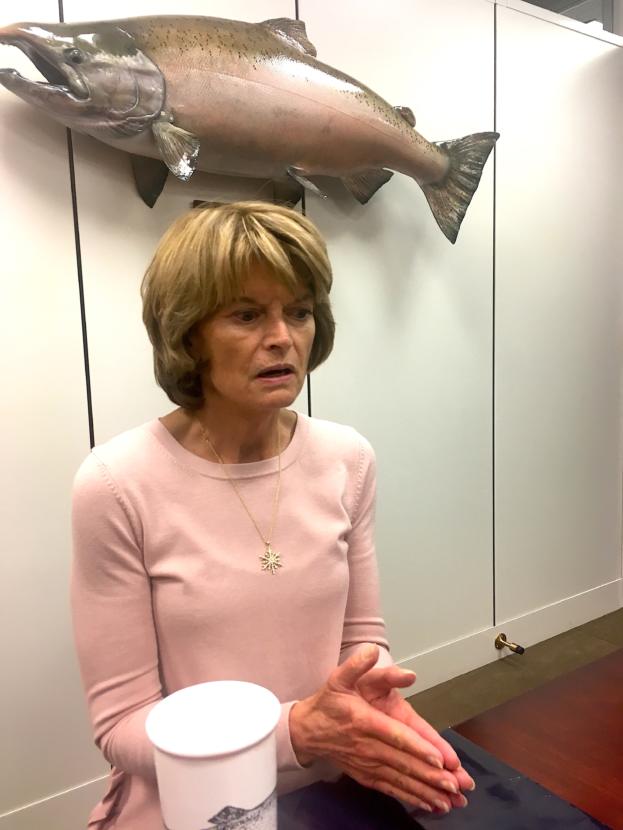
Sen. Lisa Murkowski in her Washington, D.C. office. She caught the salmon mounted on the wall behind her. She calls him Walter. (Photo by Liz Ruskin/Alaska Public Media)

Opponents of the Pebble Mine are doing all they can to get Sen. Lisa Murkowski on their side. But Murkowski is not ready to make a declaration about the mine — for or against.

Publicly, Murkowski, Sen. Dan Sullivan and Congressman Don Young are all on the same page on Pebble: they’re not taking a stand on the mine. They say they want the Corps of Engineers’ environmental review to advance, with decisions based on objective criteria.

But Bristol Bay fishermen and others who oppose the mine see Murkowski as their beacon of hope. Cook Inlet Keeper spokesman Brandon Hill said Pebble opponents are directing their energies at Murkowski because they suspect, deep down, she’s with them. He said they don’t feel that way about Sullivan.

“So instead of wasting a lot of our time hoping that he might change his mind, we just don’t expect he will. And Lisa seems like she’s going to be the person at the top that really helps move this train. If at all,” Hill said. “But we need her to… speak up.”

Pebble opponents are taking every opportunity to make their appeal to her. Last week, Murkowski posted a feel-good message on Facebook about her resolution to recognize this as the international year of the salmon. The post garnered more than a hundred comments, most urging her to support salmon by opposing Pebble.

Hill worries mine opponents could come on too strong and alienate Murkowski. He says he knows that she’s deliberate and carefully weighs important decisions.

“But gosh there just comes a time when being a leader also means recognizing that something’s unjust and changing it and being bold, you know?” Hill said. “And I think that’s what we’re asking Lisa to do, is ‘be bold and stand with us. Like, it’s time.’”

For Murkowski, though, it’s not time. She said she’s advocated for a robust permitting process.

But what about weighing in on the mine?

Murkowski said she wants to read the draft environmental impact statement, the scientific analysis, the criticism of “the science that’s out there, and not out there,” and all the comments.

“And so that is the next step in this evaluation that, as an Alaskan, I think I should be taking,” she said.

And after taking all that into consideration, she’ll weigh in?

“There will be that point where I think that is appropriate,” she said.

Pebble is especially unpopular in coastal fishing towns, but some residents in communities near where the mine would be are in favor of it. They say the region can’t rely solely on salmon and desperately needs another industry.

Fishing regulations on the Kuskokwim: Do they restrict Yup’ik culture, or preserve it?

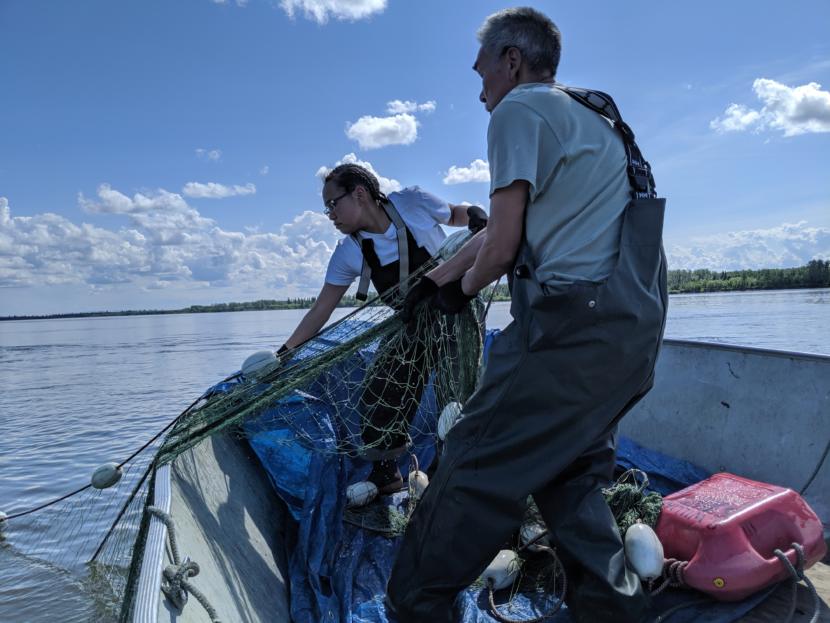
Mayor of Akiak, Bobby Williams, reels in his net with his daughter Margaret. (Photo by Greg Kim, KYUK – Bethel)
Akiak Mayor Bobby Williams reels in his net with his daughter Margaret. (Photo by Greg Kim/KYUK)

The Kuskokwim River has now had three fishing openings for drift gillnets, but many people in Akiak are not happy. KYUK went fishing with the mayor of Akiak to find out more about why people’s nets aren’t as full as they want them.

In between drifts, Akiak Mayor Bobby Williams checked on his set net with his younger daughter Margaret. There were no fish, but there was something else unexpected attached to his net: a warning from the Alaska State Troopers for improperly marking his buoy.

“Could you see my name, Margaret?” Williams asked his daughter. “Look, right there. Could you see it? On the buoys? Dang!”

Williams was upset — and not just about this warning, but about the whole system of regulations governing fishing on the Kuskokwim. And the mayor is not alone.

“It’s not fun,” said Williams’ older daughter, Cynthia Ivan. “You get angry. I get angry.”

“Fishing is who we are,” Ivan said. She is a former tribal police officer who prides herself on her toughness, but her voice broke as she talked. “It’s what makes us Native and makes us unique. And for them to take that away from us, it’s taking away from our culture. They’re taking away who we are. It’s built into our DNA system. This is who we are, and this is who we want to be.”

Back on shore, Ivan walked around people’s fish camps asking if they’re happy with the size of their catch. Many said no.

She found her cousin Kimberly Smith cutting fish, prepping the salmon to be hung and dried.

Kimberly Smith (left) and Katie Phillip (right) cut fish with their kids while talking about the history and future of fishing in their culture. (Photo by Greg Kim/KYUK)

Smith said that the regulations aren’t necessarily making people go hungry, but that’s not the point.

“They tell us to rely on other species of fish, but the king salmon is so much of who we are as Yup’ik people,” Smith said. “It’s them trying to assimilate us to what they think we should be.”

Smith works in youth suicide prevention, and she said that the fishing regulations make her job harder.

“Our young men can’t go out and provide for their families, so they get depressed, and they start, you know, going into addiction, drugs, alcohol, all that,” Smith said.

Smith said Akiak feels isolated from the regulatory process.

“Even though we’re asked about what we want, it falls on deaf ears,” she said.

“I’m listening to them real closely,” said Ray Born, a U.S. Fish and Wildlife Service official who helps decide the fishing regulations on the lower Kuskokwim. “They’re a part of the land. They’re the people from here who should be able to inform me.”

Born manages the Yukon Delta National Wildlife Refuge, and he holds weekly meetings with representatives from villages along the Kuskokwim to talk about the regulations. He said that there are other forums to communicate with him, like their website, Facebook and KYUK’s Friday call-in show, “Talkline.”

But Born said that Akiak is just one of many villages that he needs to be listening to when deciding regulations.

“One person’s voice is important, but it needs to be balanced with the needs of everyone up and down the river.”

Megan Leary, from Aniak, is one of the tribal representatives advising Born every week. She said that she understands the feelings downriver in Akiak.

“You feel like a part of you is taken away when someone tells you you can’t do something you’ve been doing your whole entire life, your parents, your whole family has been doing,” Leary said.

But Leary wants to keep fishing her whole life, and she wants her family to be able to fish.

“I think about my son,” Leary said, “and being able to bring him out and letting him do the same things my parents did with us growing up. We’re having to give up right now so that in the future our kids and people’s grandkids, they can have the same opportunities as us.”

Akiak Elder Lillian Lliaban remembers a time sacrifice paid off: “Twenty years ago, they closed the moose (hunt) down for five years, and people were yapping this and that, ‘We’re gonna starve, blah blah blah.’ And the moose is everywhere now.”

Lliaban used to be against the regulations, but she’s changed her tune.

“We have to think about the future,” Lliaban said.

Site notifications
Update notification options
Subscribe to notifications