Subsistence

In Anaktuvuk Pass, a gardener brings new life to ancient foods with Arctic agriculture

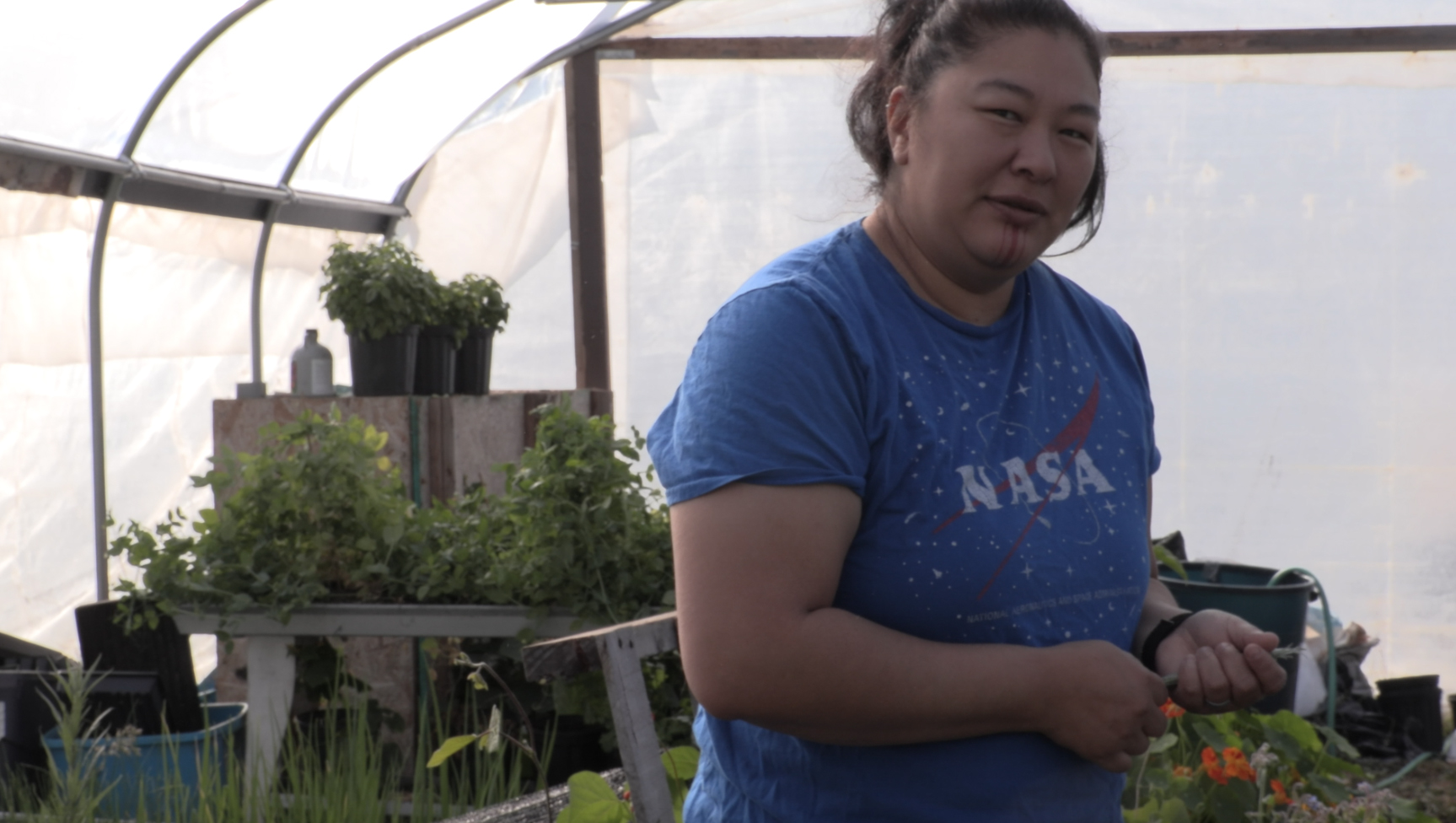
Nasuġraq Rainy Hopson stands in her high tunnel in Anaktuvuk Pass, August 2019. (Photo by Joey Mendolia/Alaska Public Media)

In her small backyard in Anaktuvuk Pass, Nasuġraq Rainey Hopson opens the hatch to a wooden box.

Inside, a flurry of teenage chicks look up in surprise. “They’re like little dinosaurs,” Hopson said with a smile.

Hopson eats the eggs and meat and uses the chicken poop as fertilizer for her garden. She said growing food locally just makes sense in a place where a one-pound cabbage can cost $12. But, it’s not exactly common.

When she started gardening about a decade ago, her neighbors were curious. She was eating beautiful green salads all summer, a rare treat in the remote village where food is either hunted, gathered or flown in, and the meat-eating culture is strong.

“At first it was a lot of confusion,” Hopson said.”Cause it’s not a ‘normal’ Inupiaq Native thing to be gardening, or to be involved in agriculture.”
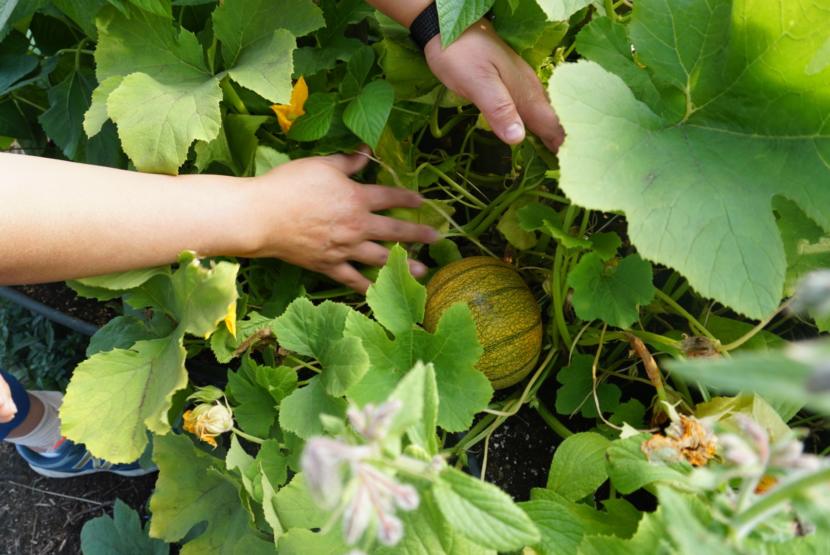
A pumpkin is starting to turn orange inside the Gardens in the Arctic high tunnel in Anaktuvuk Pass. It was a hot summer in the Arctic, and Gardens in the Arctic owner Nasuġraq Rainey Hopson said her heat-loving plants, like melons and squash, excelled. (Photo by Erin McKinstry/Alaska Public Media)

Getting started wasn’t easy. Hopson spent time in Northern California when she was young, working in her grandmother’s garden. But when she applied that knowledge in the Arctic, it failed miserably at first.

“My stubbornness kicked in,” she said, laughing. “And now you’re just making me mad, and I’m gonna make things grow here.”

Hopson spent hours poring over what little information existed about growing in the Arctic, turning to far away places like Siberia and Norway for advice. And she started talking to elders. She was surprised to learn that historically, roots, berries and leaves made up a large percentage of the Inupiat diet.

“One of the original elders here used to bury potatoes along creeks and come back in the fall and dig up and get hundreds of pounds of potatoes,” she said. “I thought that was fascinating.”

Now Hopson has developed her own breed of agriculture that incorporates Alaska Native plants like stinkweed and a high tunnel she installed in 2016 with funding from Petrostar and the Arctic Slope Regional Corporation. Some of her recipes mix traditional and western plants, like pesto made with mashu or Eskimo potato. Hopson sells about 150 pounds of produce a year and gives half of what she grows to elders. The main goal of her project, which she calls Gardens in the Arctic, is to help her community eat healthier food and have a reliable food source.
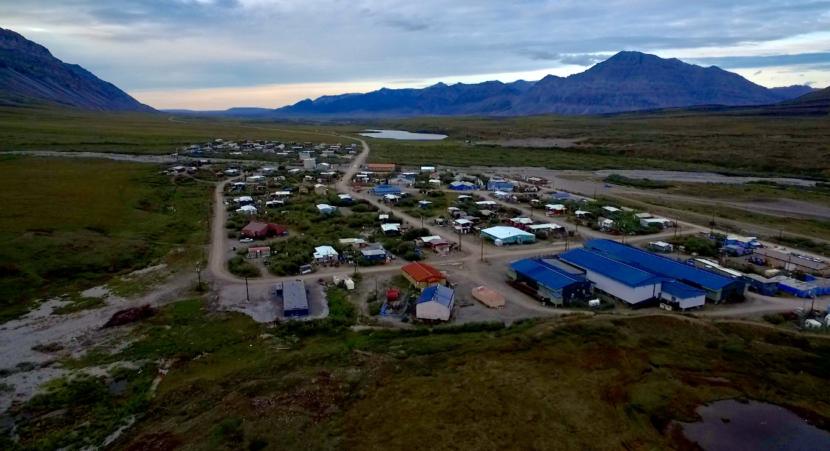
Sunset in Anaktuvuk Pass, August 2019. (Photo by Joey Mendolia/Alaska Public Media)

Communities like Anaktuvuk Pass rely heavily on subsistence food. Community leaders chose the pass as a permanent settlement in the late 1940’s because it’s the site of a massive annual caribou migration, but the patterns of that migration are no longer reliable in part due to climate change.

For Hopson, Gardens in the Arctic is just one more way her people are adapting to survive. Adaptation is a skill they’ve used in the past when they faced colonization, forced family separations, and the pressure to give up a nomadic lifestyle.

“Our talent and our Inupiaq-ness — our Native-ness — is tied to our adaptability,” she said. “Being able to survive and thrive because we are adjustable.”

Her project is giving elders like Louisa Kakianaaq Riley hope. Riley grew up gathering plants but said when her generation was sent to boarding school, much of that knowledge wasn’t passed on.

“What Rainey’s doing is getting us reintroduced to how important it is to have your own produce and how satisfying that is,” Riley said. “It’s all around mentally, spiritually, physically great.”

Inside the brightly-colored Nunamiut School in the village, Hopson is helping lead an agriculture workshop put on by the Fairbanks Soil and Water Conservation District. Participants are learning to plant microgreens. They fill a black plastic tray with potting soil, scatter seeds over the top and gently press the soil down.
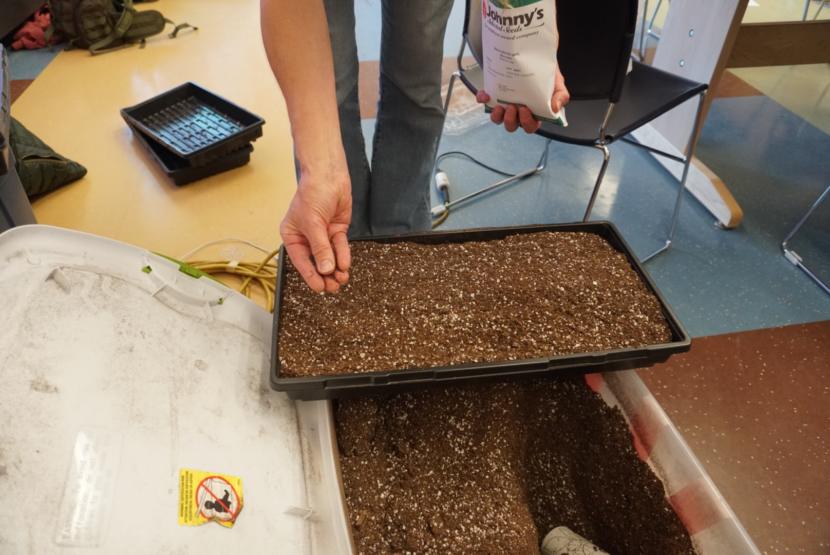
Inside the Nunamiut School in Anaktuvuk Pass, workshop participants plant microgreens at a North Slope agribusiness workshop. The densely planted seeds grow quickly and are harvested young in Aug of 2019 (Photo by Erin McKinstry/Alaska Public Media)

Agribusiness is practically non-existent across the North Slope thanks to harsh growing conditions and little historical precedent. But district coordinator Joni Scharfenberg said environmental, health, and food security concerns are fueling a new interest in local agriculture in the region.

“And in fact, in the last couple years, there’s been agricultural interest all over North Slope — several communities,” Scharfenberg said. “And through our different partnerships we’ve learned that.”

Workshop participant Katie Qaġġun Roseberry hopes to pass this skill on to her students back home in Utqiaġvik. She co-teaches contemporary and Native food preparation at Iḷisaġvik College. She said she wants to teach people to eat healthier.

“I thought this would be a really good…start to learning myself to be able to re-teach to other people, so they can grow their own food for themselves,” she said.

And that’s exactly what Hopson’s hoping for. She teaches workshops, gives advice to other North Slope gardeners, and builds garden kits for families in her community.

“One of my goals is to have more of me. I want there to be 30, like 30 of Rainey weird agriculture people all across the slope so it’s not just me,” she said. “I want it to be normal.”

Until then, she’ll keep experimenting. Hopson’s already planning a second high tunnel.
Yup’ik Elders help revive the nearly-extinct tradition of crafting baby parkas

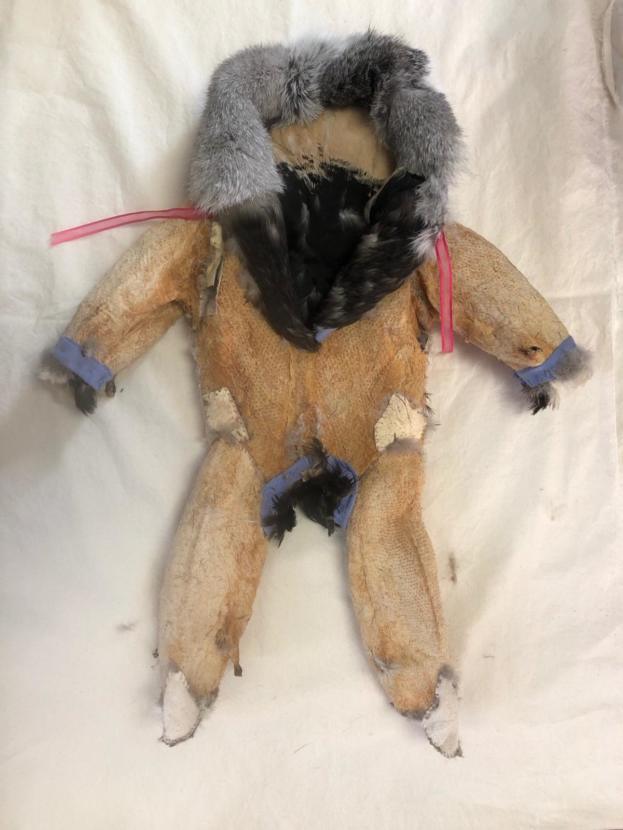
An atasuaq, a traditional Yup’ik baby parka. (Photo by Krysti Shallenberger/KYUK)

Sewing atasuaq, traditional baby parkas, was almost a lost skill.

That is, until a Yup’ik Elder helped revive it. And the result? An atasuaq, sewed with bird skin, from the coastal village of Toksook Bay.

The parka is roughly 2 feet long, just big enough to fit a 9-pound baby. The bird skin facing the outside feels like toughened leather, with the feathers tucked inside and peeking around the collar and hood.

“It’s made out of qengaallek, king eider skins, and four allgiar skins, which are long-tailed ducks,” said Ann Fienup-Riordan, an anthropologist who has documented Yup’ik life in Western Alaska for decades.

This used to be common in Yup’ik communities, where every child started life surrounded by bird skin and cuddled in feathers. There are Elders alive today who were snuggled in bird-skin parkas as infants.

But over generations, the tradition disappeared as cloth diapers and commercial baby clothes became more easily available at local stores.

Making this parka and reviving the almost-extinct tradition took the efforts of many people. It began with the memories of Albertina Dull, an Elder from Nightmute who began her life in a bird-skin parka made by her mother and later used it for her own children.

To make a new one, a hunter in the nearby coastal village of Chefornak sent over some of the skins. The rest came from Toksook Bay.

Fienup-Riordan said that the idea of making the traditional bird-skin parka arose during an education collaboration between Calista Corp. and Yup’ik Elders.

That’s when Dull remembered the baby parkas from her childhood. Dull said that the parka was easy to make. She only speaks Yugtun, but KYUK translated her replies.

“It’s easy to make an atkuuk because we are Yup’ik. Because we are Yup’ik, we never throw away anything that has skin, like birds. Keep them all, then wash them. After washing, when they are all good, we make atkuuks out of them,” Dull said.

There was one problem. At 101 years old, with poor eyesight, Dull couldn‘t sew the baby parka that she saw so clearly in her memories.

“My eyesight is no longer good anymore, but I can instruct,” Dull said.

That’s how Fienup-Riordan and the others started making this parka.

“Since she could describe it, and we’d never seen one, we decided to go ahead and make one. And so last spring, we started to work the skins,” Fienup-Riordan said.

They scraped the fat off the skins and washed them with Dawn soap before hanging the skins to dry. Then, to soften the skins, they rubbed them in a circular motion. Dull told them to do all of this by memory, Fienup-Riorden said.

“For instance, when you are scraping the skins, the way she described it was, ‘You hold the skin and you scrape toward the head, and then move gradually down the body, always toward the head.’ Now, if you picked up a greasy skin you wouldn’t know that, but she knew that,” Fienup-Riordan said.

The next step was sewing. A couple of women in Toksook Bay went to work, following Dull’s instructions. The result is a tiny parka worn by a baby until they start crawling. The tanned skin faces the outside, and the feathers line the inside to keep the infant warm. Blue cloth is stitched around the armholes and the opening in the crotch area. Pink ribbons tie the hood together.

Fienup-Riordan thinks that it may be the first such parka made in Western Alaska in nearly 80 years, but the women in Toksook Bay plan to make more.

“Our joke is that we should have a BYOB party: Bring your own bird!” Fienup-Riordan said.

Dull said that the more the parkas are made, the better they’ll look.

“When we first make something, when we didn’t know how and our moms first taught us how, they’re very ugly at first. Our first tries are very ugly, but they improve. As we learn more, our work improves,” Dull said.

It’s unclear where this, the first bird-skin baby parka in almost a century, will find a home. Fienup-Riordan hopes that home will be in Bethel.

Solutions sought to ease conflicts over Southeast Alaska’s rising sea otter populations

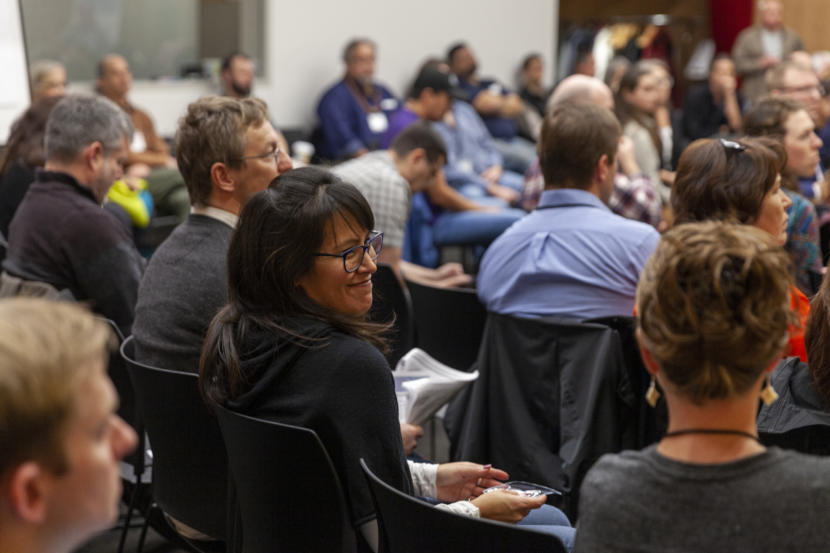
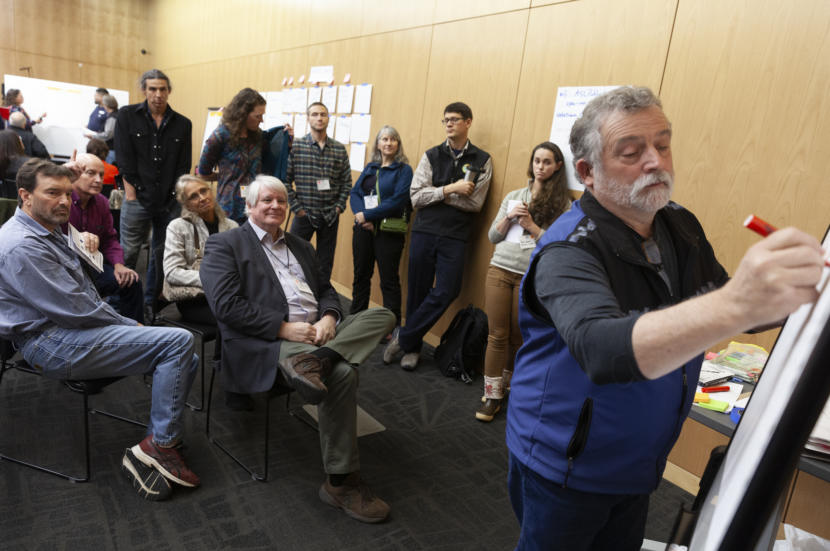
About 100 people from all over the state and Canada attended a Southeast Sea Otter Stakeholder Meeting hosted by the U.S. Fish and Wildlife Service held on Wednesday in Juneau, Alaska.
The idea is to discuss impacts from a population of sea otters that has reached at least 25,000 strong in the region. (Photos by Rashah McChesney/KTOO)

Efforts to ease conflicts over Southeast Alaska’s growing sea otter population are underway. Federal and state officials recently met with scientists, fishermen and tribal groups in Juneau to find solutions.

A hundred years ago, the fur trade wiped out sea otters in Southeast Alaska. They were reintroduced in the 1960s with 412 animals brought from Amchitka Island and Prince William Sound.

Since then, they’ve done really well. The last official estimate in 2012 shows that there are more than 25,000 of them.

But their success has changed their environment as they’re a keystone species.

That means they have a bigger effect than almost any other animal for their size on their ecosystems,” said USGS Western Ecological Research Center Research Biologist Tim Tinker. “Many of those effects are really disruptive to the existing, you know, commercial activities like shell fisheries that have developed.”

Their primary food source includes shellfish. Many of them are commercially harvested species like red sea urchin and geoduck clams. They also eat sea cucumbers.

Collectively these are known as Southeast Alaska’s dive fisheries and last year they brought in about $12.4 million. 

Phil Doherty, executive director of the Southeast Alaska Regional Dive Fisheries Association, said that when you add up all of divers, the deckhands, tenders and processors on the slime line, it’s significant for the winter economy.

I mean, we’re employing you know, five to six hundred people for four or five months,” Doherty told a room of about 100 interested stakeholders in Juneau. “So from an economic point of view, these dive fisheries are important.”

But even if federal and state managers wanted to curb the growing sea otter population, their options are limited. For one, they can’t just open a hunt on sea otters. The otters are covered by the Marine Mammal Protection Act. That means they can only be hunted by coastal Alaska Native people for subsistence or traditional crafts.

Mike Lockabey, of Wrangell, starts a discussion on solutions to sea otter management in Southeast Alaska on Wednesday in Juneau. About 100 people from all over the state and Canada attended a Southeast Sea Otter Stakeholder Meeting hosted by the U.S. Fish and Wildlife Service — the idea is to discuss impacts from a population of sea otters that has reached nearly 26,000 strong in the region.

Alaska Department of Fish and Game’s Fishery Biologist Kyle Hebert said state fisheries managers have a hard job managing commercial stocks depleted by foraging otters.

We feel pressure from industry to elevate harvest rates to try to take advantage of those species before they’re gone,” he said. “We also feel pressure and criticism for not reducing our harvests because of the sea otters.”

After a day-long meeting in Juneau, wildlife and fisheries managers, fishing industry and tribal representatives formed committee to recommend ways to manage the species.

A draft is expected by the end of the year.

But, that’s assuming the federal government isn’t shutdown later this month. U.S. Fish and Wildlife Service’s Chief of Marine Mammals Management in Alaska Patrick Lemons said a looming political impasse in Washington D.C. could set things back.

If we don’t have a government shutdown, we want to have a report available and produced on our website sometime early in the calendar year of 2020,” he told CoastAlaska.

The continuing conflict between fishermen and sea otters is not new. Nor is it limited to Alaska.

Tinker, the researcher who works out of the University of California in Santa Cruz, said it’s happening up and down the Pacific coast.

There’s no simple solution,” Tinker said. “But I think with all the stakeholders working together, you know, people with different interests and different understandings of these ecosystems, I think I think there are solutions, but it’s going to be it’ll be a long road.”

He recently published a paper estimating that Southeast Alaska’s carrying capacity could be three times the present population. That’d be around 75,000 sea otters over the next 30 to 40 years.

A month into Utqiaġvik’s whaling season, none have been landed

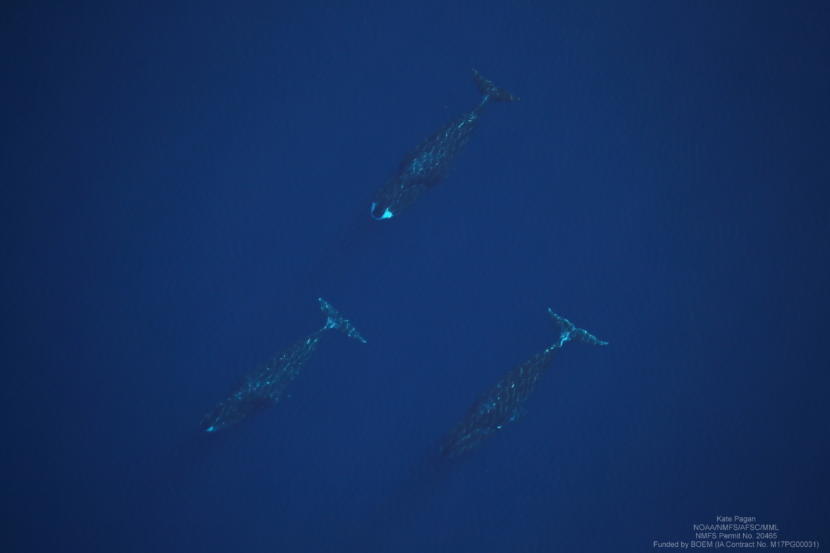
Three bowhead whales swim in the Beaufort Sea in July 2019. (Photo courtesy of Kate Pagan/National Marine Fisheries Service)

Each fall, captains from Alaska’s northernmost community, Utqiaġvik, drive their powerboats 10 to 20 miles offshore to hunt whales. And usually, by this point in the season, successful crews have towed dead bowheads back to town, divided up the meat and shared it with friends and family, who eat it through the winter until the whales return on their spring migration.

But this year, a month into the fall hunt in Utqiaġvik, the bowheads still haven’t shown up.

Whaling crews have not landed a single one, which some residents say is unprecedented for a town that last fall captured nearly 20. And federal scientists say their airborne surveys have shown bowheads much farther offshore than their usual range.

Also unprecedented are this year’s temperatures: It was the warmest May through September on record in Utqiaġvik, and there’s never been less ice offshore in the combined Chukchi and Beaufort seas at this point in the year, according to Rick Thoman, a climatologist with the Alaska Center for Climate Assessment and Policy. And some in the village think the environmental changes are connected to the whales’ behavior.

https://twitter.com/AlaskaWx/status/1185948991776706560

“This is a very important food source to us, and we have nothing to date,” said Eugene Brower, a retired whaling captain with a son who’s been hunting bowheads “constantly,” without success.

“We’re being heavily impacted up this way,” Brower said. “This is the first time we ever encountered a season with no whales being sighted.”

Last fall, Utqiaġvik’s whalers landed 19 bowheads by Oct. 23; this year’s fall harvest opened Sept. 21, and none have been captured since then.

Crews were still on the water Thursday, though, and some experts said there’s still time left in the season.

“It is not unusual for Barrow whalers to be hunting into the month of November,” Arnold Brower, executive director of the Alaska Eskimo Whaling Commission, said in an email, using the old name for the town before it was changed in 2016. He added: “Patience is usually the best strategy.”

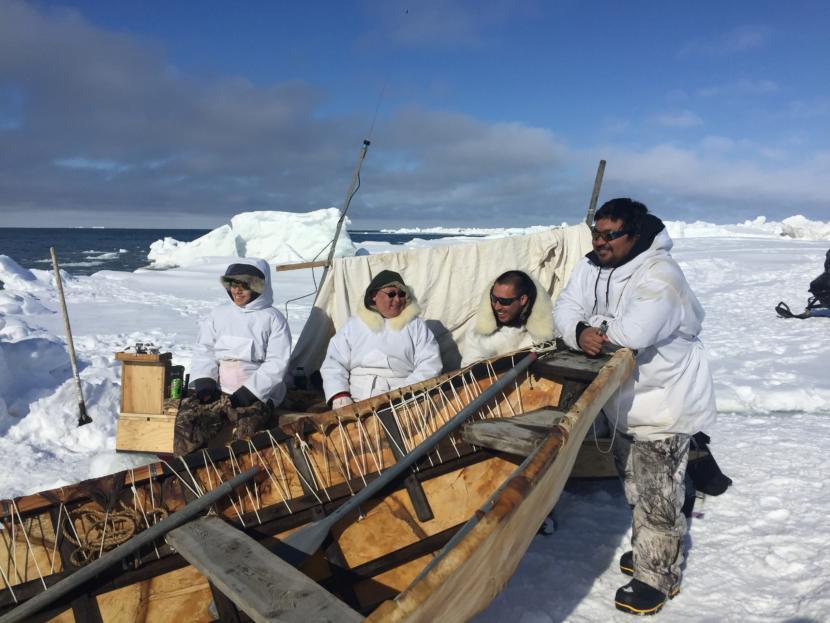
Utqiaġvik whalers stand on the ice during this year’s spring hunt, which still uses many traditional tools, including the sealskin boat, or umiak. (Photo by Ravenna Koenig/Alaska’s Energy Desk)

The bowhead whale hunt is an essential cultural and subsistence tradition for the Iñupiat of Alaska’s North Slope. It dates back at least 1,500 years, and annual harvests can supply families with hundreds of pounds of meat. There are several dozen crews in Utqiaġvik.

Other North Slope villages have had successful hunts this fall, east of Utqiaġvik in Kaktovik and Nuiqsut. But whalers haven’t even been spotting bowheads near Utqiaġvik, said Brower, a former president of the Barrow Whaling Captains Association.

“It is the way of our life, and it’s why we are who we are,” said Deano Olemaun, a top official at the North Slope Borough.

“They spotted some gray whales out there,” he said. “But no bowhead.”

The whalers’ experiences align with those of federal scientists, who flew in small planes this summer and fall doing aerial surveys of the Chukchi and Beaufort seas.

Megan Ferguson, a National Marine Fisheries Service research biologist, spent up to five hours at a time in the air, plotting whale sightings on a chart, as the plane flew in long lines about 20 miles apart, as far as 150 miles offshore.

Near Kaktovik, where whalers were successful, bowheads were observed farther offshore than in typical years. But there were also still “a good number of whales,” close to shore, Ferguson said.

But as the flights started moving west of Kaktovik, toward Utqiaġvik, “everything was shocking,” she said. The whales were far offshore compared to where scientists usually see them.

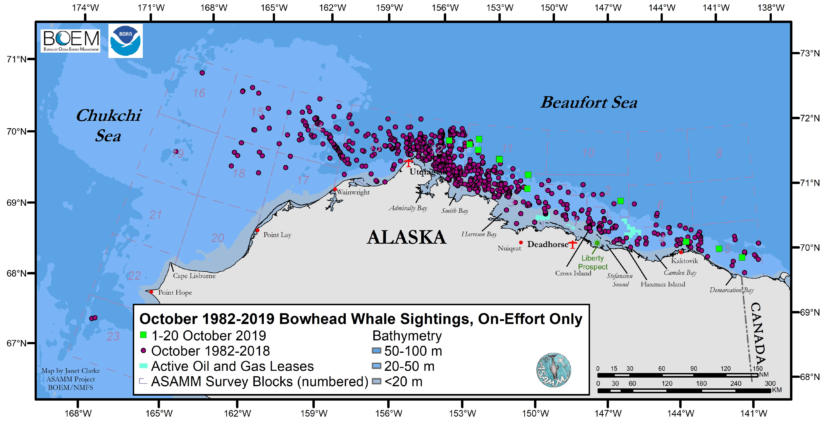
A chart from Ferguson’s research shows how bowhead spottings during surveys this October (the green squares) were farther offshore than most of the other bowhead spottings from October surveys dating back to 1982 (the purple circles). (Graphic courtesy NOAA/BOEM)

“Having the map right in front of me, it was pretty striking,” Ferguson said. She added: “We don’t have anything close to shore.”

The change comes as the region experiences “unprecedented” environmental conditions, said Thoman, the climatologist.

“There’s no doubt that the ocean climate has never been like this, that we know of,” he said.

This year, Utqiaġvik had its longest-ever recorded stretch, 85 days, with temperatures staying above freezing. Water temperatures north of the village are the warmest on record for this time of year, Thoman said.

https://www.facebook.com/NWSFairbanks/posts/566418880853816

But up until this fall, the bowheads’ migration past Utqiaġvik had been relatively steady in spite of the dramatic environmental changes happening in the area, said Craig George, a longtime North Slope Borough wildlife biologist. The spring migration has been trending earlier, but the fall harvest has been relatively stable until this year, he said.

“It’s pretty abrupt,” he said.

Whalers and scientists both said the bowheads’ location might have to do with where they’re finding their food, plankton. Whalers also said the winds have kicked up waves that have made bowheads more difficult to spot.

Another hypothesis is that the water closer to shore is warmer than the whales can tolerate, so they’ve moved farther offshore.

George, the borough biologist, said he’s perplexed and concerned by the change. But he also said it appears that this year was a strong one for bowhead calves, which is generally a good indicator of the species’ overall health.

One thing that’s clear to Brower, the retired whaler, is that unless things turn around, there won’t be a lot of whale meat stored away in Utqiaġvik this winter.

“Whatever muktuk you’ve got, whale meat, that’s going to be scarce,” he said. “It’s going to be a commodity that’s going to be hard to get.”

This old Alaska mining town is almost a ghost town. It has everything to gain from Donlin mine.

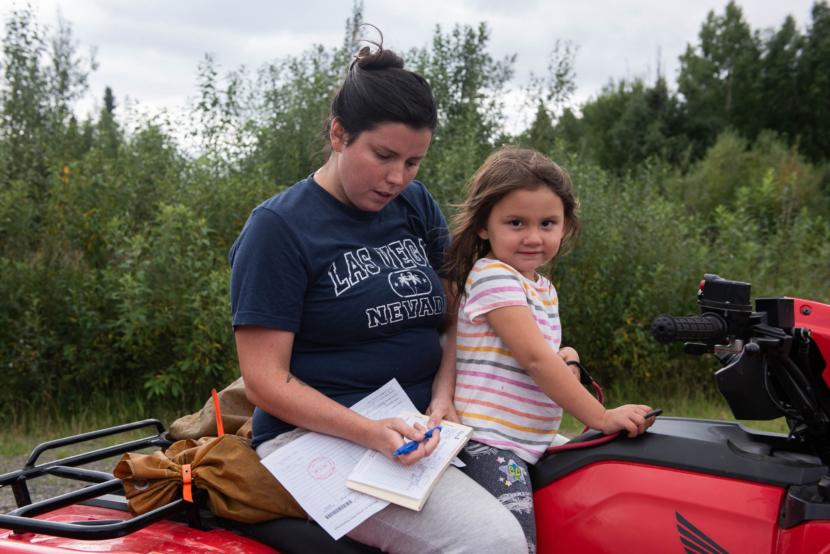
Rebecca Wilmarth and her daughter wait for a plane to arrive on the Red Devil runway on Aug. 17, 2019. Maintaining the runway and working as an agent for local airlines are two of the only jobs in Red Devil and Wilmarth’s family manages both of those contracts. (Photo by Katie Basile/KYUK)

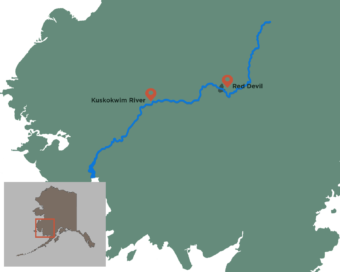
This is a three-part series reported from a village of 20 people on the Upper Kuskokwim River that stands to gain the most from the proposed Donlin mine. Red Devil was built by mining almost 100 years ago, and now carries a toxic legacy of mine pollution. But to its residents, the Donlin Gold mine represents hope. Like so many communities in Alaska, resource extraction is at once a lifeline and a risk.

Red Devil, Alaska, Part I

Outside Rebecca Wilmarth’s kitchen window, there’s a big green well-manicured lawn. It’s an unusual sight in one of the most remote places in Alaska. Wilmarth says there’s a history of big gardens and meticulously-kept lawns in Red Devil. The gardens grow some of the only fresh produce residents will eat and then save the rest for the winter.

“You know that sounds kind of cliche but we really do, you know, think about that,” Wilmarth said.

While talking, Rebecca’s phone pings occasionally with emails. She has to string together multiple part-time jobs to make a living here. She’s the agent for Ravn, maintains the airstrip, sells fuel and occasionally puts up travelers in a small, one-room cabin next to her house.

Rebecca also sends her seven-year-old daughter to Palmer for school because Red Devil doesn’t have one.

Red Devil used to be home to Alaska’s biggest mercury mine. Before the mine started in 1933, there was no permanent village. At its height, after the mine came, the village had a bar called the Mercury Inn, a school, a clinic and a store. Miners came from nearby communities. But it shut down in 1971 and people slowly left to find other jobs. Now, there isn’t much here. The population? Roughly 20.

So we’re just kind of in this stagnant position and the people who are here just don’t want to turn their back on this lifestyle and make a lot of sacrifices to stay here. Because they think it feel like it still beats city life,” Wilmarth said. “I love everything about it. Just the isolation, I guess, from the rest of the busyness of the rest of society,”

But, Wilmarth and other residents think the proposed Donlin Gold mine could help revive Red Devil. The mine would be built just 50 miles down the Kuskokwim River. It would employ 800 people.

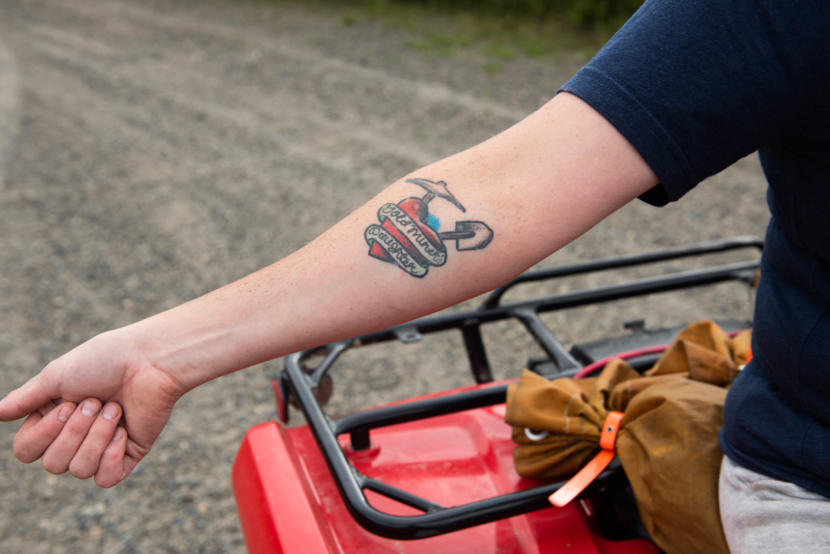
Rebecca Wilmarth’s father is Dick Wilmarth, the very first Iditarod champion. He also loved Red Devil and passed that on to his daughter. “Gold miner’s daughter” is tattooed on Rebecca Wilmarth’s right arm.

Rebecca Wilmarth’s tattoo reads ‘Goldminer’s Daughter’ and honors her late father Richard Wilmarth, a gold miner and the champion of the first Iditarod Trail Sled Dog Race. Wilmarth supports opening the proposed Donlin Gold mine which could create local jobs and revitalize the community of Red Devil. Aug. 17, 2019. (Photo by Katie Basile/KYUK)

The proposed mine requires a lot of infrastructure: a port, an airstrip, a power plant, a proposed 315-mile pipeline to bring gas for the power plant from Cook Inlet, a road and fiber optic cable. Donlin says it expects to mine 1.3 million ounces of gold over a 27-year period. And that period could be even longer. As part of its lease agreement with the two Native corporations, which own the land and surface rights, Donlin promised to prioritize hiring local shareholders, like people who live in Red Devil.

The Donlin mine could be one of the biggest gold mines in the world. And the project is well on its way. Last year, it secured two vital federal permits and a handful of state permits. This year, it expects to receive several more. It’s also completing its safety certification for the seven dams it plans to build. That can take up to two years. It’s unclear when they will actually start mining.

“I think that’s what this area needs right now is the development of some kind,” Wilmarth said.

Joe Morgan in Red Devil, where he grew up and his dad worked in the nearby cinnabar mine, Aug. 17, 2019. The population and infrastructure of Red Devil fell after the mine closed in 1971, and now Morgan and fellow community members are working to revitalize the community. (Photo by Katie Basile/KYUK)

Glen Morgan and his brother Joe were raised in Red Devil but left with his family once the mine closed. Glen lived in Anchorage since 1997 but returned in 2015 with his wife, Theresa, after they  retired. Glen’s parents are buried there. Glen wants to bring back basic services, like a health clinic for the people that still live there.

(Image courtesy Hannah Lies/Alaska Public Media)

They would love the community to grow to a population of 200 — the same size it was when the Red Devil mine was in full swing just three miles away.

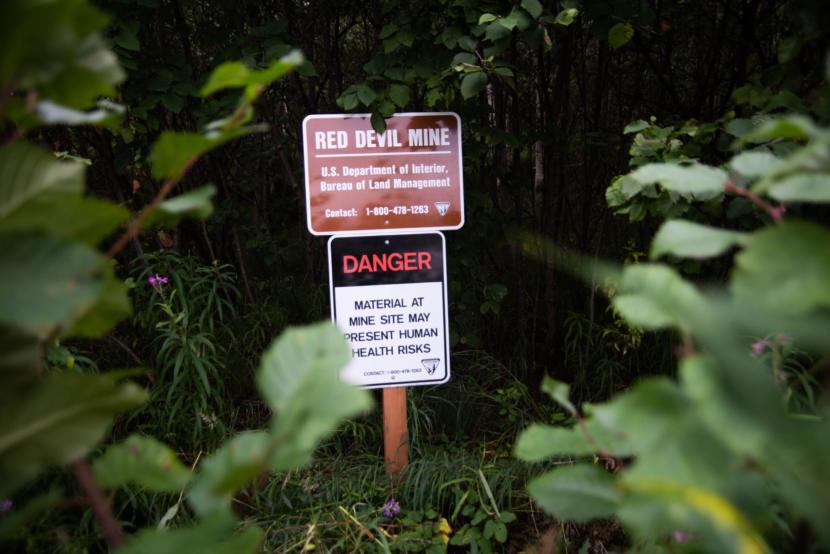
The old mine is now covered in trees and brush with a trail leading back toward where the buildings once stood. At the beginning of the trail leading to the mine site is a sign overgrown with fireweed. On a recent day, Joe Morgan hacked those out of the way.

The sign read: “Red Devil Mine, U.S. Department of Interior Bureau of Land Management. DANGER. Material at mine site may present human health risks.”

The Red Devil Mine left behind more than just the memory of good jobs. Developed before there were environmental safeguards, it also left behind pollution. The federal government has been working on a clean-up there for years.

In part two of our series, we’ll look at how Red Devil residents weigh the risks of that mercury pollution, and possible pollution from the mine, against he promise of jobs.

For people who live in remote Red Devil, an old mine’s toxic legacy is not enough to doubt Donlin’s promise

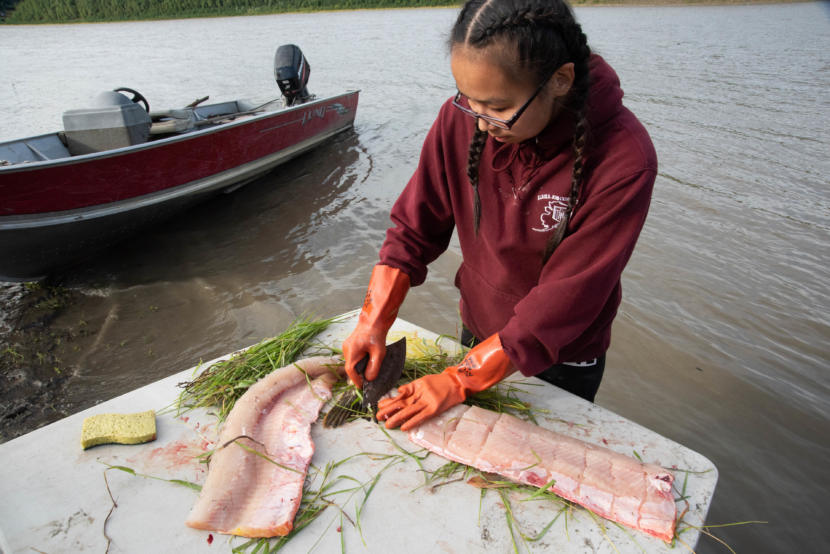
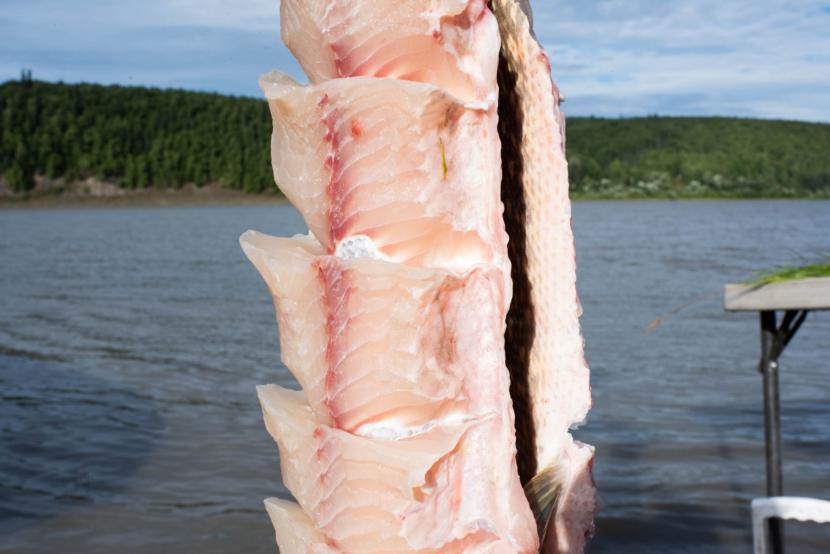
Leann Morgan cuts a northern pike in Red Devil, Alaska, on Aug. 16, 2019. Residents of Red Devil are warned to limit how much they eat of large, predatory fish like northern pike because of high mercury levels, but Leann and her father Joe Morgan depend on subsistence-caught foods and plan to eat the pike they caught. (Photo by Katie Basile/KYUK)

This is a three-part series reported from a village of 20 people on the Upper Kuskokwim River that stands to gain the most from the proposed Donlin mine. Red Devil was built by mining almost 100 years ago, and now carries a toxic legacy of mine pollution. But to its residents, the Donlin Gold mine represents hope. Like so many communities in Alaska, resource extraction is at once a lifeline and a risk.

Red Devil, Alaska, Part II

Leann Morgan stands at a makeshift table on bank of the Kuskokwim River, cutting a huge northern pike.

Leann and her father, Joe Morgan, make pike a regular part of their subsistence diet. They eat salmon, lush and sheefish. In the fall, they hunt moose.

But the pike they eat contain high levels of mercury. So high, in fact, that the federal government issued a warning to elders, children and pregnant women to limit how much they eat from the area. But Leanne and Joe Morgan aren’t worried.

Never get sick or anything … so we’re fine,” Leanne Morgan said.

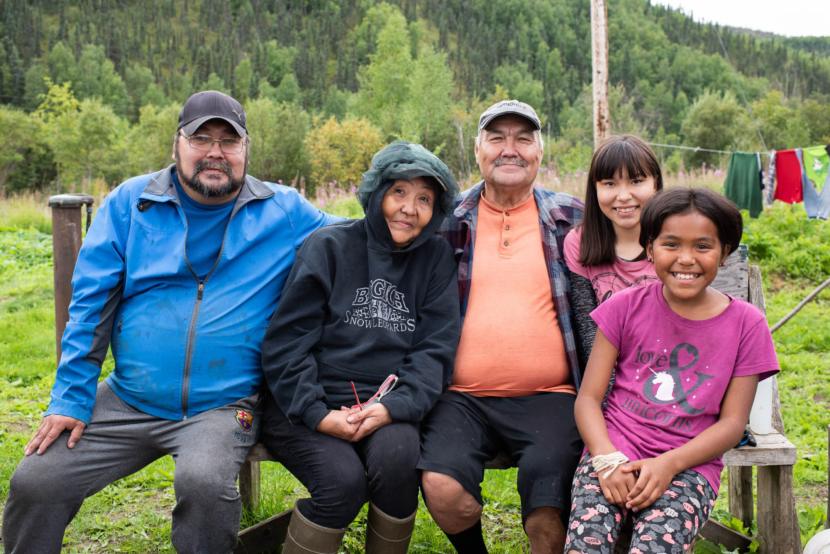
Joe Morgan, Theresa Morgan, Glen Morgan, Desirae Morgan and Tamara Stern-Morgan in Red Devil, Alaska. (Photo by Katie Basile/KYUK)

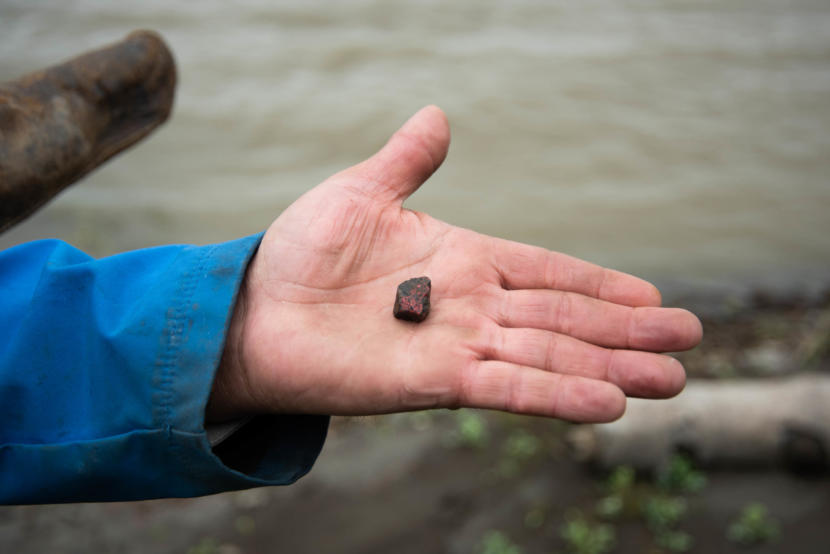
This part of the Kuskokwim winds through a mercury belt. That type of mercury is called cinnebar, and naturally infiltrates the northern pike and other fish as part of the environment.

It also makes the area ripe for mining. In 1933, when there were few mining regulations, Alaska’s biggest mercury mine started operating and created its own town. It’s called Red Devil. At the mine’s peak during 1940s through the 1960s, around 200 people lived in the town. But the mine shut down in 1971, when the price of mercury ore dropped too low to turn a profit.

After the owners left, it was discovered that the mine tailings were leaching into Red Devil Creek, a tributary of the Kuskokwim, as well as the surrounding groundwater. No one knows when they started leaking. Those tailings contain methylmercury ⁠— a particularly poisonous form that was a byproduct of the mining operations. It can cause neurological damage, especially to unborn babies. Arsenic and antimony were also found in the tailings; both can cause cancer.

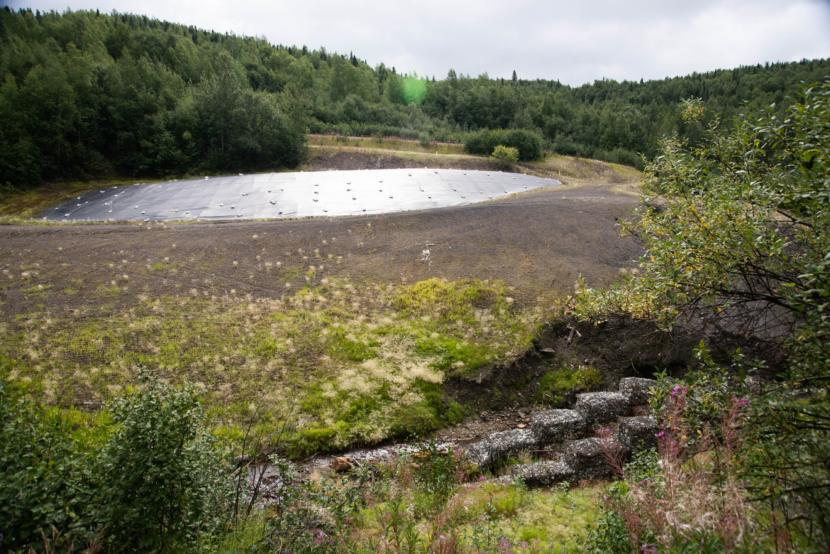
Buried contaminants from the old mine site in Red Devil, Alaska. (Photo by Katie Basile/KYUK)

Mike McCrum is the project manager for the Red Devil Mine for the U.S. Department of the Interior’s Bureau of Land Management. He says the owners did remove the groundwater from the mine site, but then literally just walked away, abandoning it.

The materials left behind were toxic enough to attract federal attention. Throughout the 1980s, the Environmental Protection Agency tested the site and found that the tailings required extensive remediation.

Typically the EPA oversees these efforts under a law called the Comprehensive Environmental Response, Compensation, and Liability Act or CERCLA. If the owner walks away from the site, like what happened in Red Devil, the EPA can use a fund called the Superfund to pay for remediation.

But what’s happening in Red Devil is different. In 1987, federal and state agencies began examining remediation. The site is not technically a Superfund site, with access to those funds. Instead, BLM has control over coordinating state agencies and local organizations, as well as paying for the cleanup.

(Image courtesy Hannah Lies/Alaska Public Media)

So far, BLM has torn down the old buildings, buried the tailings in a liner and planted a gate warning people of its health risks. It set up a weir to stop the leaching in 2014. BLM is set to come up with a final remediation proposal within the next year. But McCrum says communicating the risks from the mine to the community has been a challenge. People rely on fish food and don’t experience any immediate problems.

“Communicating risk to people is a challenge because it’s a pretty abstract concept that you’re talking to people whose food security is at risk,” McCrum said.

BLM tested the water from Red Devil Creek. It tested the fish that swam in that creek. It tested people’s hair. It tracked the northern pike and lush that swam in the Kuskokwim River and its tributaries. The state Department of Environmental Conservation and BLM tested groundwater flow around the mine and the wells of people living in the town. The results are complicated.

Signs at the entrance to the now-defunct Red Devil Mine in Alaska warn people to stay out because of potential health risks. Aug. 17, 2019. (Photo by Katie Basile/KYUK)

The northern pike that live farther up the river from the contaminated mine site showed higher mercury levels than those nearer to the old Red Devil Mine site. In fact, the BLM wrote this in a 2012 update to the Middle Kuskokwim communities:

“This report also highlighted the complexity of mercury chemistry within the aquatic food ecosystem, which includes fish species that seasonally migrate within the Kuskokwim and its tributaries.”

BLM’s McCrum says the northern pike prefer slower moving waters. Red Devil Creek, which flows into the Kuskokwim River, is very shallow and small, perfect for smaller fish but not pike. And the way the Kuskokwim River flows at the mouth of the creek is too fast for northern pike to live. McCrum says the creek dilutes the contamination before it reaches the river, and based on that, McCrum says there’s no correlation to the tailings leaking out into the river and the health of the pike.

Northern pike, a subsistence food on the upper Kuskokwim that’s vulnerable to mine pollution. (Photo by Katie Basile/KYUK)

The Kuskokwim Corp., a Native village corporation, owns the surface rights to the mine.

Vice President Andrea Gusty, says the lengthy remediation process for Red Devil is too slow, putting more residents more at risk.

“It’s been frustrating because we know the level of contamination that is in this historical mine site,” Gusty said.

Gusty is also not satisfied with the level of testing, and believes more information is needed to truly understand the risks of the mine’s contamination.

BLM says it takes a long time to gather feedback and do enough testing in order to clean up a toxic site like the Red Devil Mine.

For now, Red Devil residents aren’t too worried about mercury contamination. Joe Morgan, who caught the pike in the Holitna River, will still eat it.

Joe Morgan holds up a piece of cinnabar found on the beach outside of the now-defunct Red Devil Mine on Aug. 17, 2019. Cinnabar was mined and process on site to make mercury. (Photo by Katie Basile/KYUK)

Despite the Red Devil clean up, the residents are not as worried about possible contamination from the proposed Donlin Gold mine that’s about fifty miles down the river from the village. It’s a massive mine plan, but residents point out that Donlin Gold has to build it under much stricter scrutiny.

Not everyone in the region agrees. The Association of Village Council Presidents originally supported the mine, but recently withdrew its support over environmental concerns and worries it would impact subsistence animals.

In Red Devil, residents emphasize jobs. The proposed mine requires a lot of infrastructure: a port, an airstrip, a power plant, a proposed 315-mile pipeline to bring gas for the power plant from Cook Inlet, a road and fiber optic cable. Donlin says it expects to mine 1.3 million ounces of gold over a 27-year period. And that period could be even longer. As part of its lease agreement with the two Native corporations, which own the land and surface rights, Donlin promised to prioritize hiring local shareholders.

Donlin already has its major federal permits in hand, as well as some state ones, and hopes to get more of its state permits by the end of the year. Its also completing its safety certification for the seven dams it plans to build. That can take up to two years. The mining will begin after that.

With lots of optimism, Red Devil residents are beginning to put in place the skeleton of basic services for the people who live there now, and the people they expect when the mine opens. In part three, we look at the challenges of reviving an almost ghost town.

Site notifications
Update notification options
Subscribe to notifications