Subsistence

Kaktovik is crawling with polar bears. Now a man is going to prison for wasting one.

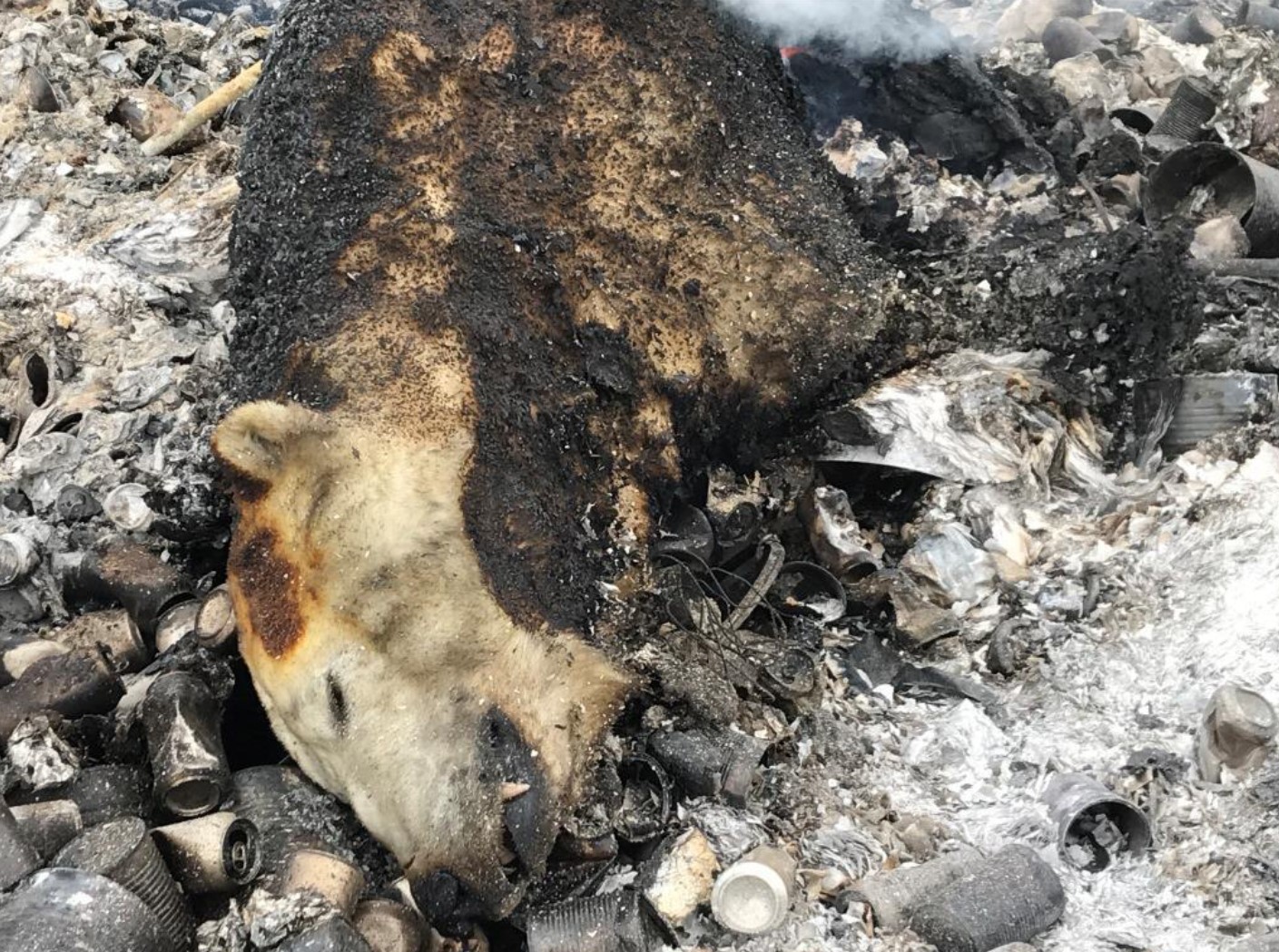
The remains of the polar bear shot by Chris Gordon sit in the Kaktovik dump, as shown in a prosecutors’ memorandum filed in federal court. (Photo courtesy of U.S. Attorney’s Office)

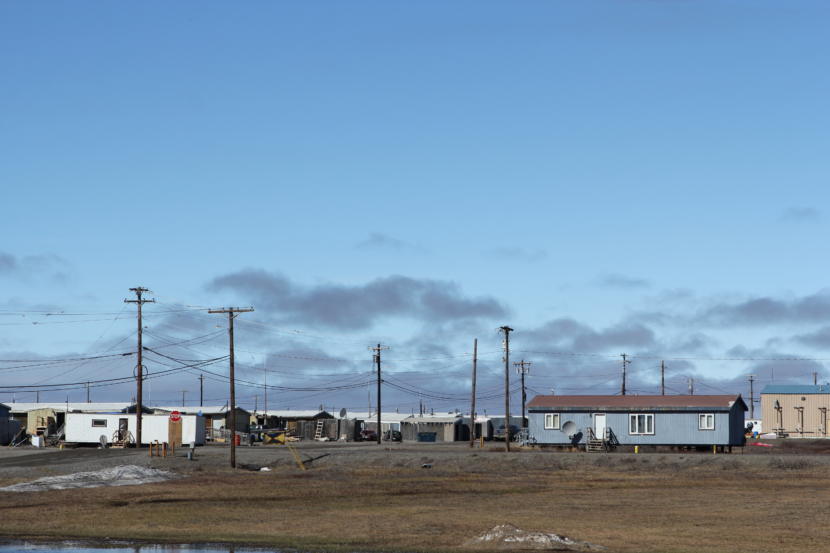
At the southern edge of Kaktovik, a tiny village on Alaska’s North Slope, the polar bear came around Chris Gordon’s yard on a winter night in 2018. He’d left whale meat out that was being prepared for a village feast — a common practice.

The bear wouldn’t go away. Gordon shot and killed it. Polar bears are a federally-protected marine mammal listed as “threatened” under the Endangered Species Act.

“Got put down tonight,” Gordon wrote in a Facebook post, which showed the bear’s carcass lying in his yard next to a snowmachine. He added later: “I did what I know is right. I can’t let a bear feast on what’s going to be shared.”
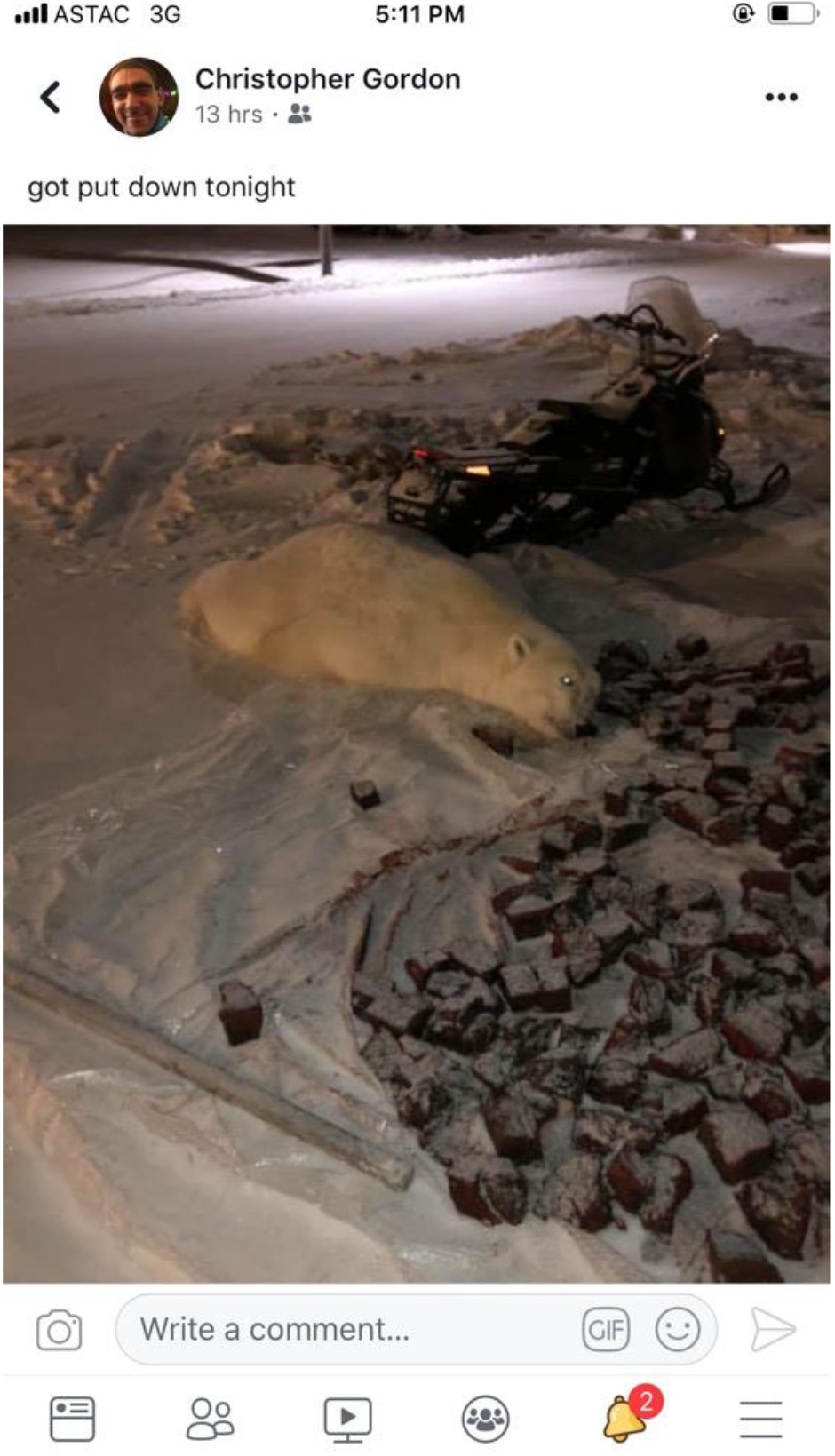
An image from a Facebook post by Kaktovik resident Chris Gordon showing the dead polar bear that he shot outside his house, where it was trying to eat frozen bowhead whale meat. (Image courtesy of U.S. Attorney’s Office)

On Feb. 28, a federal judge sentenced Gordon, 36, to pay a $4,500 fine and serve three months in prison — not for killing the bear, but for what he did afterward.

As a coastal-dwelling Alaska Native, Gordon was entitled to kill the bear by the Marine Mammal Protection Act, but only if he did so without wasting the animal. But instead of harvesting its meat or salvaging the bear’s skin, Gordon left the carcass in his yard for five months before having it moved to the village dump and burned, he acknowledged in a plea agreement filed in December.

“We know that the parties were preparing muktuk in the traditional fashion. That’s all part of village life, and that’s fine,” Judge Ralph Beistline told Gordon at sentencing on Feb. 28. “We’re not criticizing shooting the bear. We’re criticizing the manner in which it was dealt with once killed.”

Gordon’s criminal prosecution, for a single violation of the Marine Mammal Protection Act, is unusual. But his case underscores the tensions that arise as polar bears increasingly disrupt village life in Kaktovik, where climate change is melting nearby sea ice and driving the bears ashore.

Some villagers have capitalized on the bears’ presence by becoming tour guides, charging visitors thousands of dollars to travel to Kaktovik and see the bears from the safety of boats. But other residents argue that the tourism boom is making the bears more comfortable around people, and risking everyone’s safety.

In the last tourist season, there were two “close encounters” with polar bears that “almost killed some people,” Edward Rexford, the president of Kaktovik’s tribal government, told Beistline at the sentencing hearing.

“We are getting a lot of negative impacts from that tourism. Polar bears are getting habituated to humans and causing human health and welfare problems,” Rexford said. “This is a very dangerous community that we live in.”

Gordon’s case, which grew out of a late December evening in 2018, underscores some of those dangers, even as his response drew community condemnation.

In addition to his federal prison sentence, Kaktovik’s tribal government and a polar bear management council jointly imposed additional penalties on Gordon: three years of probation, $1,000 in restitution, 300 hours of community service, a public apology to the village and a year-long ban on subsistence polar bear hunting.
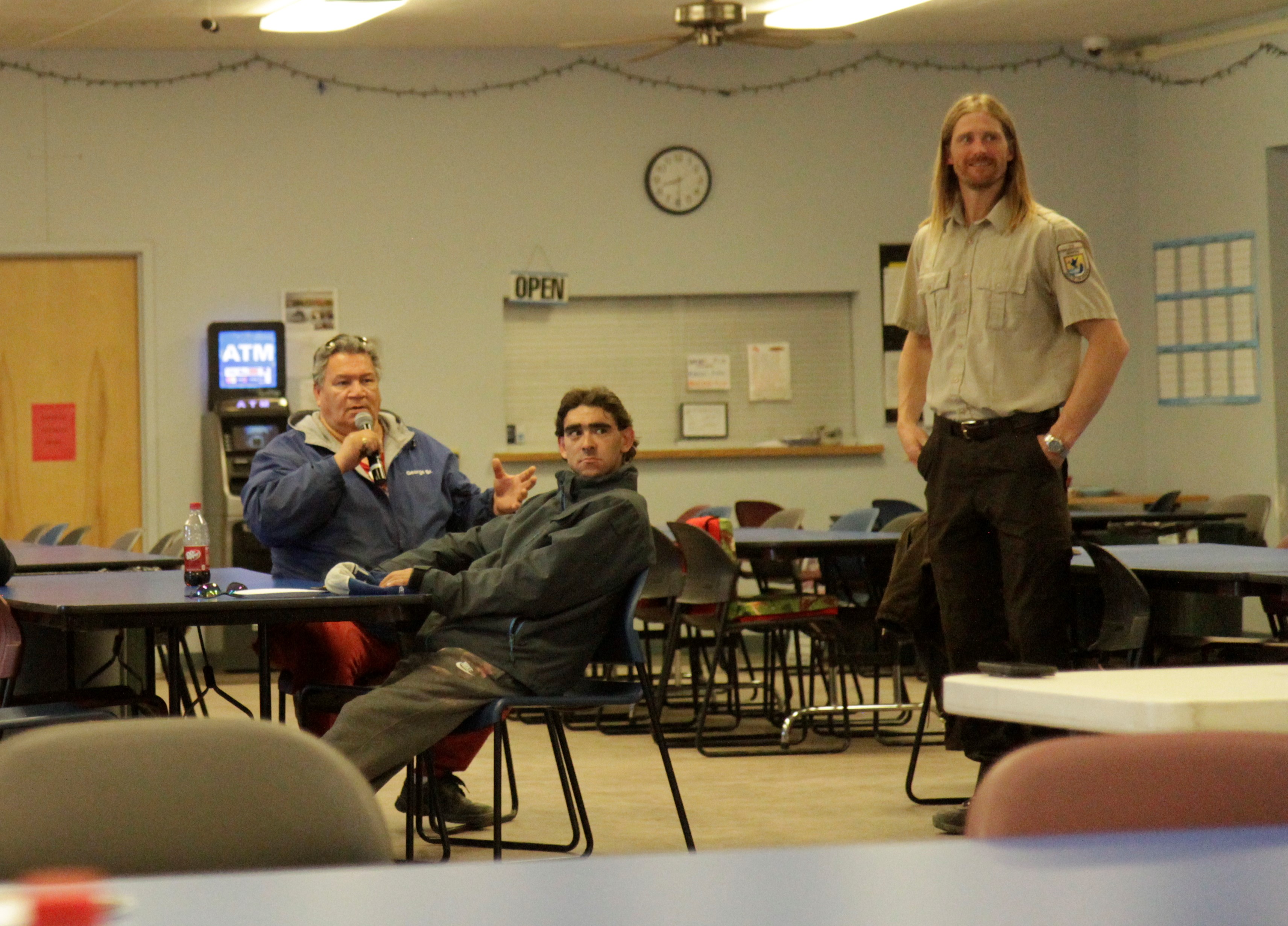
Chris Gordon, center, sits during a meeting about polar bear management in Kaktovik in June 2019. (Photo by Nat Herz/Alaska’s Energy Desk)

Gordon, a captain of one of Kaktovik’s whaling crews, had left small portions of bowhead whale meat spread around his yard in the sub-zero temperatures. Bowhead is an important subsistence food source for Kaktovik; Gordon was preparing the meat for a village feast in a traditional style that keeps the chunks from freezing together, his attorney wrote in a sentencing memorandum last week.

The North Slope’s borough government runs a polar bear patrol program in Kaktovik. But that night, members weren’t working, Gordon and Rexford both said at the Feb. 28 hearing. Gordon also said he tried called an emergency number.

“I didn’t want to kill it. Really,” Gordon said. But he’d run out of nonlethal ammunition and, Gordon added: “That thing just kept coming back.”

Prosecutors noted that Kaktovik has bear-resistant food storage lockers available that Gordon chose not to use.

After the shooting, a member of the U.S. Fish and Wildlife Service, which manages the nearby Arctic National Wildlife Refuge, told Gordon “multiple times” that he needed to tag and report the bear. But he did neither, according to prosecutors.

Gordon told USFWS agents in an interview that he didn’t harvest the bear’s meat because he didn’t want to spill its blood around the frozen whale, prosecutors said.

“I did what I wanted to do to stop it from eating my muktuk,” Gordon said, according to prosecutors’ sentencing memorandum. “I asked a few people if they wanted it, they said ‘no.’”

As the dead bear languished in Gordon’s yard, it drew attention and dismay from other Kaktovik residents — including one unnamed witness who posted a video about it on Facebook. At the sentencing hearing, prosecutors played the clip, in which a woman describes the scene outside Gordon’s house over the sound of an idling four-wheeler.

“Here we have a dead nanuq (polar bear), because this family refused to put their food away properly and be shepherds of this blessing. I am so upset right now. Kaktovik, we need to come together and stop this,” the woman said. “This is not okay, and it’s crossed a line.”

After the woman posted the video, prosecutors said that the Alaska Eskimo Whaling Commission — a group that Gordon belongs to — pressured her to take down her post. The group told her it “could potentially harm their subsistence and whaling rights,” prosecutors said.

The commission’s executive director, Arnold Brower, did not respond to a request for comment.

A few weeks after the bear was killed, it was hit by a snow removal vehicle, ripping off one of its paws. Then, in May, Gordon had another village resident take the carcass to the village dump, where workers were burning trash. USFWS agents later found the bear’s “charred remains” there, prosecutors wrote in their sentencing memorandum.

“The single paw, ripped off by the snow removal vehicle, remained on defendant’s lawn,” prosecutors wrote in their sentencing memorandum. “The next day, the defendant told federal agents that they could take the polar bear’s paw because it would ‘save me a trip to the dump.’”
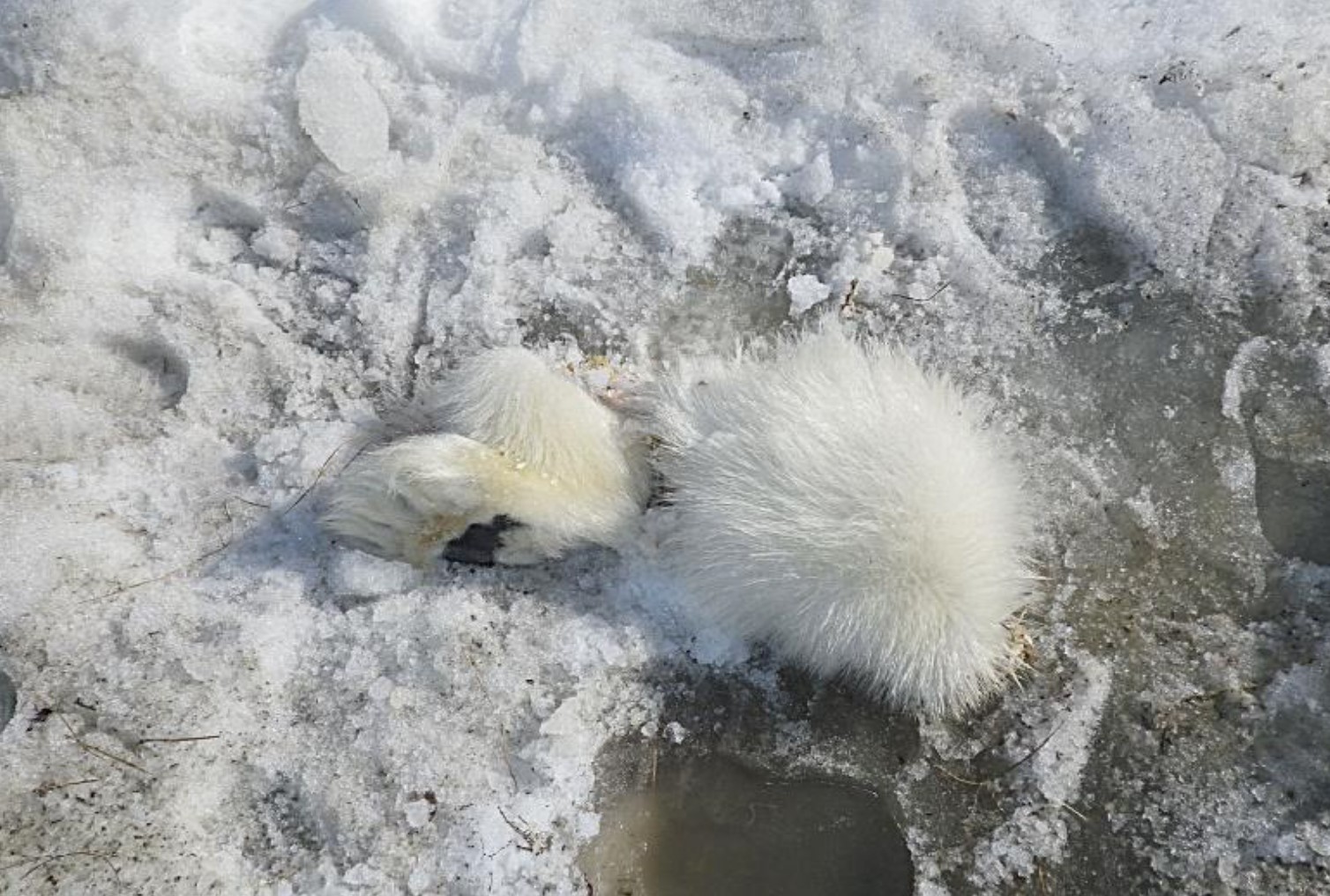
Parts of the polar bear killed by Kaktovik resident Chris Gordon, as shown in a prosecutors’ memorandum filed in federal court. (Photo courtesy of U.S. Attorney’s Office)

In Gordon’s own sentencing memorandum, his attorney, Brian Stibitz, argued that the federal government’s case against him demonstrated a misunderstanding and ignorance of Alaska Native “custom and cultural practices” — in particular, by suggesting that Gordon was irresponsible for leaving the bowhead meat in his yard. That method “is a traditional method of preparing muktuk, and is encouraged among whaling captains,” Stibitz wrote.

Stibitz’s argument echoes a separate one also made by village residents: That USFWS, which manages the neighboring Arctic Refuge, prioritizes the well-being of polar bears and tourists over the safety of Native people who live in Kaktovik.

“We know and respect the interest that the urban people seem to have in protecting the endangered species of animals and plants here. What about us?” Fenton Rexford, a Kaktovik elder, asked USFWS officials at a June community meeting.

Federal authorities said they did not pursue the case against Gordon lightly, or out of a lack of sensitivity to the impact of polar bears on his village. Gordon’s violation of the Marine Mammal Protection Act, prosecutors argued in their sentencing memorandum, was “brazen.”

In a prepared statement, a top USFWS official said that the agency has been “working closely with Kaktovik residents, leaders, and other partners for over a decade to address human-bear conflicts.”

“We understand the challenges bears pose to the community,” the statement quoted Steve Berendzen, the Arctic Refuge manager, as saying. “Together, we’ve taken some positive steps, including food-storage locker installation and local polar bear patrols. We’ll keep working with our partners to look at additional solutions.”
 

Caribou were restored to the Nushagak Peninsula in the ’80s. Now there are so many, they’re depleting the food they depend on.

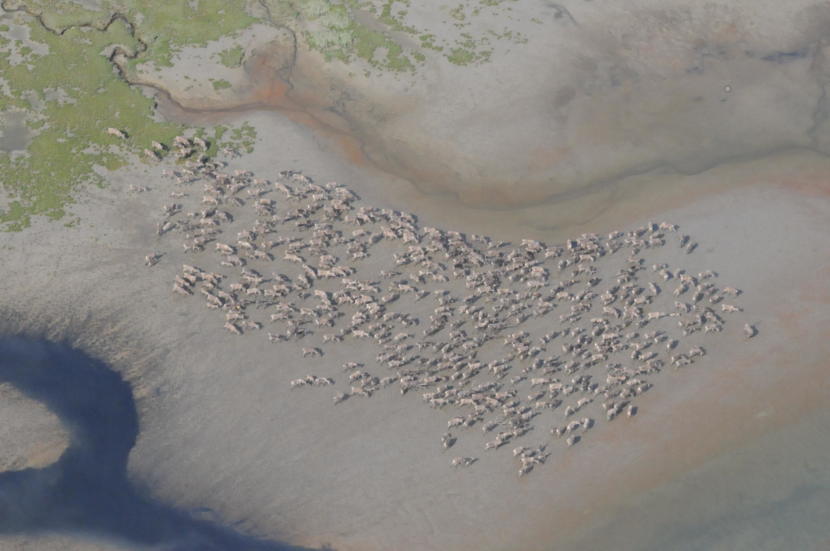
A group of 551 caribou on tidal flats of the Nushagak Peninsula seeking relief from biting insects, July 9, 2019. (Photo by Andy Aderman / USFWS)

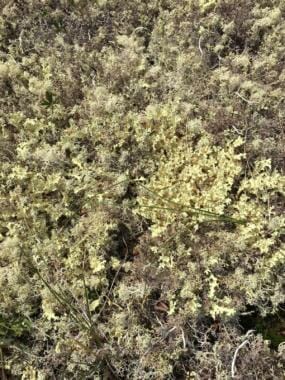
Lichens cover the Nushagak Peninsula. They range from mottled green and gray, to yellow and brown, spreading in moss-like patches across the tundra. But as the peninsula caribou herd multiplies, that lichen cover, which used to be thick and lush, is shrinking. Surveys showed that lichen cover decreased by 18% since 2002, extending over just 32% of the peninsula’s tundra in 2017.

“It’s decreasing at an increasing rate. That has us concerned,” said Andy Aderman, a biologist with the Togiak Wildlife Refuge.

Aderman is holding a hefty textbook, “Lichens of North America” by Irwin Brodo, Sylvia Duran Sharnoff and Steven Sharnoff, and he starts by reading a few basic facts: Lichens can be found in almost every environment in the world, and on every kind of surface.

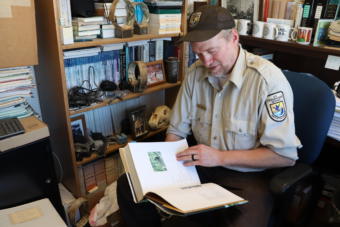
Andy Aderman reads from “Lichens of North America.” Jan. 24, 2020. (Photo by Isabelle Ross / KDLG)

“From soil, rocks and tree bark to the backs of living insects. A lot of people refer to the lichens, at least the lichens caribou like, as ‘caribou moss,’ but it’s not really a moss,” he said.

The scientific name is cladonia rangiferina, though caribou eat a number of lichen species. Lichens aren’t actually plants — they’re photosynthetic composites made up of algae and fungi. If overgrazed, they can take decades to regrow.

Nushagak lichens weren’t always fodder for the caribou. In fact, for much of the past two centuries there were almost no caribou on the peninsula at all. Biologists aren’t sure what happened to them, but in the 1980s, managers decided it was time to bring them back.

Aderman noted that one of the missions of the Togiak Wildlife Refuge is to conserve fish and wildlife populations and habitats, including their restoration to historic levels. When they transported caribou back to the peninsula in 1988, lichens were widespread and their cover was also taller and denser.

But as the Nushagak herd has thrived, that cover has thinned. The warm weather also means that hunting conditions are poor, so there’s less of a check on the population. Ideal hunting largely depends on two things: frozen rivers and enough snow cover for snowmachines to move easily across the tundra.

“That’s been a challenge,” he said. “And really, five of the last eight winters have not been very good. That was when the numbers were high, and there’s a lot of mouths down there eating lichens and other stuff. Our intentions were good, but it didn’t work out. I think that’s part of the reason.”

Locals hunt caribou on the peninsula, but in the past it’s been difficult for them to access the herd. Last winter, only three caribou were reported harvested, taken by hunters that flew into the area.

A mat of the gray cladonia rangiferina (commonly called ‘caribou moss’) and yellow lichens in the Cetraria genus, on the Nushagak Peninsula, July 12, 2017. (Photo by Andy Aderman / USFWS)

“It used to be good when there was lots of snow and colder weather,” said Moses Toyukuk, Sr., the mayor of Manokotak, one of the communities closest to the peninsula. “But currently we’ve been having mild winter and some places are pretty dangerous to go across. And I wouldn’t recommend going down if you don’t know the terrain down there.”

Warm winters are also changing the ecology of the peninsula, making it more difficult for lichens to replenish themselves.

“Snow acts as a protectant from wind abrasion and trampling,” said Kyle Joly, a wildlife biologist with the National Park Service. “So if there’s less snow on the ground lichens could be crushed by caribou. They’re also more accessible and can be eaten that way. When they dry out they become very brittle and fracture very easily.”

As the summers get hotter, lichens are also increasingly susceptible to wildfire. Unlike grazing, fires completely destroy the lichen structure. Those that don’t burn have to dispense spores and germinate, and it could take them more than a century to recover. Other vegetation — shrubs like crowberry, labrador tea, and dwarf birch — are more and more ubiquitous, competing for space on the ground.

The Nushagak herd, which doesn’t migrate in search of food, could remain on the peninsula for a time by shifting its diet to other plants. But as lichen cover dwindles, the question remains: what happens to the caribou if they are gone?

Donald Trump Jr. is headed to Juneau for a hunting trip — and you could join him

Donald Trump Jr. speaks into a microphone at a podium.
Donald Trump Jr. at a campaign rally at Iowa State University, Nov. 1, 2016. (Creative Commons photo by Max Goldberg)

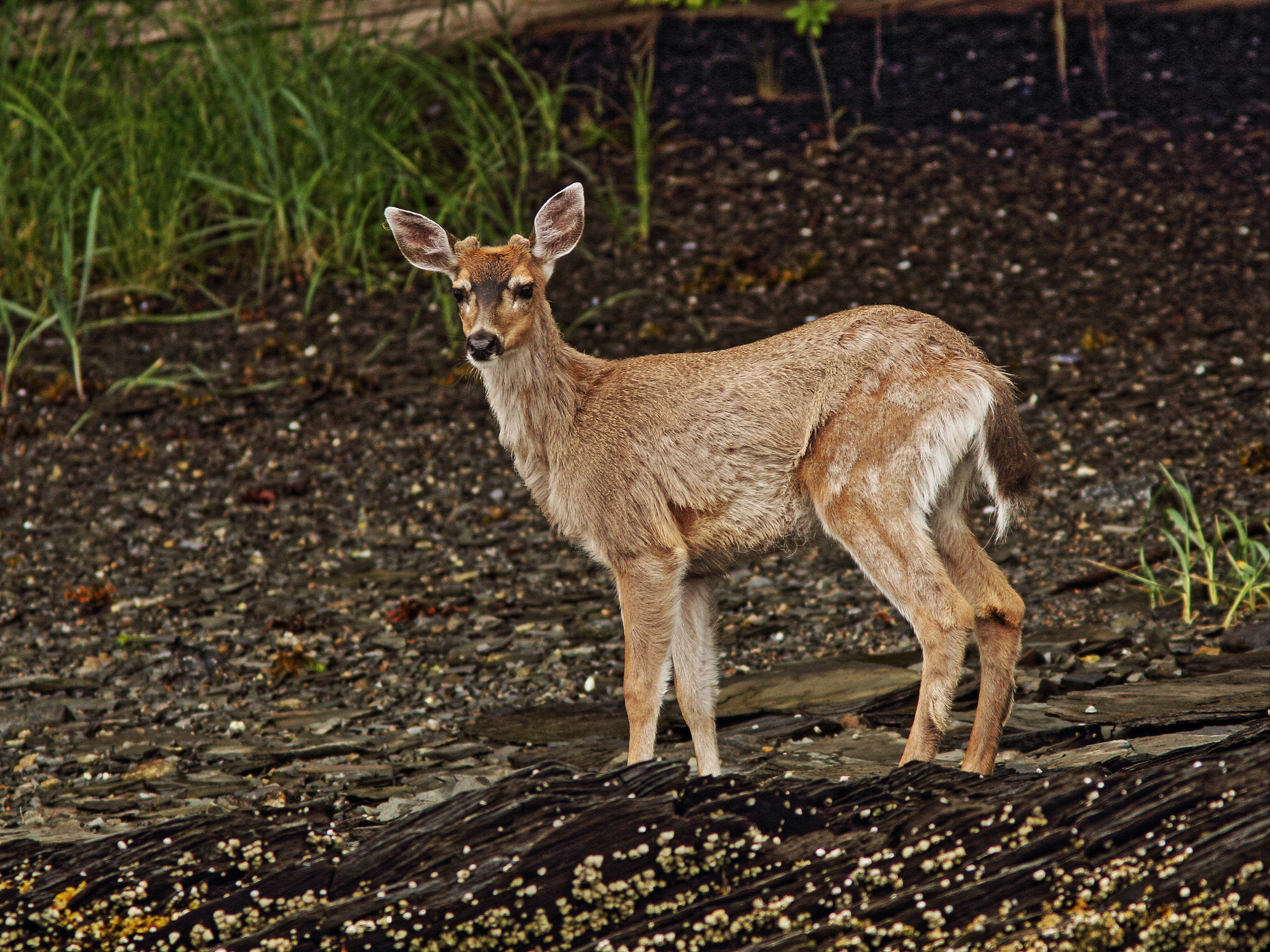
Donald Trump Jr. and his son will be embarking on a weeklong hunt for Sitka black-tailed deer and ducks in Southeast Alaska — and a spot to join them was auctioned off to the highest bidder.

For one Juneau-based guide, it’s a way to teach his guests about the importance of the Tongass National Forest at a crucial time.

Keegan McCarthy owns Coastal Alaska Adventures, a business that guides visitors on yacht-based hunts.

He’s also developing a new program that will help kids learn the subsistence values he grew up with. A big part of that revolves around Sitka black-tailed deer.

“That’s what my family subsided on,” he said. “Growing up in Juneau, all we ate was Sitka black-tailed deer, and still do to this day. That’s what my family eats. So (I am) sharing that message and the importance of that resource with the young hunters.”

McCarthy is well-connected in the guided hunt scene. In fact, he spoke on a cell phone where he was attending the Safari Club International convention in Reno, Nevada.

McCarthy auctioned off the Alaska hunt there and online. It’ll help fund his new youth program.

And he tapped a famous acquaintance to come along: Donald Trump Jr.

A Sitka black tailed deer in June 2014.
A Sitka black-tailed deer. (Creative Commons photo by Kenneth Cole Schneider)

“As a hunter, I do personally believe that his morals and ethics are excellent in the hunting world,” McCarthy said.

Trump has been criticized by the Humane Society for his hunting practices. Photos of him posing next to a dead elephant in 2012 caused a stir among animal rights groups.

But McCarthy stresses Trump is conservation-minded. And the deer on this hunt aren’t being shot for just trophies. The meat will be served on board the yacht, taken home or donated.

“You know, like farm to table type concepts,” McCarthy said. “We stress the importance of how we eat what we harvest.”

But McCarthy has another thing he wants to teach Donald Trump Jr. and his guests about a subsistence lifestyle in Southeast Alaska: He thinks it’s largely dependent on protecting habitat in the Tongass National Forest.

McCarthy is outspoken in his opposition to changes to the Roadless Rule in the Tongass, which could increase logging. The Trump administration has been pushing for that.

But McCarthy said it’s not a secret that he would like to see an end to massive timber sales in the national forest. He’s spoken to Trump about it before, and that conversation will continue when he visits in November.

“Hopefully, if anything, we can bend a sympathetic ear towards getting somebody potentially as influential as he is out there to really see what we’re doing,” McCarthy said. “And see how important the Tongass National Forest is. So I do think this can be beneficial if done right.”

The auction closed on Saturday — the final day of the Safari Club International convention. It sold for $150,000.

This story has been updated.

The 2019 Arctic Report Card shows the impacts of a warming climate. Here are 4 key details.

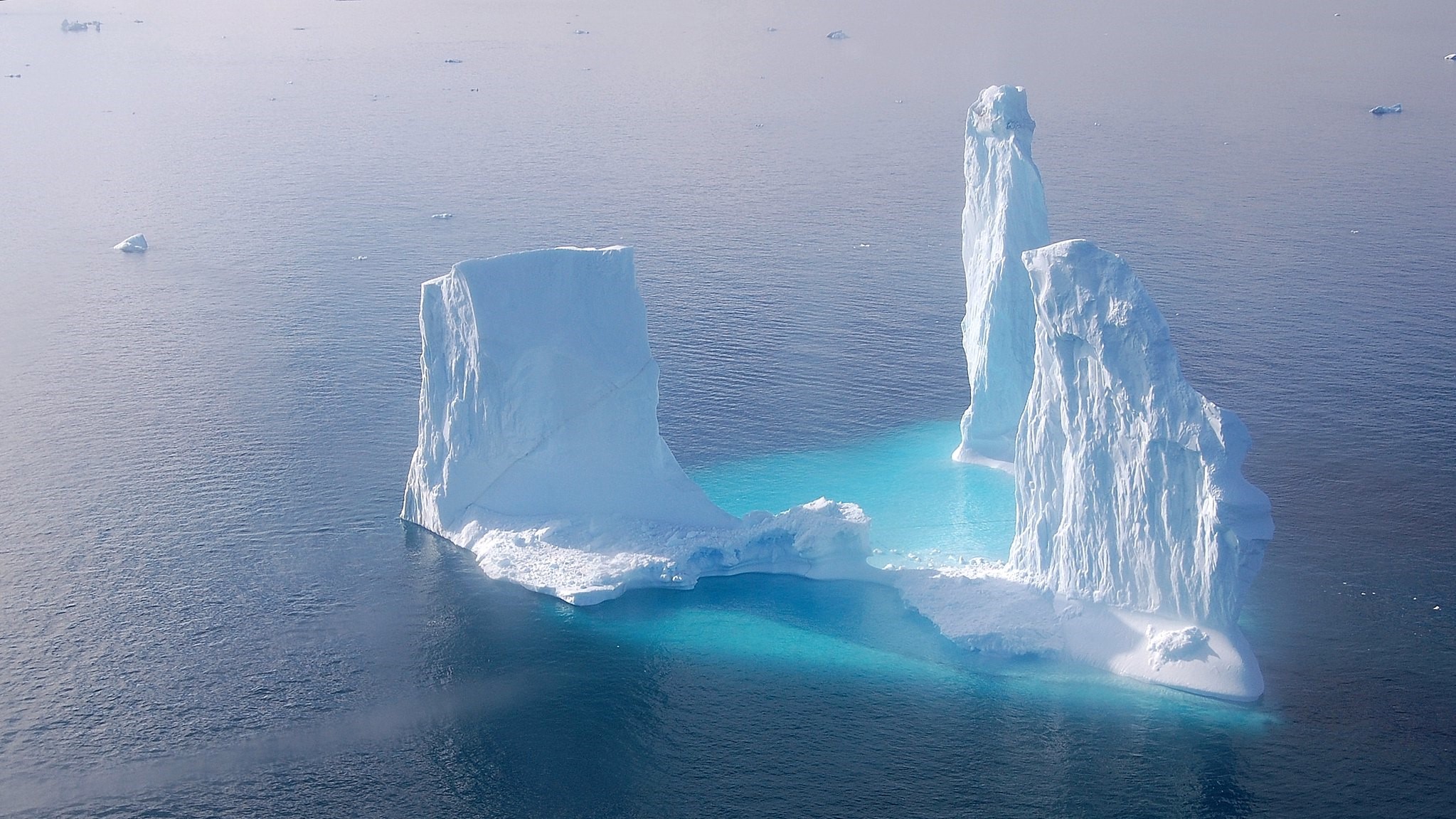
An iceberg floats off the western coast of Greenland. (Creative Commons photo by Greenland Travel)

The Arctic is rapidly and dramatically changing, with continued warming of the air, land and sea.

That’s the theme of the 2019 Arctic Report Card from the National Oceanic and Atmospheric Administration.

The report card was released Tuesday at a conference in San Francisco. While the general message is not a surprise, some of the specifics are sobering. Here are four big takeaways.

1. Surface air temperature is rising.

In 2019, the Arctic did not quite set a record, but look at the trend.

“The average annual surface air temperature over land for 2019 was the second highest since 1900,” said Matthew Druckenmiller from the National Snow and Ice Data Center. “The six hottest years on record in the Arctic have all taken place in the last six years.”

2. Change brings more change.

Consider permafrost. As it thaws, it releases carbon to the atmosphere — as much as 600 million tons a year.

“This thawing of permafrost may now be acting to accelerate global climate change,” Druckenmiller said.

A warmer Arctic also means a greener Arctic, but those plants don’t suck up enough carbon to balance the increase.

A warmer climate means permafrost emits carbon in winter, too. And a new study suggests the winter carbon release is two or three times higher than previously known.

3. The Bering Sea has now had two winters in a row that were almost ice-free.

That’s part of a larger picture: Sea ice is in retreat across the whole Arctic.

“The 13 lowest summer ice extents have been in the last 13 years,” said Donald Perovich, a Dartmouth College professor who studies sea ice.

He said old ice is disappearing. Ice more than four years old is thicker and more resilient, he said, and young ice is more vulnerable to the elements. Back in the 1980s, Pervich said, about a third of the ice cover was made of that old, thick ice.

“It covered an area roughly the same size as the United States east of the Mississippi,” he said. “Now, in March of 2019, it’s 1% of the ice cover, and all that’s left is an area the size of the state of Maine.”

4. These changes cause direct harm to real people.

Mellissa Johnson is Iñupiaq and lives in Nome. She was invited to speak at the report card rollout. She explained that her community depends on sea ice. It’s the platform they need to hunt marine mammals.

Johnson said it used to be that hunters only had to travel 10 or 20 miles to reach the ice.

“And now it’s, at minimum, 50 miles out, is where the sea ice is. And it’s having treacherous impacts to our hunters,” she said.

The warmer environment is degrading their food sources, too, she said, and that leaves less to go around. Animals have a thinner fat layer. Sea birds are sick. Berries don’t ripen when they used to.

And Johnson said they need snow cover and ice to travel between communities.

“Without that, we become limited,” she said. “We become isolated. We become continuously sparse in our sharing.”

This is the 14th annual Arctic Report Card. It’s a peer-reviewed document compiled by 81 scientists from a dozen countries.

A new oil boom on Alaska’s North Slope is encircling a village, and residents have raised a red flag

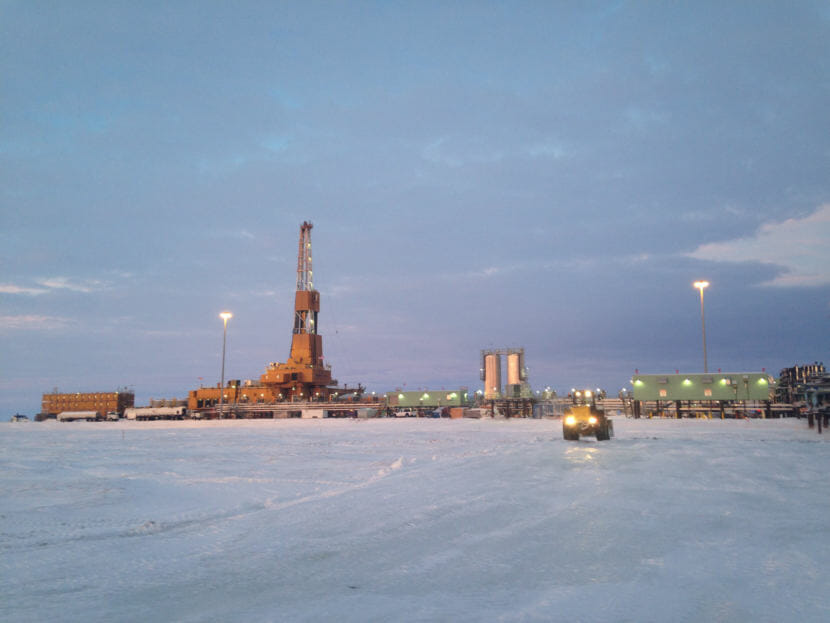
ConocoPhillips’ CD5 drill site, which is linked to its Alpine development that opened in 2000, is 9 miles from the North Slope village of Nuiqsut. (Photo by Elizabeth Harball/Alaska’s Energy Desk)

A major proposed North Slope oil project is running into local opposition from residents of the village of Nuiqsut, who are already partially surrounded by development and wary of more.

After hearing residents’ concerns at a North Slope Borough planning commission meeting that ran past midnight earlier this month, the commissioners declined to support a rezoning proposed for the Nanushuk project — a development that could produce 120,000 barrels of oil a day at its peak, or about one-fourth the amount that currently flows through the trans-Alaska pipeline.

The 4-2 vote isn’t binding, and the borough Assembly will take up the question at a meeting next month. But the decision highlights how the balance between development and subsistence is becoming increasingly fraught in Nuiqsut, a village of 450 that’s found itself in the middle of the oil industry’s resurgence on the North Slope.

Eight miles north of the village is ConocoPhillips’ Alpine project, a $1.3 billion development that opened in 2000 and is still expanding, with sites to the south and west. Another big new Conoco project, Willow, proposes to establish a gravel mine 7 miles west of Nuiqsut, with as many as 250 wells at the site of the development farther away.

Then there’s Nanushuk, pushed by Papua New Guinea-based Oil Search. The company plans to build one of its drill sites 7 miles northeast of Nuiqsut, with a processing facility — to separate out oil from natural gas and water — farther away.

Some of Alaska’s elected leaders have touted the developments as a major boost to the state’s oil-dependent economy. And many Nuiqsut residents support continuing oil development, citing the ample financial benefits and quality-of-life improvements the industry has brought to the village’s residents — particularly those who are shareholders in the village’s Native corporation.

But Sam Kunaknana, Nuiqsut’s representative to the borough and an outspoken critic of oil development’s impacts on the village, said that the other commissioners — who represent different North Slope communities — were persuaded to vote against the Nanushak resolution by testimony from Nuiqsut residents.

People are concerned about development’s impacts on the fish they’re catching and the caribou they’re hunting, Kunaknana said in a phone interview. Already, oil development has affected as much as one-third of Nuiqsut’s traditional subsistence range, according the local Native village corporation.

“It’s not just one project,” Kunaknana said. “It’s everything that’s going on around this area.”

Oil Search’s Nanushuk project and Conoco’s Willow project could, if built, together produce 250,000 daily barrels of oil at their peak, or roughly half the amount of oil that currently flows down the trans-Alaska pipeline. The companies’ management would have been watching the planning commission’s meeting closely, said Tim Bradner, a former BP employee and journalist who’s long followed Alaska’s oil industry.

“And they would be very concerned about making sure that their relationships are good with the local people up there,” he said. “Because unlike in a lot of places, the North Slope is a place where the local people really do have clout.”

Oil Search has been expanding its footprint in Alaska and recently hired Joe Balash, formerly a top official in the U.S. Interior Department; the company recently moved into office space in BP’s Midtown Anchorage headquarters. Spokesperson Amy Jennings Burnett declined to comment.

The planning commission’s vote comes as the Trump administration pushes to loosen restrictions on oil and gas development in the area. Later this week, the Bureau of Land Management plans to release an environmental review of a new land-use plan for the National Petroleum Reserve in Alaska, where the Willow project and others are located — and it’s expected to revoke some of the environmental safeguards contained in a previous, Obama-era version.

The challenge of balancing resource extraction and subsistence exists across the North Slope, but that tension has escalated in Nuiqsut amid the increasing development nearby.

“I can’t think of anywhere in the state where the juxtaposition of these issues comes to roost as it does in Nuiqsut,” Bradner said. “You have to feel some sympathy for the people — they’re surrounded by all this and they worry about their community kind of becoming a truck stop for the industry. On the other hand, there are people in the community who see a lot of upside to this.”

Nuiqsut sits in the biologically-rich delta of the Colville River, just south of where it flows into the Beaufort Sea, and it was founded amid passage of the Alaska Native Claims Settlement Act in the early 1970s. At the time, the oil industry’s focus was 50 miles east, where the Prudhoe Bay field had been discovered. But in the decades since, development has crept steadily west.

Since Alpine opened in 2000, Conoco has linked its central facility with several additional sites, with pipelines and roads now stretching nearly 180 degrees around Nuiqsut; a new connected drill site, Greater Mooses Tooth 2, is under construction.

Nuiqsut in June 2018. The village is near a growing number of oil developments in the western Arctic.
The village of Nuiqsut in June 2018. (Photo by Elizabeth Harball/Alaska’s Energy Desk)

Oil Search’s Nanushuk development is proposed northeast of Nuiqsut. And Conoco’s new proposed Willow project, to the west, is currently undergoing federal environmental reviews.

Conoco has a “long-term relationship with Nuiqsut, which goes back over 20 years with our Alpine development,” spokesperson Natalie Lowman said in an emailed statement.

“We are actively engaged with the community on our Willow project to identify concerns and seek collaborative solutions,” she said. “It is our goal to assist the community and ensure the North Slope Borough and all the NPR-A villages have the opportunity to benefit from our activities in the NPR-A.”

In February, Nuiqsut’s tribal government sued the federal government over its approval of Conoco’s exploratory drilling program for the previous winter.

But Nuiqsut’s Native village corporation, Kuukpik Corp., has taken a different approach, often partnering with the oil industry to bring cash and infrastructure improvements to shareholders and residents.

Kuukpik’s shareholders receive as much as $30,000 a year in dividends, thanks in part to royalties from oil pumped from some of Kuukpik’s lands that are part of the Alpine project. Alpine also is the source of a natural gas line that runs directly to Nuiqsut, allowing residents to heat their homes for a fraction of the cost in other rural Alaska villages.

Kuukpik has fought for, and received, concessions from oil companies to protect the village’s subsistence harvests and health. For one project, Conoco agreed to move the location of a proposed bridge away from an area where residents fish; for another, it used lower-emission generators to power a drill rig, reduced noise levels and boosted air and water quality monitoring.

The Nanushuk project also included a list of mitigation measures in the resolution that the planning commission rejected this month.

Oil Search, the company pushing the project, would have been required to hire a “subsistence representative” and conduct an array of studies on fish, caribou and the “cumulative impacts” of development in the area. It also would have been required to host an annual job fair in Nuiqsut, and to the extent possible, involve local students in their studies and hire local boat and snowmachine drivers.

The company has also agreed to build a boat ramp on the Colville River, along with a road to it, to improve residents’ access for subsistence.

The North Slope Borough’s planning department recommended that the planning commissioners approve it, and Kuukpik’s position was similar.

“The corporation still thinks that Oil Search will be a genuine and viable partner in the Colville delta,” Lanston Chinn, Kuukpik’s chief executive officer, said in a phone interview this week. “And we’ll see where it goes from there.”

The North Slope Borough Assembly is scheduled to consider the Nanushuk rezoning at its meeting Dec. 3. The borough’s chief administrative officer, Deano Olemaun, said he could not comment on the project “until all the final processes have been completed.”

Bradner, the journalist, said he expects the Assembly to balance the planning commission’s position with the project’s potential to add to the North Slope’s tax base. Most of the borough’s $400 million budget is paid for with property taxes on oil infrastructure, and “as the industry matures on the North Slope, its existing tax base is depreciated,” he said.

“They need new projects to keep their tax base active and renewed, to maintain all the public services that they support up there,” said Bradner. “So there’s two sides to this issue, and it’s a complicated question.”

Utqiaġvik whalers finally land bowhead nearly two months into season

A bowhead whale and a calf in the Arctic on May 29, 2011.
A bowhead whale and a calf in the Arctic on May 29, 2011. (Photo by Corey Accardo/NOAA)

Whalers in Alaska’s northernmost town of Utqiaġvik have finally landed their first bowhead of the season, after what some veterans said was an unprecedented absence of the marine mammals amid record-setting air and water temperatures.

Social media postings from the North Slope hub community show members of the successful crew standing in the dark in front of the 25-foot bowhead.

This year, the dozens of crews from Utqiaġvik went without a bowhead for nearly two months after the season opened Sept. 21. Last fall, they’d landed 19 bowheads by Oct. 23.

Utqiaġvik’s whalers weren’t even spotting bowheads early in the season, and scientists flying aerial surveys found bowheads much farther offshore than their normal range — although other North Slope villages farther east did manage to land whales.

Utqiaġvik and the ocean that surrounds it have experienced record warmth this past summer and fall. Experts, including whalers and scientific researchers, theorize that the whales may have moved offshore in search of food or cooler water.

Site notifications
Update notification options
Subscribe to notifications