Alaska's Energy Desk

As planet warms, researchers project more ‘extreme’ rainfall in Southeast and Western Alaska

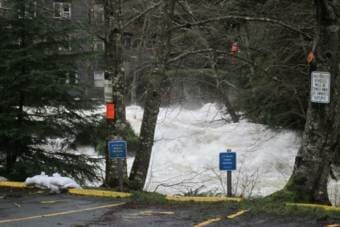
Ketchikan Creek rages after heavy rains and a high tide in 2015. (Leila Kheiry/KRBD)

Climate scientists say a warming planet is likely to make big rainstorms in Southeast and Western Alaska more common. And rising temperatures are also forcing researchers to reconsider just how much rain a storm can drop.

Researchers project storms that might occur once every 20 years could start to happen every five to 10 years in Southeast Alaska, and every three years in Western Alaska.

But what is a 20-year storm? Jeremy Littell is a United States Geological Survey researcher who works with the Alaska Center for Climate Assessment and Policy.

Let’s say you look out your window and see sheets of rain coming down. You say to yourself, “Wow, that’s quite a rainstorm.”

“If your neighbors are saying, ‘Well, that’s also impressive,’ and they lived there a long time, then probably, you know, you’re approaching that one in 20 years,” Littell said in a phone interview. He presented the findings at a webinar earlier this month.

To get more technical, a 20-year storm has a 5% chance of happening every year. As the planet warms, Littell projects that 5% will increase to 10-20% in Southeast and 33% in Western Alaska.

For a more concrete example: A early December storm that triggered flood warnings and threatened to damage a dam upstream of downtown Ketchikan dumped 19.9 inches of rain in seven days, making it a roughly 20-year event.

Littell projects that as the Earth warms, storms like that could start coming to Southeast four times more often. But Littell said, that’s not the whole story.

“The game changer is that while we were focused on the one in 20-year event, which was previously kind of our definition of extreme, the definition of what is possible was also changing,” Littell said.

As storms that were once thought of as extreme become more common, storms that are thought of as impossible — or at least extremely unlikely — start to become real concerns.

“It can lead us into a false sense of security by saying, ‘Oh, well, okay, we can plan for one in four instead of one in 20, that’s okay.’ But you’re not thinking about one in 500, one in 1,000,” Littell said. “Those are no longer one in 1,000. Whether they’re one in 100, or one in 500, or one in 20, nobody really knows for certain yet.”

Take the rainfall that triggered a deadly landslide in Haines in December. That was even more out of the ordinary — a 200- to 500-year storm over two days. Littell said scientists also expect those to become more likely: They’re just not sure how much more likely.

In any case, Littell said the rising chance of severe precipitation — both rain and snow — should be on state and local officials’ minds when thinking about things like public works projects and building codes.

“All of our built environment is affected by those kinds of assumptions, and the codes that we relied on in the past may not be sufficient for the extreme events that we could expect to encounter in the future,” he said.

Just how much more common these 20-year storms become depends on how much warmer the planet gets. That depends on what’s done to curb greenhouse gas emissions, among other things.

But Littell said it pays to prepare for a warmer future, even if the United Nations’ most dire predictions of an eight-degree Fahrenheit rise in global temperatures by 2100 don’t come to fruition.

“In that case, you came out ahead, even if you invested quite a bit on the front end,” Littell said. “But if you plan for that lower-warming future, and you get the higher-warming future and didn’t plan for it, then those consequences might be quite a bit more impactful.”

This story was produced as part of a collaboration between KRBD and Alaska’s Energy Desk.

‘It brings back memories’: Northwest Alaska health provider cleared to make seal oil and serve it to elders

A jar of seal oil processed at the Siglauq building in Kotzebue. (Photo by Wesley Early, KOTZ – Kotzebue)

In Inupiaq communities, more than any other food, seal oil is a fixture.

“I had it for lunch today,” said Cyrus Harris. “I’ll have it for supper tomorrow.”

Like many Inupiaq people in the Northwest Arctic, Harris grew up eating traditional foods like seal oil, caribou and musk ox. When his relatives moved into Maniilaq’s Utuqqanaat Inaat long term care, he found they weren’t able to eat the same food they’d lived off for years.

“They didn’t choose to be living off the Western diet that they were being served every day,” Harris said. “So I found out I could cook a meal at home and take it to my ahna and taata over at the long term care, and serve it in that manner. But where does that leave the other 18 elders there?”

Seal oil has been a diet staple for Alaska’s Inupiat people for centuries. However, because of federal and state health regulations, you can’t buy it in stores and it can’t be served in restaurants.
Cyrus Harris is in charge of Maniilaq’s hunter support program. (Photo by Wesley Early, KOTZ – Kotzebue)

In 2015, Congress passed the federal farm bill which allowed people to donate wild game that they’ve hunted to certified non-profits, like hospitals or food banks. Since then, Harris has been in charge of Maniilaq’s hunter support program, which prepares traditional foods for elders at long term care.

The food is processed at the Siglauq, a state-certified meat processing building. The name comes from the Inupiaq word for the underground ice cellars used to store meat.

“Back in the day, everybody had their own Siglauq,” Harris said. “They had their own underground cold storage.”

Cyrus Harris shows frozen musk ox meat to be served to elders at Maniilaq’s Utuqqanaat Inaat long term care. (Photo by Wesley Early, KOTZ – Kotzebue)

Walking in the Siglauq freezer, Harris described some of the donations.

“These are some products that we will most likely use for our certain potlucks,” Harris said. “This is sheefish filet. We do have moose burger. We do have some musk ox burger.”

While getting wild meat on the menu for elders has gone smoothly for about five years, Harris says seal oil remained prohibited. The only time it could be served was at a potluck, and it had to be brought in from home. It couldn’t be made and served by Maniilaq – until now.

Just before the freezer in the Siglauq is the main processing room. And sitting on a table are three large drums with blubber floating in vats of seal oil. Harris describes the process for rendering the seal oil, which starts with separating the skin and blubber from the carcass.

“Then flesh the blubber from the skin,” Harris said. “And cut into maybe one inch by three inch pieces and set into containers like this.”

Three containers of seal oil being rendered by Cyrus Harris. (Photo by Wesley Early, KOTZ – Kotzebue)

Granted, Harris says most seal oil is made out in the field, and not under the strict lab requirements of the Siglauq.

“The best seal oil I ever had was stored in seal pokes,” Harris said. “Seal pokes have a long story behind it. It’s seal hides made into a container.”

While seal oil is generally ingested without incident, a major reason it was restricted was due to its connection to a foodborne illness called botulism, which can cause nausea, blurry vision, muscle fatigue, and in some cases, death. Since the 1950s, the Maniilaq service area has seen more than 15 outbreaks of the illness tied to eating traditional Native foods.

Chris Dankmeyer is environmental health manager for Maniilaq. For the past few years, he, Harris and others have been collaborating to develop a way to safely render seal oil. Those include food safety scientists at the Kodiak Seafood and Marine Science Center as well as microbiologists at the University of Wisconsin. After several years of running lab tests, they found that heating the seal oil to 176 degrees for 10 continuous minutes made seal oil safe.

“That completely destroys the toxin that may or may not be in the oil,” Dankmeyer said.

Dankmeyer stated that this heat treatment has only proven to make pure seal oil safe and not seal oil that contains other traditional additives.

“We’re not keeping blubber in there,” Dankmeyer said. “We’re not throwing in pieces of dry meat. And that’s a traditional thing.”

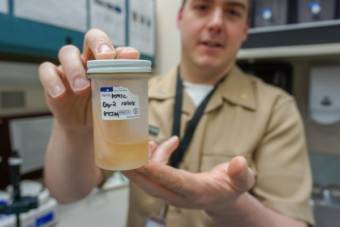
Chris Dankmeyer displays a sample of seal oil in 2018, when researchers were developing a method to heat treat the oil (Photo by Anne Hillman/Alaska Public Media)

Once the seal oil is heat treated, it’s rapidly cooled to prevent the toxin from reforming, and placed in the freezer where all the other traditional foods are.

“And we keep it frozen until it’s time to serve,” Dankmeyer said. “Basically, over there at the hospital, they’re going to dip it out frozen into a serving dish. It’s going to come up to room temp and be eaten.”

Dankmeyer says the last step is to make sure that Maniilaq’s kitchen staff are prepped on how to safely handle and serve the seal oil. For example, it can’t be left out for more than four hours, or it runs the risk of creating more toxin.

In the next few weeks elders can look forward to seeing plates filled with the traditional foods they’ve eaten their whole life.

One person excited to see the reactions from elders is Marcella Wilson, who heads Maniilaq’s long-term care facility. She says elders have been able to have seal oil during the occasional potluck, and she always sees an immediate reaction.

“It brings back memories,” Wilson explained. “Memories of when they were children and how they had the seal oil and traditional foods growing up. And that brings about storytelling. And then the storytelling starts bringing about laughter.”

Wilson says that she’s learned a lot about the Inupiaq culture from the elders, and she expects them to feel more lively as their traditional foods become more available.

“I’m not saying there’s magic in it, because there’s not,” Wilson said. “But there is such a nutritional value to it and such a cultural value to it, that the two together are just immeasurable.”

Dankmeyer says Maniilaq is the first organization in the nation approved to make and serve seal oil, and he’s excited to share their process with other organizations in the future.

Biden suspends new leases for oil and gas development on federal lands, including in Alaska

BLM_NPRA
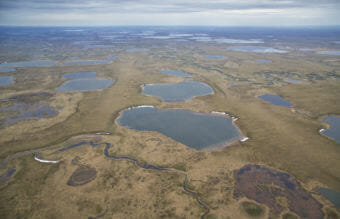
National Petroleum Reserve in Alaska. (Photo by Bob Wick, image courtesy Bureau of Land Management)

President Joe Biden hit pause Wednesday on any new leases for oil and gas development on federal lands, drawing cheers from conservation groups and criticism from the fossil fuel industry.

“We’re going to review and reset the oil and gas leasing program,” Biden said, before signing a series of executive orders aimed at combating climate change.

A piece of one order directs the Interior Department to suspend new leasing until the review is completed.

The order doesn’t prohibit work on existing oil and gas leases. Because of that, it shouldn’t have an immediate impact on oil operations in Alaska, according to Andy Mack, a former natural resources commissioner for the state.
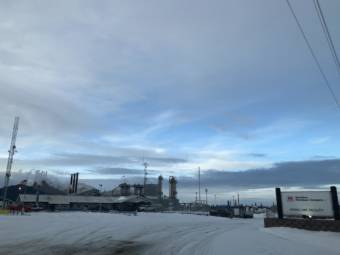
“Alaskans should take a deep breath because there are already a tremendous number of acres under lease in the most prospective area on federal land, which is the National Petroleum Reserve,” he said.

The reserve, on the western North Slope, is home to some of the state’s biggest, planned oil projects — including ConocoPhillips’ Willow prospect. A Conoco spokeswoman said the company has the required permits for its work in the reserve this winter.

But Kara Moriarty, head of the Alaska Oil and Gas Association, said she’s concerned about the impact of Biden’s order beyond this winter.

There’s no set time limit for the Interior’s review, according to a department spokesman.

“So,” Moriarty said, “you don’t know how long that ban on leasing is going to be.”

Moriarty also expects the suspension to be the first step in sweeping changes under Biden.

“I think it’s fair to say that our leasing and permitting program on federal lands is going to change. We just don’t know how, and we just don’t know when,” she said. “So that’s just a recipe for the most extreme uncertainty that I could think of.”

While the majority of Alaska’s oil production currently comes from state lands, Moriarty said, “the future is in federal lands.”

Biden’s order to suspend leasing indefinitely follows a 60-day pause on new drilling permits and leases on federal land, unless approved by top Interior officials.

On his first day in office, the president also imposed a temporary moratorium on oil and gas leasing activities in the Arctic National Wildlife Refuge.

Conservation groups have applauded Biden’s orders, saying they’re major steps in the right direction, and a sharp shift from the policies of the Trump administration.

“We’re going to need a bunch more work in the years ahead to correct a lot of the damage that President Trump did in the past four years,” said Andy Moderow, state director for the Alaska Wilderness League.

“But I think we’re on a good strong course,” he said. “And we’re grateful for Biden’s leadership.”

Voice of the Arctic Inupiat, an advocacy group of Inupiat leadership organizations across the North Slope, doesn’t agree.

In a statement, the group said Biden’s orders halting leasing in the reserve and work in the Arctic refuge will have a significant impact on the region’s economy and jobs.

“We’re not climate change deniers. We have lived in the Arctic for thousands of years and have witnessed first-hand its effects on coastal erosion, melting sea ice and subsistence resources. We’ve worked hard to balance the health of our environment and culture with the survival of our people and communities, and we’ll continue to do so,” North Slope Borough Mayor Harry Brower said in a statement from the group.

“Shutting down the industry that supports virtually everything in our region – especially as we struggle with the effects of a global pandemic – will have very real, negative consequences for the indigenous people, and all residents, of the North Slope,” Brower said.

Kenai natural gas plant unlikely to harm endangered belugas, report says

The Kenai liquefied natural gas facility (Photo by Sabine Poux/KDLL)

Marathon Petroleum’s plan for the Kenai liquefied natural gas plant will not likely harm endangered Cook Inlet belugas, according to a Jan. 25 letter from the National Marine Fisheries Service.

That brings Marathon one step closer to reopening the Nikiski plant as an import facility. Marathon subsidiary Trans-Foreland Pipeline got the green light from the Federal Energy Regulatory Commission to reopen the plant in December.
In the letter, the National Marine Fisheries Service said Marathon’s plan will probably not adversely affect endangered Cook Inlet beluga whales or their habitat, which extends past Kalgin Island. Nor is the project likely to impact several other species, including local populations of Steller sea lions or gray whales.

That’s because the proposed upgrades to the facility will occur on land, the letter said. The project also doesn’t propose any changes to current vessel operations.

But the plant would emit greenhouse gases, through the venting of excess boil-off gas during ship unloading. The report said the effects of those emissions on the listed marine species would be insignificant and the facility emitted more greenhouse gases in the past.

The Kenai LNG facility ran for years as a natural gas exporter, under ConocoPhillips. At one point, it was the country’s sole exporter of LNG and Japan’s only source for the commodity.

As the market became more competitive, ConocoPhillips mothballed the facility in 2017. Marathon bought the plant in 2018.

The company is still not certain it will act on its proposal to reopen the plant and flip it from exports to imports. If it did, Marathon could use the imported gas to power its refinery down the street.

Sitka fish and game committee speaks out about climate change

Members of the Sitka Advisory Committee expressed concern that climate change is impacting habitat for fish and game resources that commercial, sport and subsistence users rely on. (Photo by Erin McKinstry/KCAW)

Sitka’s local fish and game advisory committee is speaking out again about climate change and its impacts on commercial, sport and subsistence activities.

When the group met on Wednesday, they signed off on a letter to other advisory committees around Alaska urging them to take action. Last November, the group unanimously passed a climate emergency resolution, and in February, they were part of an effort that unsuccessfully petitioned the city assembly to do the same.

The city has since formed a task force to address climate change locally.

Member Stacey Wayne who holds the shellfish seat, said at the meeting that part of the Sitka advisory committee’s job is to advise others on wildlife conservation and use, including matters related to habitat.

“We’re fighting as user groups to have fish to fish, and our seasons are collapsing and our stocks are collapsing, and all of these are related to climate change,” Wayne said. “And so our job is to preserve opportunities to fish and hunt for the community.”

Support for the letter was almost unanimous, but member Luke Bastian, who holds the guide seat, did have some concerns.

“I think there’s unforeseen consequences there, and I don’t know if it actually gains us anything,” he said.

Wayne and others disagreed, saying that calling on other advisory committees to take action could have a tangible impact.

“Maybe with many voices pressuring local governments to become louder in support of stopping climate change and taking actions at the local level, there can be an impact to help preserve and protect the habitat for the species that we’re supposed to be protecting,” she said.

The committee also signed off on a letter opposing the decision to reverse the Roadless Rule in the Tongass National Forest and filled or renewed positions on the trapping, processing, alternate and sport fishing seats.

Federal mining authorities ID man who died working at Red Dog Mine

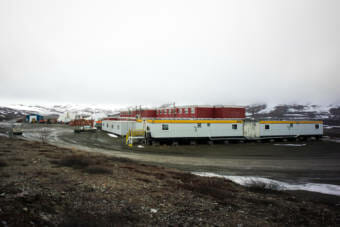
Secondary housing and offices at Red Dog Mine. Red Dog is 90 Miles north of Kotzebue, 50 miles inside the Arctic Circle. (Ian Dickson, KTOO)

Federal officials have identified the Red Dog Mine employee who died there on Saturday.

According to a preliminary report from the Mining Safety and Health Administration, 47-year-old driller Dustin Thomas was lowering the mast of a production drill to pack it up. During the operation, the drill turned and caught Thomas’s leg in some equipment.

Another employee reversed the drill rotation to free Thomas’s leg. He was transported to a mine clinic, where he died less than 90 minutes after the accident. Thomas had worked at the mine for more than seven years.

Teck Alaska, the operator of the mine, said no other employees or contractors were injured and that “there is no ongoing safety or environmental risk.”

A federal investigator is still at Red Dog Mine to determine the nature of the accident in their final report. To date, this is the sole fatality report the federal mining safety authority has filed on Red Dog.

A major employer in the Northwest Arctic Borough, Red Dog Mine is the largest zinc mine in the world, located about 90 miles north of Kotzebue.

Site notifications
Update notification options
Subscribe to notifications