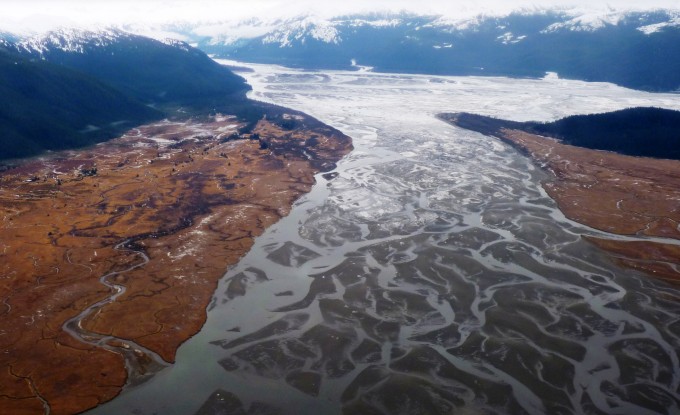
The Stikine River empties into the ocean near Wrangell. Mines and energy projects proposed for upstream sites in Canada are worrying some municipal and tribal governments. (File/CoastAlaska News)
Wrangell has joined with a dozen other Southeast municipal and tribal governments in calling for stronger protections from mines in Canada that straddle transboundary watersheds.
Wrangell’s assembly and residents say the issue is especially pressing to the community, which sits in the mouth of the British Columbia-originating Stikine River.
That’s because there aren’t financial or legal protections in place for Southeast Alaska tribes and communities that depend on transboundary salmon watersheds. If a mine dam failed in Canada, it argues the downstream waste could devastate the environment and economy of communities like Wrangell.
Wrangell Mayor Steve Prysunka says he’s seen firsthand how mines have been abandoned in Canada, “And I’m here to tell you it was insane,” Prysunka told the assembly at a meeting on October 26.
In a previous job, he ran canoe trips on the Iskut River — the largest tributary of the Stikine — near the old Johnny Mountain mine site. “This was shortly after the shutdown and they literally walked away. We’d go into a building and there would still be the beakers inside the lab with Bunsen burners and rain gear still suspended. It was like they just disappeared. And over the course of three years or four years, I watched that tailings pond drain down the side of the mountain … It was this unreal turquoise color that was just unnatural. It reminded me of Lake Louise in Alberta. And it was just filled with all these minerals and was all draining down into the Iskut and into the Stikine.”
But Prysunka’s larger point was that it’s important to protect Wrangell from legacy pollution. The borough’s resolution points out how the Stikine River is integral to Wrangell’s fishing economy, the work of the community’s Marine Service Center, and the traditional lifestyle of the indigenous population.
Wrangell resident and artist Brenda Schwartz-Yeager spoke in favor of the action at the assembly’s Tuesday meeting.
“I believe that for all of us here, whether you’re a fisherman, a health care worker, a teacher or a boat repair person, a little bit of Stikine River water runs through just about everything we do here in Wrangell,” Schwartz-Yeager told the assembly. “I don’t think this community would exist at all if it wasn’t for the remarkable richness and bounty of the Stikine. It’s a fragile ecosystem.”
Schwartz-Yeager told the assembly she finds it “incredible and scary” the size of the tailings upriver from Wrangell.
The largest mine operating in the Stikine River watershed is the Red Chris Mine, operated by Imperial Metals since 2015. That’s the same company that operated the Mt. Polley Mine that had a tailings dam failure in 2014. The tailings dam which holds mine waste from the Red Chris Mine is more than twice as tall.
“These mining companies have a pretty deplorable track record for taking responsibility for previous messes that they’ve made,” Schwartz-Yeager said. “We have a lot to lose, and they kind of have a lot to gain and really not a lot to lose. I feel like we need a place at the table, and I feel like this resolution will help bring us closer to using the treaty to put some teeth in the agreements that might help us downstream stakeholders. We just need a voice.”
The Southeast Alaska Indigenous Transboundary Commission is a coalition of 15 tribes that banded together in the wake of the 2014 dam failure. Wrangell tribal citizen Tis Peterman is a former executive director of the commission, and said in an interview that they’re still working to gain representation as stakeholders in transboundary watersheds.
“We feel as tribal members in Southeast Alaska, that we should have a voice,” Peterman said, “Because anything that’s being done on the B.C. side on transboundary mining is going to affect downstream communities.”
Peterman says the Canadian government needs to recognize the rights of all indigenous peoples affected by its actions, not just those within a relatively recent border: “Tribes have pretty well taken care of the land for thousands of years. And to have a say in how the waters are being affected in Southeast Alaska is one of our rights.”
“It’s literally out our back door. Look across the backchannel. There’s Canada,” Peterman added.
Wrangell’s local tribe, the Wrangell Cooperative Association, is a member of SEITC, and had already passed a resolution asking for more engagement and protections from the effects of transboundary mines.
But Alaska critics say that call for IJC oversight of transboundary mines hasn’t borne fruit.
“Until we have binding protections in place, we are just sitting ducks below what everybody calls these ticking time bombs,” says Jill Weitz, the Juneau-based campaign director for Salmon Beyond Borders, one of the organizations that requested a resolution on transboundary mining protections from Wrangell’s government.
Like Peterman, Weitz notes that the community of Wrangell is mere miles from the mouth of the Stikine River.
“Nearly the entire riparian corridor of the Stikine watershed is staked with mineral claims –54% of the river’s lower watershed is covered by mineral claims that overlap with salmon spawning habitat,” Weitz explains. “We’re not under the illusion that mining is going to stop or that any of us are going to stop mining in British Columbia. We need some of these resources towards the energy transition that is underway in face of a changing climate. But mining can be done better, it has to be done better.”
Alaska and B.C. regulators have been meeting regularly to discuss transboundary mining issues since 2016 under a bilateral agreement signed during Gov. Walker’s administration. And state officials say their B.C. counterparts do consult with them when permits are being reviewed for mines in transboundary watersheds.
This isn’t the first time Wrangell has called on the Canadian government to create a table for discussion with indigenous and municipal governments from Alaska — the assembly passed resolutions in 2017, 2019 and 2020. But it’s a stronger request than before, with a call for an immediate pause on permitting new mines and a full ban for earthen tailings dams.
Rosita Worl unexpectedly grew teary eyed as she looked at the coho salmon a younger family member had brought her.
The silver fish was a sight she was used to, but one she had learned wasn’t always guaranteed.
“I just cried that our traditions were still viable, and that he was able to still bring food to me as an elder,” she said.
Worl, Tlingit, was born in Petersburg, Alaska, during the 1930s. She was brought up in a subsistence lifestyle, living off the land in Southeast Alaska as her ancestors had. As she grew older, the ceremonies, traditions, and community need for subsistence stayed constant, but the laws surrounding it changed.
She recalled the first time she realized this, as if it were yesterday. She was fishing with other kids from her village as they always did, when state officials suddenly told them that the familiar process was illegal.
“We didn’t know that it was against the law. They confiscated the fish and we couldn’t believe it. We kept saying, ‘what value is it to you to take that fish away and not return it?’ Whereas to us it meant winter food,’” she said.
Decades after this incident, similar legal disputes over subsistence are still occurring. The Alaska Native Claims Settlement Act was intended to protect this Indigenous community right, but the matter did not end up being resolved. As the 50th anniversary of the landmark legislation approaches, the question still remains: what can be done to protect subsistence rights today?
‘An unsettled and unsettling landscape’
(Illustration by Holly Mititquq Nordlum of Naniq Design)
While Indigenous land claims were being settled during ANCSA, many Alaska Natives fought to include subsistence rights in the final bill. The pairing appeared natural. After all, the legislation addressed traditional lands, which seemed inseparable from the hunting and fishing that accompanied them.
However, outright subsistence protections were left out of the final legislation, due to disagreements and a pressured timeline to develop oil. Instead, ANCSA ended up extinguishing all aboriginal hunting and fishing rights as part of the settlement. Congressional intent was for the Secretary of Interior and state of Alaska to “take any action necessary to protect the subsistence needs of the Natives.” Many believed this would be sufficient, but it soon became apparent that more concrete protections were needed.
The omission is viewed as one of the largest unintended consequences and unresolved portions of ANCSA.
“I think the ongoing, unsettled nature of subsistence has caused people to take pause; to see and ask themselves whether that part of ANCSA was a shortcoming,” said Margie Brown, Yup’ik, in an interview with University of Alaska Anchorage.
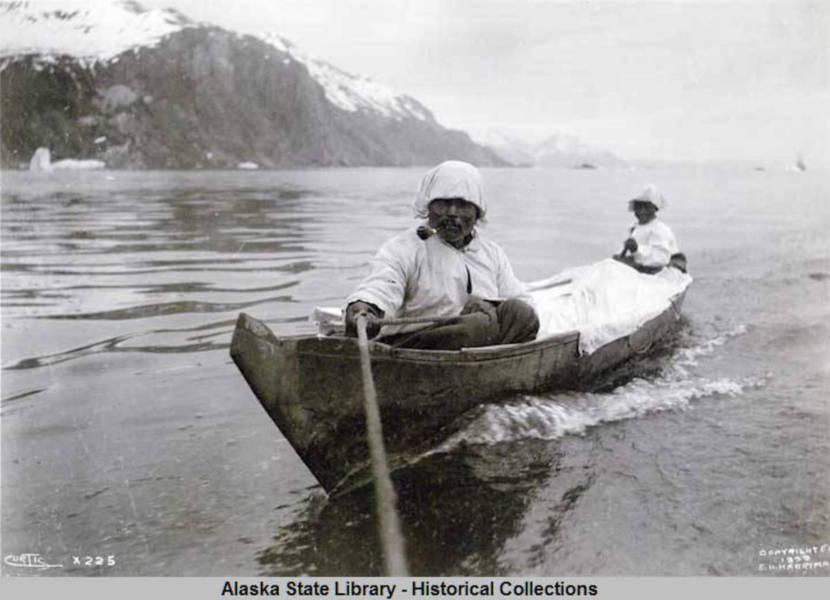
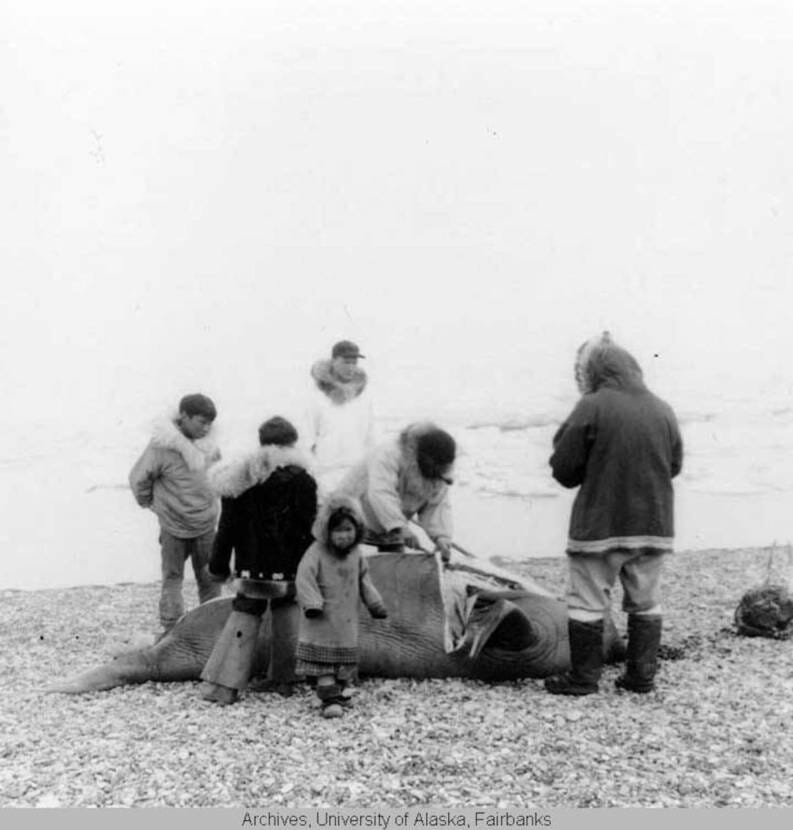
Subsistence fishing in the past. (Photo courtesy of University of Alaska, Fairbanks).
Around 10 years later, there was a second chance to protect subsistence with the passage of the Alaska National Interest Lands Conservation Act (ANILCA). While ANCSA determined the future of Native lands, ANILCA designated what would happen to the rest of state. Through the act, approximately 222 million acres of Alaskan land were put into conservation units such as parks, preserves, wildlife refuges, and national monuments. The decision meant that around 60% of the state was under federal control, making it the highest acreage of federal land ownership in the country by a long shot. Even states known for their national parks hardly compare — Alaska’s federal land is more than that of California, Oregon, Washington, Montana, Wyoming, and Idaho combined.
This time, subsistence was explicitly addressed. ANILCA protected the customary and traditional uses of fish and wildlife for food and other noncommercial use, and made subsistence the priority use on federal lands, above sport or commercial fishing and hunting.
But there was a catch. ANILCA designated subsistence to be a priority for rural residents, not Alaska Natives. Under this law, urban residents could still practice subsistence, they just wouldn’t receive priority status during times of shortage. The rural distinction was a compromise meant to protect Native subsistence, while not discriminating on the basis of ethnicity —something that several influential non-Native groups in the state opposed.
The state of Alaska set out to replicate this policy on non-federal lands, but urban hunters and fishers who considered it unfair were determined to fight it. After a few years of legal disputes, the Alaska Supreme Court ruled in their favor, deeming the rural distinction unconstitutional. The decision meant that any Alaskan resident could practice subsistence on state lands, if the state approved subsistence use in the area for that season.
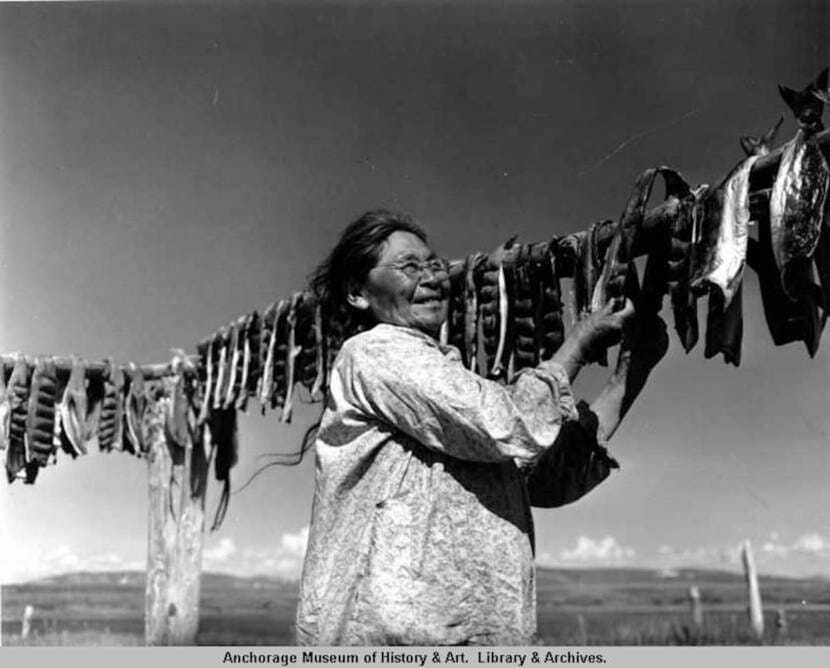
An elder hangs salmon during the 1950s. (Photo courtesy of University of Alaska, Fairbanks).
Today, this dynamic has resulted in a vague and often-clashing dual system. The federal government regulates subsistence on the 60% of Alaskan land under federal control, while the state regulates subsistence on the 30%of Alaska which is under state management, the 10% which is privately owned, and navigable waters.
“You’ve got three different land jurisdictions in Alaska: you’ve got the state lands, you’ve got the federal lands, and then there’s this 40 million acres of Native lands,” said John Sky Starkey, Cheyenne River Lakota Tribe, a lawyer who has spent decades representing Alaska Native organizations in subsistence cases.
Since ANILCA passed, there have been several lawsuits between the state and federal government that have put this system to the test.
“Although the laws can potentially provide protection, the implementation of the laws is greatly lacking. And the legal meaning of the laws is also still in flux,” he explained. “In both the federal and the state regulatory regimes, Alaskan Natives have really very little say in what the regulations are going to dictate and the restrictions that they’re going to cause.”
Subsistence, a practice which past generations participated in without question, had now become a complex legal puzzle.
“It’s a very unsettled and unsettling [legal landscape] for Alaska Native people,” Starkey said.
‘An embodied way of life’
“We don’t think about subsistence as merely a quantifiable event. Subsistence is a whole structure, it’s a way of life,” explained Haliehana Alaĝum Ayagaa Stepetin, Unangax̂. Stepetin grew up subsistence fishing and hunting in her homelands on the Aleutian Islands. Today, subsistence is part of everything she does: her PhD research in Native American studies at the University of California Davis, her teachings at the Alaska Native Studies program at the University of Alaska Anchorage, and her performance and choreography of traditional Unangax̂ dance.
“It’s an embodied knowledge, an embodied way of life. And when we dance about these activities, we’re extending that process of subsistence,” she said.
From the Athabascans in the interior to the Inupiaq in the Arctic, this sentiment is consistently echoed. The practice itself looks different across the varying Alaska Native regions. Some communities hunt seals and whales along icy coasts, others fish for salmon during the long days of the midnight sun. The ceremonies might vary, and the passed down stories might differ. But despite these contrasts, all tribes have one aspect in common: subsistence means more than just food security, it also has greater cultural significance.
“Subsistence is absolutely critical to our survival. Without it, we don’t exist out here,” said Steve Ivanoff, Inupiaq, a subsistence hunter and fisherman from Unalakleet, a village of about 600 people in Western Alaska. For him, subsistence meant the community gathering and sharing of food from nature.
It can be difficult for those who aren’t familiar with subsistence to fully understand this concept.
“A major issue is that the general public, overall, does not understand the full significance of subsistence hunting as one, our basic food security, and then also the cultural dimensions of it,” explained Worl, who has a PhD in Anthropology and a renowned career in subsistence research and advocacy. She currently works as the president of Sealaska Heritage Institute and spent years on the Alaska Federation of Natives’ subsistence committee.
Worl believes some of the disconnect stems from antiquated views of Indigenous people, in which others expect them to be solely traditional, rather than the reality of modern people living in current times, who also practice their traditions.
“These spiritual things, they’re important to our cultural survival. And I don’t know that people realize that, because they see us driving cars and dressed up in modern clothes,” she said.
Stepetin also encountered misunderstandings surrounding subsistence, both as a teacher and a student.
In her PhD program, she found that the term “subsistence” was often corrected to “sustenance,” and that people viewed it in the same light as agriculture.
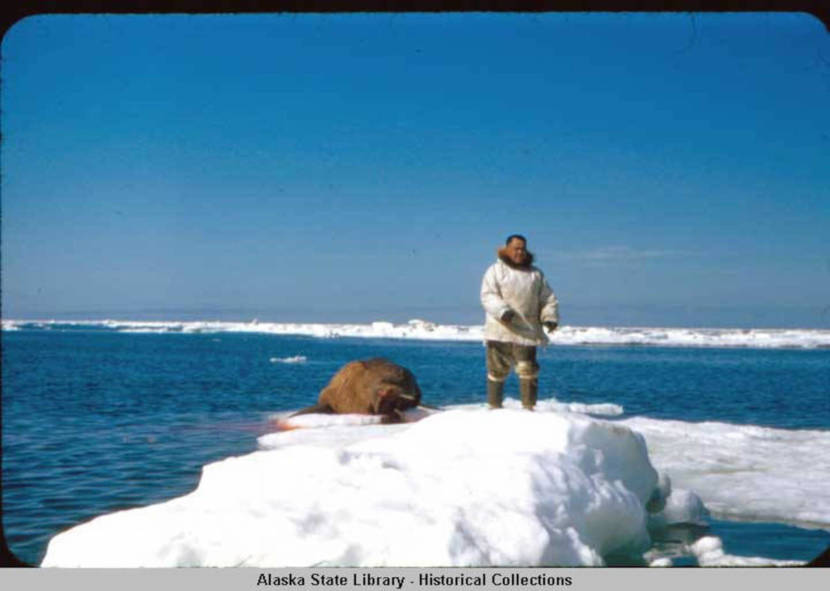
Past walrus hunting practices. (Photo courtesy of University of Alaska, Fairbanks).
“It’s always surprising to me that people don’t know what subsistence is, which is really just living a balanced and sustainable lifestyle with your local ecosystem, and stewarding that ecosystem for returns to come for generations in the future,” she said.
As a teacher of Alaska Native studies, she tries to emphasize this point for students who might be unfamiliar with the tradition.
“All of our our pedagogy revolves around transfers of subsistence, which includes sharing, storytelling, dance, song, and eating together,” she said. “It permeates into every single part of an Alaskan Native existence. So I try to make it clear in my curriculum.”
She starts by encouraging her students to think beyond what’s represented in mainstream culture, which can be a challenging exercise for anyone.
“It takes a lot of introspection to even be able to understand that there’s a whole other way of living and thinking and being in the world that exists,” she said. “So really, it’s a philosophical question of, “Can I get these students to think in a different way?’ And to think critically and to think deeper about the ways that people have adapted to living in place over time.”
For many Alaska Natives, the highlight of subsistence is the generational bonding formed over passed down knowledge and shared experiences.
“It’s an important part of our wellness, our health, and our healing culture. It’s the very center of who I am as an Alaska Native person,” said Jody Potts, Han Gwitch’in Athabascan. “And it’s important for me to be raising my kids this way.”
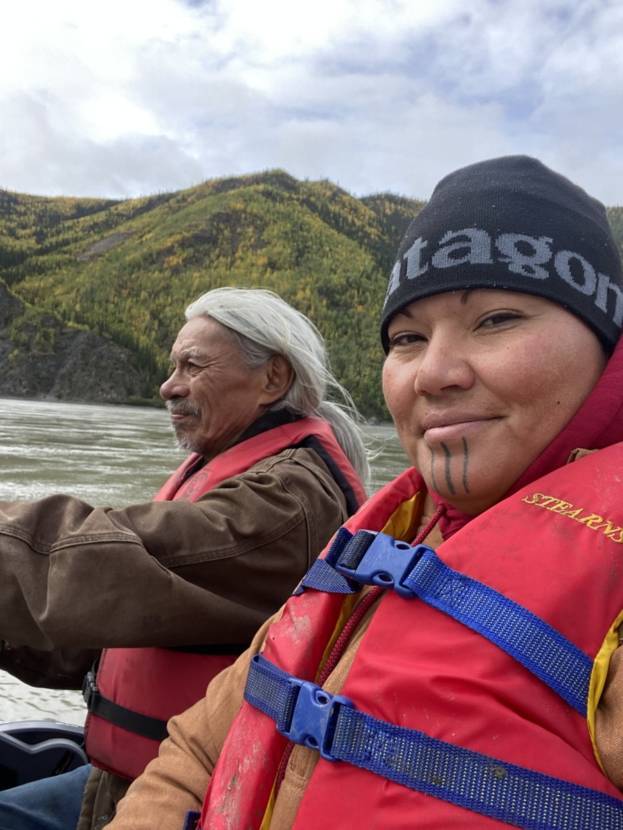
Jody Potts on the Yukon River.(Photo courtesy of Jody Potts, 2021)
But in recent years, the legal landscape has made the crucial generational component more difficult to fulfill. Subsistence life is usually tied to the village one is from. In the summers, people travel to their fish camps — settlements near one’s village where people fish, oftentimes in the same location their ancestors had practiced subsistence. In the winter, they trap or hunt in areas located near their village as well.
Today, an increased number of Alaska Natives have moved away from their family’s village to urban areas, such as Anchorage, for employment or educational opportunities. However, many still have ties to their home village, and return for key community events, such as subsistence practices and celebrations.
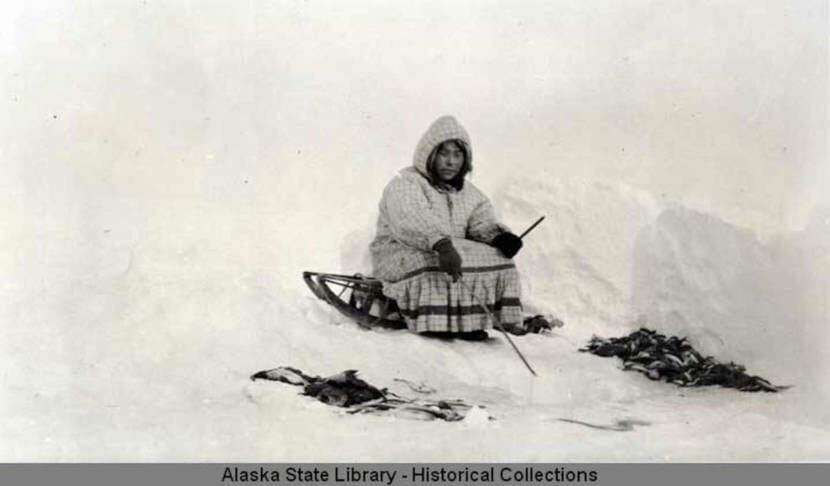
Ice fishing subsistence practices of the past. (Photo courtesy of University of Alaska, Fairbanks).
“They want to continue to engage with their village and their kin and everybody around subsistence activities. They want to bring the kids up with that culture. And because of this rural priority, if they live somewhere other than in the village, then they’re cut out, which causes a great amount of consternation to people,” Starkey said.
If the federal government exercises its authority to close a river to subsistence fishing to anyone who’s not a qualified rural resident, that means their own family can’t come out to fish camp anymore, says Starkey. Because federal subsistence protections extend to rural residents, urban Alaska Natives aren’t included.
“It’s just becoming a real tool for assimilation,” he explained.
Even those who do qualify for the rural precedent can have their access removed. For example, in 2006, the Federal Subsistence Board terminated the Southeastern village Saxman’s rural status and grouped it in with the larger town Ketchikan. For 10 years, the small community of 400 worked to restore their subsistence access before it was finally granted.
It’s situations like this that reveal how the rural precedent can be unpredictable, and demonstrate why some Alaska Natives would favor a law that more directly protects their subsistence practices.
“This does not mean that non-Natives from Anchorage and Fairbanks can’t go out and take a moose or go fishing,” wrote Thomas Berger in his 1985 Report of the Alaska Native Review Commission. “What it does mean is that I believe Congress should entrench Native subsistence rights, so they cannot be placed in jeopardy by any future state action.”
The argument that Berger made almost 40 years in his report to the Inuit Circumpolar Conference is still being debated today.
Basic rights, different wavelengths
In theory, the current legal setup is designed to provide equal hunting and fishing opportunities for all Alaskans. But some argue this approach doesn’t account for pre-existing societal inequities.
Most Alaska Native villages are located in highly remote areas, disconnected from roads and far from other communities. Food must be shipped in by plane or boat, and the unconventional transportation route can cause prices to skyrocket. Expensive airfare and unpredictable weather conditions can make grocery deliveries unreliable.
“There is currently this notion that all Alaskans, regardless of whether or not they’re living a subsistence way of life, are subsistence users. And if everyone is, then it dilutes the so called priority for real subsistence users. If everybody is a subsistence user then what does priority mean?” Starkey said, referring to the state’s subsistence laws.
Worl sees cases of these inequities all the time. For example, during the pandemic, transportation to the village of Kake was interrupted, meaning the coastal town was unable to get a steady supply of commercial goods during the health crisis. In light of the urgent situation, the village applied for an emergency subsistence use permit. The request was initially denied, briefly approved, then stalled by a lawsuit from the state government.
“It just seemed like it should be a basic right. But we must be on different wavelengths than other people,” she said.
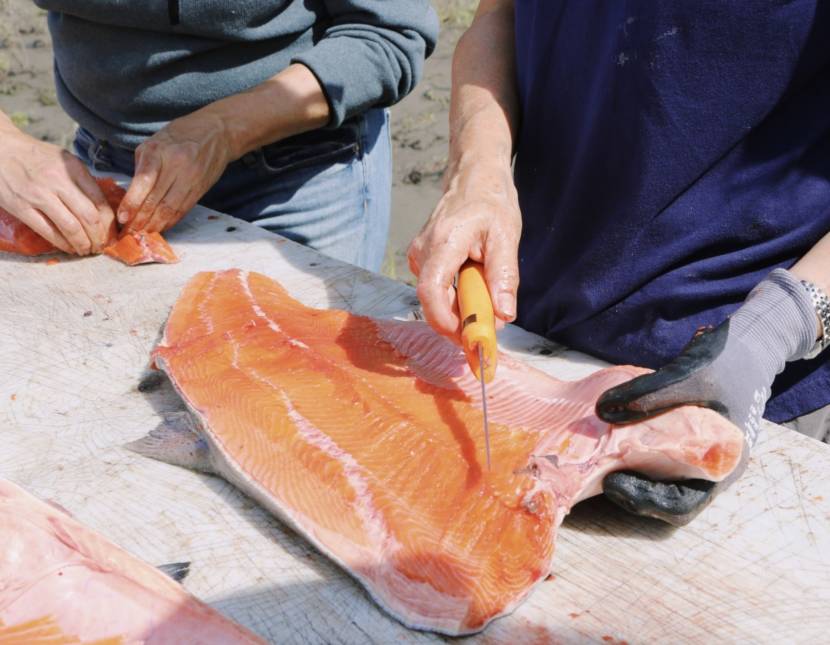
Cutting the salmon at fish camp on the Yukon River in Alaska.(Photo by Meghan Sullivan, Indian Country Today)
To make matters worse, it occurred at a time when the health qualities of subsistence food were especially sought after.
“There was this great concern for elders who were more susceptible to getting COVID,” she said. “And the community really wanted them to be able to have this healing food.”
The case demonstrated how Alaska Native subsistence rights can often become tangled in legal conflicts focused on state vs federal power. Matthew Newman, an attorney for the Native American Rights Fund, says they should be two separate issues.
“Unfortunately, the board’s effort here has been attacked as part of a much different battle between the federal government and the state of Alaska about who gets to control fish and game management,” said Newman said in an interview with High Country News.
For those worried that an increase in subsistence practices could lead to a strain on natural resources, data says otherwise. Subsistence users take just 1% of the fish and game harvested in Alaska, according to the Department of Fish and Game, with the vast majority going to commercial fishers and hunters instead.
A worsening situation
The Alaska Native subsistence debate has been occurring for years. But the stakes are even higher in recent times, when a changing climate has altered everything from salmon runs and hunting seasons, to migration patterns and berry growth.
“There are so many threats to our subsistence and our traditional ways of life, be it climate change, be it laws, [other] hunters, and the stress on the resource,” explained Potts.
Many subsistence based communities have been impacted by this first hand. For example, the Yukon River has seen two consecutive years of record breaking low salmon runs, consistent with a decade of downward trends. Around 40 communities in the area rely on subsistence fishing. The situation was so dire that emergency shipments of salmon and other food had to be flown out to particularly afflicted regions.
This dismal data isn’t surprising news to subsistence users. Many have been seeing warning signs for years. Stepetin described how her dad taught her to observe the signs in the land, and note the interconnected nature of the wildlife that surrounded them. This knowledge was based on thousands of years of passed down insights. For instance, when there wasn’t enough snowfall, there would likely be a shortage of berries.
“We’re already Indigenous scientists and already know this. We don’t need outside sources to tell us what’s going on. We can tell them that we’re witnessing and experiencing a changing climate and returns of salmon and the different fish,” she said.
The value of traditional knowledge was apparent to outside perspectives as well. Through his legal work on subsistence, Starkey has witnessed countless times where Indigenous customs predicted food shortages, or traditional management prevented overfishing.
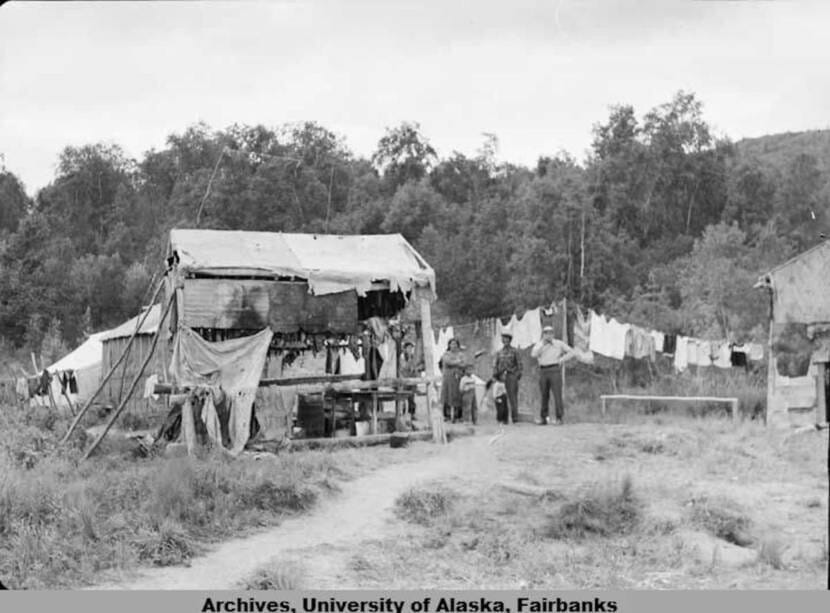
A fish camp in the past. (Photo courtesy of University of Alaska, Fairbanks)A fish camp today (Photo by Meghan Sullivan, Indian Country Today)
He views this as another reason Alaska Natives should have an increased role in subsistence management.
“It’s not just for the sake of Alaska Native people, that Alaska Natives need to be much more meaningfully engaged in land management. It would benefit everyone,” he said.
50 years later, an ANCSA amendment?
From the very start of the legislative process, it was evident that many expected ANCSA lands to be tied to Indigenous subsistence. When ANCSA first passed and the various Alaska Native corporations began choosing the lands they would own, some corporations, such as Ahtna, specifically selected areas that were best for subsistence, says Starkey. Thousands of years of knowledge went into the decision. Decades later, Ahtna has had to consistently fight for hunting and fishing rights on their own lands.
“In one lifetime, we went from being the only inhabitants of our region to co-managing the resources of our homeland alongside state and federal actors,” said Ahtna chairman Ken Johns, Udzisyu Caribou clan, in an essay for the Anchorage Daily News.
It’s another example of the unsettled dynamic between subsistence and ANCSA. But there are still possibilities for change down the line.
“I think that there needs to be amendments made to the Alaska Native Claims Settlement Act that reinstates our Aboriginal hunting and fishing rights,” Potts said.
There are a few potential solutions. One change would be to enable Alaska Natives to manage and harvest ANCSA lands, as they initially believed they would be able to.
This could be accomplished through an amendment to ANCSA legislation. Many in the community, like Potts, believe this is a good compromise: if Alaska Natives aren’t legally given priority to subsistence hunt and fish on all Alaskan land, then they should at least be able to receive priority on their own lands.
Unfortunately, the amendment process would likely be extremely expensive. Already, Alaska Native subsistence advocacy has cost millions of dollars, says Worl. Furthermore, many of the Alaska Native organizations that could lead the process already are inundated with other pressing legal matters.
“There is an estimate that we’ve spent around $20 million trying to protect subsistence, because it seems that every time we try to do something, we end up with a lawsuit. And it’s still ongoing,” Worl said.
This is where the Alaska Native corporations have been able to help: funding. Any legal battle would most likely be a sort of David and Goliath dynamic, where subsistence users would have to go against resource-heavy opponents such as the state and federal government, or special interest groups like sports hunters that receive outside funding from national sporting organizations. Many villages simply don’t have the resources to counter these larger groups. But the Alaska Native corporations, which have more assets and organizing capacity, might be able to provide more assistance.
Subsistence hunting in the early 1900s. (Photo courtesy of University of Alaska, Fairbanks)
Another option would be to amend ANILCA, so that Alaska Natives have priority to subsistence hunt and fish on federal lands in addition to rural residents. This would also likely be a lengthy and expensive process.
The third option is to implement a co-management solution, which would enable Alaska Natives to have greater influence over state and federal subsistence laws.
“In both the federal and the state regulatory regimes, Alaskan Natives have very little say in what the regulations are going to dictate and the restrictions that they’re going to cause,” Starkey said. “They’re left out of control of one of the most important aspects of their way of being. And that’s just wrong. It’s been a huge problem from the beginning.”
As it currently stands, there are three Alaska Native representatives on the federal subsistence advisory board, and one representative from the BIA. However, these voices are often outvoted by the 5 other representatives that don’t have ties to Alaska Native communities. The setup can cause critical subsistence decisions to depend solely on the current administration.
“If your way of life depends on who’s in office every four years, either as a governor or president, what kind of security do you feel about that?” asked Starkey.
Worl also saw a need for a more concrete co-management policy.
“We’ve been pushing and pushing for increased co-management. I know some regions have more success with co-management, but it should be addressed on a statewide level,”’ she said.
Tribes fishing in the Pacific Northwest, where some states have adopted co-management approaches.(Photo courtesy of Linda Tanner, 2018)
This strategy has worked in other locations. In Washington, salmon and steelhead fisheries are managed cooperatively by Western Washington tribes and the Washington state government. The arrangement involves an annual agreement on salmon fishing seasons and on hatchery production objectives in Puget Sound and the Washington coast.
While the region still experiences the type of salmon population challenges that are becoming increasingly common today, the co-management approach has seen positive results overall.
“I don’t know of a better working relationship between a tribe and a state agency,” Scott Chitwood, Jamestown S’Klallam Tribe’s natural resources director, told the Northwest Indian Fisheries Commission in 2007. “By working well together, we’ve been able to make real progress toward recovering Dungeness chinook.”
Even sports fishers who had initially been against a co-management relationship eventually saw the value of Indigenous-led fishing policies.
“I had a lot of sports fishermen come directly up to me. And they put out their hand and they said, ‘Would you please tell the Yakama Nation thank you? Because we know if it wasn’t for their tribe, there’d still be no fish in that river,’” recalled Carol Craig, Yakama, in a 2016 NMAI interview.
As the Alaska Federation of Natives rolls around this year, Worl and others will be including a resolution to amend ANCSA to protect subsistence rights. Considering the cost it would take to change the law, coupled with the many other advocacy campaigns Alaska Native organizations are already handling, she isn’t optimistic that it will pass. But giving up doesn’t seem like an option, either. She’s hoping that increased emphasis on social and environmental justice might just make a difference this year.
“I was thinking this would be the perfect time to try to pursue it when people are looking at social justice and social equity. But again, it takes money to be able to push these things through Congress. So I just don’t know what it’ll take to move it past a stalemate,” she said.
Until then, Indigenous Alaskan communities will continue passing on their traditions despite legal barriers, just as they have done for centuries.
“It’s a sustainable way of life,” Stepetin said. “And we will keep it alive as long as communities with this knowledge continue to transmit it to the next generation, and keep these stories and lessons of subsistence alive within us.”
This story is part of a joint project between Indian Country Today, Alaska Public Media, and Anchorage Daily News on the 50th anniversary of the landmark Alaska Native Claims Settlement Act. Funding for ICT’s ANCSA project is provided in part by the Alaska Center for Excellence in Journalism and the Solutions Journalism Network. Stay updated on ICT’s ANCSA project using #ANCSA50 at https://indiancountrytoday.com/tag/ancsa-50.
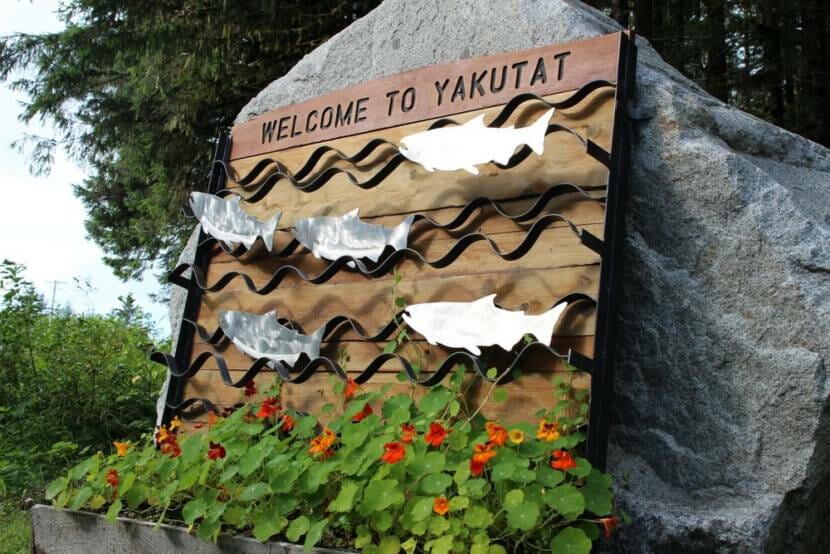
Yakutat is a community of about 600 people on the Gulf of Alaska coast in uppper the crook of the Southeast Alaska panhandle. Emily Kwong/KCAW)
Yakutat is a remote Gulf of Alaska village about halfway between Juneau and Cordova. Its economy has long been tied to fishing, tourism and for the first time since the 1980s, commercial logging. That’s thanks to its Indigenous-owned Native corporation getting back into the timber game, cutting and exporting to foreign shores.
But recently that’s concerned elected officials in both the city and tribal governments, who have called for a halt to cuts in areas they say are ecologically sensitive and culturally sacred to Yakutat’s inhabitants.
Yakutat Mayor Cindy Bremner used to be president and CEO of Yak-Tat Kwaan, Inc. and serve on its board of directors of the village corporation. Since 2015, she’s only been active as a shareholder.
But a couple years back she said she had a hunch and decided to look up local timber plans on a state website. It was there that she first learned of the village corporation’s ambitious logging plans in Yakutat.
“And then the very next day, they had their barge of equipment coming in,” she said. “I just had a bad gut feeling one day, and I was pretty sad to see that they had applied for that.”
Yak Timber, Inc.
Yak-Tat Kwaan’s last public filings with state financial regulators date from 2017. Back then it said it had no plans to log any of its 23,040 acres, or 36 square miles, granted in the 1970s under the Alaska Native Claims Settlement Act.
But the following year the corporation created a new subsidiary: Yak Timber, which got to work quickly. A note to shareholders last summer said that in two years it made $1.8 million in logging and selling cabins and tiny homes.
“It is understandable that some do not like logging,” Yak-Tat Kwaan CEO Shari Jensen wrote in a June 25 letter to shareholders that was partly in response to timber critics.
“Instead of using energy to sabotage Yak Timber, it would be nice to see it being used to help make Yak-Tat Kwaan a viable and a long-term sustainable company for years to come,” she wrote.
Earlier that month, the corporation released an unaudited report that says the corporation earned some $3.8 million from timber in 2019, with a net profit across the board just shy of $800,000 that year.
But that economic boost has been contentious, Bremner said.
“The shareholders, I feel, are kind of torn about the logging going on here,” she said.
Yak Timber needed financing to get heavy equipment for its crews. Since 2019, it’s borrowed at least $7 million, according to documents and statements to shareholders who were told the debt’s necessary to carry the corporation until more timber is sold. The village corporation’s fish plant and timber rights on some of its land have been used as collateral.
The mayor says she’s concerned that Yakutat’s forestland is being sold too quickly to finance the corporation’s ventures.
“They’ve leveraged the resources on our land to be able to do this,” Bremner said. “And I don’t think that is something that they should be able to do.”
ANCSA directs Indigenous enterprises to drive profits for shareholders
Talk to another Bremner and there’s a very different view.
“You’ve got to hear the rest of the story,” said village corporation executive Don Bremner, who is related to the mayor.
“Yes, we’re related — everyone in Yakutat’s related,” he says.
The community has fewer than 600 people and has lost people in the last census.
Don Bremner is president of both the village corporation and its timber subsidiary. The long-term health of the company is good and the debt isn’t a concern, he said.
“We’re a valid business, making real serious business decisions, not based on perception, opinion, without research,” he said. He declined to get into specifics, saying that’s an internal matter for Yak-Tat Kwaan’s shareholders. And because the village corporation has less than 500 of them, it’s not required to file its annual reports with state financial regulators.
But Bremner still dismisses concerns about logging Yakutat’s lands too quickly.
“It’s not a large volume, but the people that have concerns are the folks that will always have those concerns,” he said.
His other message is that Congress created for-profit corporations to enrich Native shareholders. And that’s exactly what Yak-Tat Kwaan is doing, he said.
“We’re a profit-making business and ANCSA directed that we keep making money off of our assets, become self determined,” he said. “If they want to go try change ANCSA, have at it. It’s just not going to happen. Because you’ve got 12 very rich regional corporations making a lot of money off ANCSA. So that’s what we’re doing, is running corporations, profitably.”
Tribes, state historic office raises concerns over Humpback Bay clear cuts
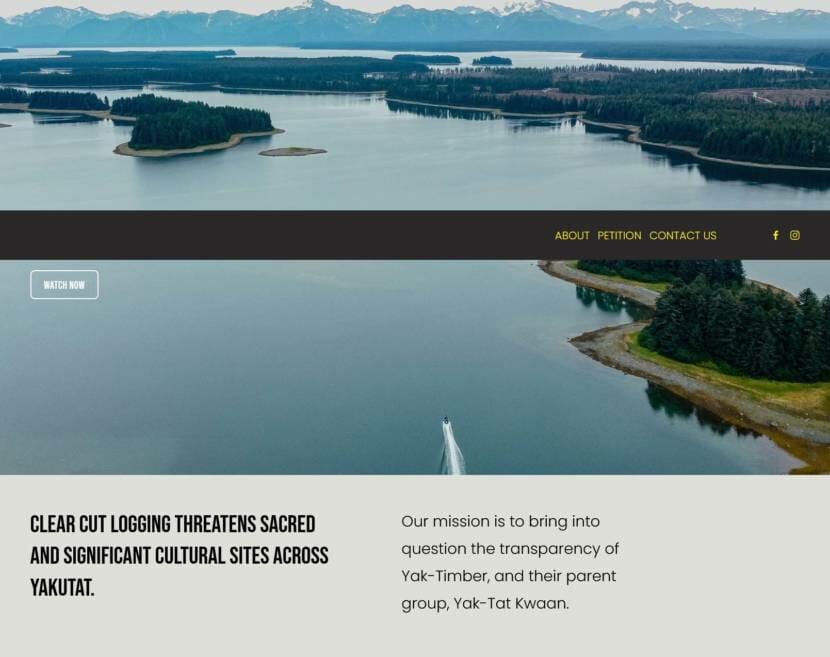
An anonymous “Defend Yakutat” website has emerged criticizing Yak-Tat Kwaan’s timber practices in the community. (Screenshot by Jacob Resneck/CoastAlaska)
But that hasn’t caused the board of directors to shift course. A state fisheries biologist reported that some of the logging was too close to streams, and follow-up visits are planned for November.
But the real fight brewing is over logging planned on a 426-acre tract around Humpback Creek, about 10 miles to the northeast of the village.
As the name suggests, it’s also known for its pink salmon. And its Indigenous name comes from both the Eyak and Lingít languages, which residents say speaks to Yakutat’s history as a crossroads of Native cultures.
“Humpy Creek itself you know, has a lot of significance in our oral history,” said Judith Dax̱ootsú Ramos, who is originally from Yakutat and now teaches immersive languages at University of Alaska Southeast in Juneau. “People were kind of taken aback when they saw the plans for the harvesting in that area and nobody knew that they were going to be harvesting in that area.”
Ramos said the corporation is making its commercial timber plans without consulting elders or anyone with traditional knowledge.
The debate over logging for cash versus conserving cultural resources is a common friction that arises from ANCSA’s legacy over the past half-century.
Tribal governments urge village corporation to rethink logging plans
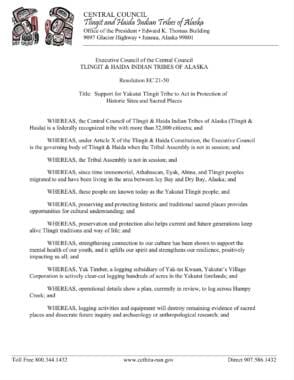
A resolution passed September 28 by Southeast Alaska’s regional tribal government in solidarity with the Yakutat Tlingit Tribe.
State agencies work with for-profit Native corporations to realize the commercial value of natural resources. That’s despite sustained opposition from tribal governments.
Both Yakutat’s tribal council and the regional Central Central Council of Tlingit & Haida Indian Tribes of Alaska have passed resolutions in opposition to the Humpback Creek timber harvests around Humpback Creek.
The state’s Office of History & Archaeology also recently wrote a letter to the village corporation warning that its clear cuts could threaten historic sites. It said there are irreplaceable heritage resources in and near the project area.
But good-paying jobs in Yakutat are scarce in the community, which is losing population. So the promise of timber jobs and cash dividends does resonate, said Cindy Bremner, the mayor.
“Has it been good for the local economy and putting people to work and contributing to payroll taxes?” she asked. “Yes. Do I like that? Yes, I do. I don’t like the way they’re doing it.”
She added: “They could have come up with a 20-year sustainable plan that wouldn’t have required clear cutting. And more people could have gotten on board with something like that.”
Yak-Tat Kwaan to face shareholders in November meeting
There appears to be a reckoning coming in Yaktuat. Successive shareholder meetings have been canceled this year. The corporation said that’s due to COVID-19 precautions and other scheduling problems.
“It’s not some kind of world secret that there’s a pandemic going on,” Don Bremner said.
Cindy Bremner said shareholders plan to try and hold the village corporation accountable when board directors are up for reelection. She said there’s a clear disconnect between Yakutat residents, village corporation shareholders and those calling the shots.
“Most of those board of directors don’t even live here anymore, and don’t have to see the devastation of clear cut logging every day like we do,” she said.
The Nov. 20 meeting could be a referendum on Yakutat’s satisfaction with the last few years of commercial logging. But it will only be open to its few hundred shareholders, many of whom make their homes elsewhere.
Students and teachers at a preschool designed to immerse children in the Alutiiq language in 2017. (Kayla Desroches/KMXT)
The Alutiiq language has lost four speakers in the last year. Tribal leaders say it’s a big loss — out of the 30 remaining speakers, there are just a handful of people left who are able to teach Alutiiq.
Candace Branson, the Sun’aq tribe’s program services director, says there’s plenty of interest in learning the language, but there aren’t enough people qualified to teach it.
“That’s a great problem to have. Everybody wants to learn — what a problem, right? But right now, we’re not able to fill those roles. We’re struggling to keep the programs running because we don’t have enough teachers,” Branson said.
Branson says the Sun’aq tribe’s new master-apprentice language program’s goal is to train Alutiiq teachers.
“We submitted an application to the Administration for Native Americans to fund a three-year language, Alutiiq preservation and maintenance grant. And the grant includes developing a master-apprentice program that would teach adults how to speak Alutiiq fluently, as fluently as second language speakers could,” Branson said.
Branson says the tribe plans to start accepting applicants from potential apprentices in December after the tribe’s annual meeting. Applications would be reviewed in January, and the first two apprentices would begin their full-time program in March.
The program includes a stipend, so language learners can focus on Alutiiq.
Branson says one long-term goal is to create what she calls an immersion house — a live-in setting where apprentices and masters would study and speak Alutiiq all day long.
“The end goal is for Alutiiq to be a language that is used in Safeway,” Branson said. “Used at the coffee shop, used between mother and daughter and grandchild. And we have to start with teaching adults who can teach their families and teach other kids and teach other parents. We have to get some people fluent.”
The objective for the three-year program is to produce five speakers who will be fluent enough to teach the language in school.
Erick Heimbigner keeps an eye on his son, 4-year-old Emmett Heimbigner, as he practices riding his bike at the Archipelago Lot along Juneau’s Seawalk on Oct. 21, 2021. Juneau Docks and Harbors officials want to rename the lot “Peratrovich Plaza” after the Alaska civil rights leader and the subject of the mural behind them. (Jeremy Hsieh/KTOO)
On Thursday, 4-year-old Emmett Heimbigner was doing some wobbly laps on a bike that recently got pedals.
“I am Emmett, and I’ve learned to ride a bike, and I haven’t done it by myself,” he said.
His dad was keeping an eye on him, and so was Alaska civil rights leader Elizabeth Peratrovich — in the giant, three-story mural behind him. Emmett didn’t recognize her, but the decked-over lot along Juneau’s Seawalk could soon be renamed for her: “Peratrovich Plaza.”
Right now, this prominent public space is called “Archipelago Lot 2A.” Few people know it.
Officials with Juneau Docks and Harbors think Peratrovich Plaza is a better name that fits with the new public art. It would also help teach throngs of cruise ship visitors a little about Alaska civil rights history.
The archipelago name seems to come from a boring legal description of the property. Kirby Day, who’s worked for the cruise industry in Juneau for decades, said it’s not well known.
“When you say ‘Archipelago Lot’ no one really knows what that is or what that means,” he told the Docks and Harbors Board on Wednesday.
That checked out with people walking by during the lunch hour on Thursday. Emmett’s dad, for example, didn’t know the archipelago name but knew Peratrovich.
Docks and Harbors officials want to rename the lot, both to fit with the new mural that was finished in September, and to help people get around the waterfront better.
“There’s a natural flow to naming it Peratrovich Plaza, given the mural’s existence there,” said board member Mark Ridgway. “And we’re talking about people who are just walking off of a boat. I’d like it better than, say, ‘the Norwegian Nook’ or ‘the Carnival Corner’ or ‘the P&O Outlook.’”
Paul Grant voted no. He said he’s an “unreserved admirer” of Peratrovich but thinks she’s already well-known and recognized in Alaska. And he said the public ought to be more involved in picking a name. The board did get one letter about the name change, asking that it be named for miners or fishermen.
Ray Wilson was also walking the waterfront on Thursday. The Lingít elder has lived in Juneau most of his life and wears a hat that says “Native veteran.”
Ray Wilson poses for a photo on Juneau’s Seawalk on Oct. 21, 2021. Wilson, who is Lingít, says including Elizabeth Peratrovich, the Alaska civil rights leader that is the subject of the mural behind him, in Juneau history would be a big step toward recognizing Alaska Native people. (Jeremy Hsieh/KTOO)
“I think for a long time, the City of Juneau hasn’t recognized Native people,” Wilson said. “And haven’t given them enough credit for what they do and what they put into the pot, so to speak.”
Wilson also has a fuzzy memory that he might be a distant relative of Elizabeth Peratrovich.
“To include Peratrovich in Juneau history is a big step towards recognizing Native people,” Wilson said.
Before the recommendation goes to the Juneau Assembly, the Docks and Harbors Board has to vote on it at one more meeting.
Correction: An earlier version of this story misstated Ray Wilson’s age. The Lingít elder will turn 89 in December.
Tlingit and Haida President Chalyee Éesh Richard Peterson in his office. (Claire Stremple/KTOO)
Lt. Gov. Kevin Meyer has certified an initiative that would require the state of Alaska to officially recognize all of Alaska’s federally recognized tribes.
The action means a group called Alaskans for Better Government can start collecting signatures to put the measure before voters next year. The group is chaired by President Richard Chalyee Éesh Peterson of the Central Council of Tlingit and Haida Indian Tribes of Alaska.
“As we try to build communities, build a better Alaska, it’s about relationships,” said Peterson. “And so the fact that the state of Alaska doesn’t recognize us currently is kind of a barrier in the building blocks, right? So that’s what it really comes down to.”
The federal government recognizes 229 Alaska tribes. That recognition acknowledges that the tribes are sovereign and have a government-to-government relationship with the feds.
In a legal opinion on the initiative, an Alaska assistant attorney general said it’s not clear that recognition would have any legal effect on the relationship between the state and the tribes. But he said there’s nothing unconstitutional about the proposal.
Organizers of the initiative say state recognition is hugely symbolic but would have practical impact, too. Barbara Wáahlaal Gíidaak Blake noted that a lot of tribes are in places with no other form of local government.
Barbara Wáahlaal Gíidaak Blake in 2018 when she was a senior adviser to former Gov. Bill Walker. (Photo by Skip Gray/KTOO)
“And when trying to do business with our communities when there’s a lack of municipal governments, a lot of state departments will choose to just ignore having conversations with the local people when coming in to do any kind of work in our communities,” Blake said. “And so it does create somewhat of a barrier.”
A bill to require state recognition passed the state House this spring but wasn’t brought up in the Senate.
To get on the 2022 ballot, initiative organizers will have to collect more than 36,000 signatures.
Close
Update notification options
Subscribe to notifications
Subscribe
Get notifications about news related to the topics you care about. You can unsubscribe anytime.