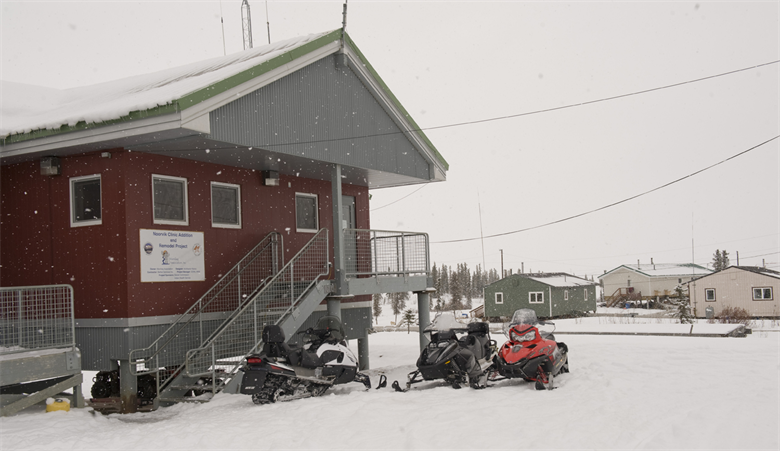
Noorvik’s village clinic. (Photo by Master Sgt. Jack Braden/U.S. Air Force)
Residents of the Northwest Arctic village of Noorvik, where there is no village public safety officer, say their town is feeling increasingly unsafe.
Describing a “dangerous escalation of violence,” villagers have drafted a letter to local, state and federal officials asking for permanent law enforcement.
“Threats of violence are heard on the radio daily,” Angie Sturm said at the last Northwest Arctic Borough Assembly meeting. “I don’t let my daughter go out. She’s not allowed to go outside by herself.”
Sturm serves as finance director for the borough, but she was speaking as a concerned Noorvik resident speaking about how unsafe she and other residents feel, she said.
“There was an incident where there were two individuals shooting at a home, an occupied home where there were children inside,” Sturm said. “And then a couple weeks later, they had an arson of an occupied home, again where children were present.”
Sturm authored a letter signed by 77 Noorvik residents directed at officials including the mayor of the town, Governor Mike Dunleavy and the Alaska congressional delegation saying the community wants an Alaska State Trooper and Village Public Safety Officer posted to the village.
Staffing for VPSO positions has been difficult in recent years for the Northwest Arctic Borough. Recently, though, the borough hired three officers to serve in Kobuk, Noatak and Kiana. The new hires just began their training in Sitka, according to Aucha Kameroff, the borough’s public safety director. Before the new hires, it had been months since there was a VPSO in any Northwest Arctic village.
Kameroff says there are currently seven state troopers that serve Kotzebue and the surrounding villages. However, during the assembly meeting, Kameroff recounted an experience with a trooper official highlighting how inconsistent troopers can be.
“I said, ‘why can’t people from the troopers office, during their work week, go to the village and do their work out of there?’ And she said they’re not available to do that,” Kameroff said. “While at the same time, one of the troopers was sent from this region, from Kotzebue, to go down to cover in Dillingham. I said we have a dire need and this is what’s going on in our region, and then one of our troopers is sent to Dillingham?”
Kameroff expressed the need to continue to pressure the troopers to maintain an effective presence in the region.
VPSOs are hired by local regional nonprofits — in this case the Northwest Arctic Borough. They get funding from the legislature. Last year, Governor Dunleavy cut $6 million from the program, saying that the funds came from unfilled positions. Borough Assembly member Walter Sampson said that at a recent Alaska Municipal League meeting, the governor’s message was different.
“His message was ‘if you have qualified VPSOs that are willing to come to work, let me know. We’ll hire them,’” Sampson said.
Dunleavy was set to call in to the borough meeting, but spokesman Jeff Turner said a scheduling conflict prevented that from happening. A request for comment on the letter from Dunleavy and the Department of Public Safety went unanswered as of this report.
As communities grapple with keeping their residents safe, borough officials say alcohol bootlegging and the introduction of drugs like meth into the villages are exacerbating the problems. Assembly member Sandy Shroyer-Beaver noted that the tight-knit nature of the villages makes reporting crimes an issue as well.
“None of us want to call on a family member or a friend,” Shroyer-Beaver said. “But if we seriously want to make some of these changes, you can’t expect the borough to save you. We can do our part to hire a trooper or get a VPSO, but community members also need to come forward and start assisting.”
While not immediately offering a solution for Noorvik, the borough says they will continue to try to bolster their VPSO program with grants and assistance from the state.
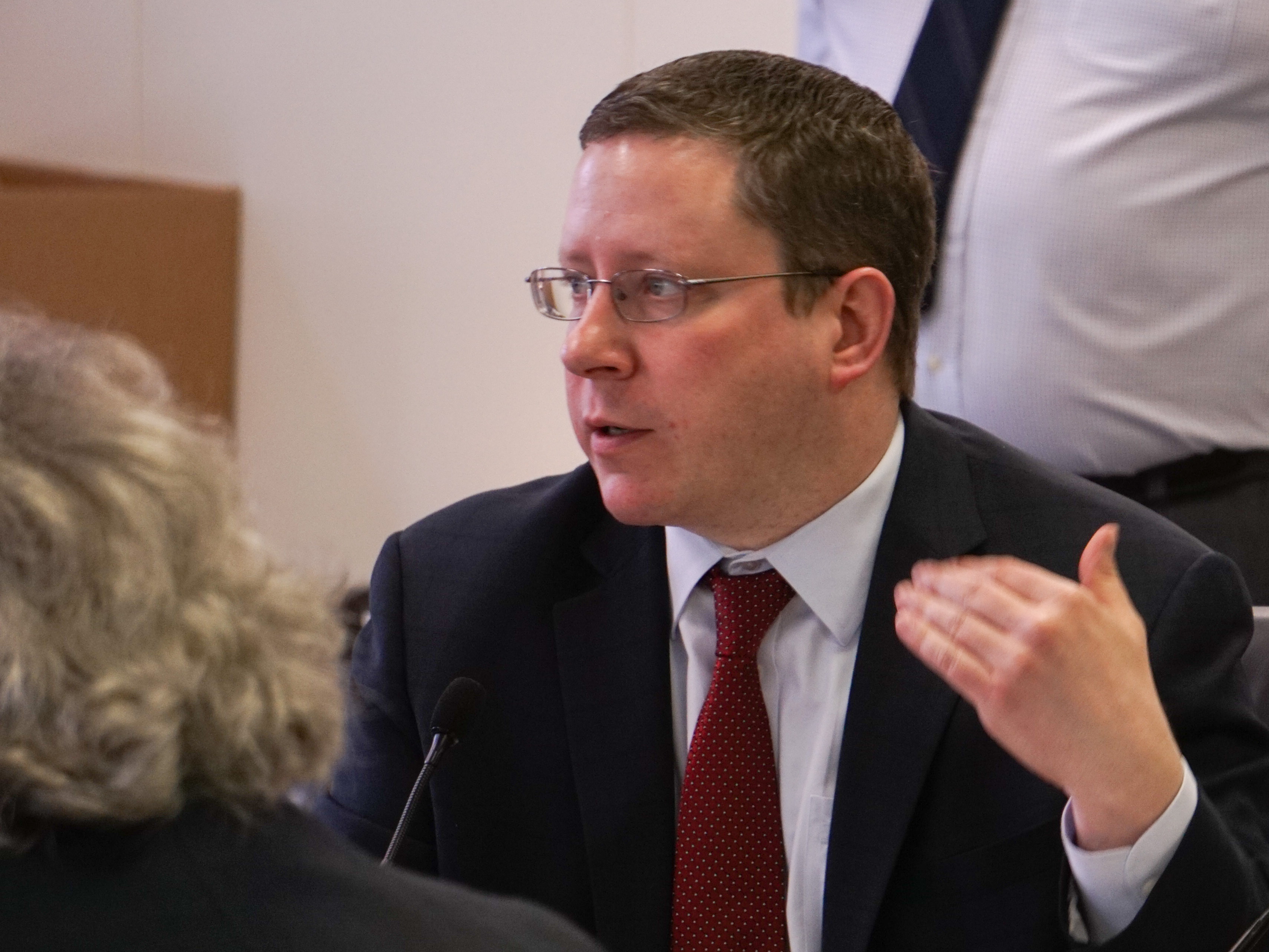
Currently a legislative working group headed by Sen. Donny Olson, a Democrat who represents the Northwest Arctic among other communities, and Rep. Chuck Kopp, an Anchorage Republican, is working with the Department of Public Safety to revise state statutes for the VPSO program which haven’t been updated in decades. Supporters hope it will lead to more effective law enforcement in villages statewide.
While she’s not optimistic, Sturm says she will keep the issue alive until it’s solved.
“I’m going to continue to place pressure on this body, on this state and on our regional organizations until we get somebody in Noorvik,” Sturm said.
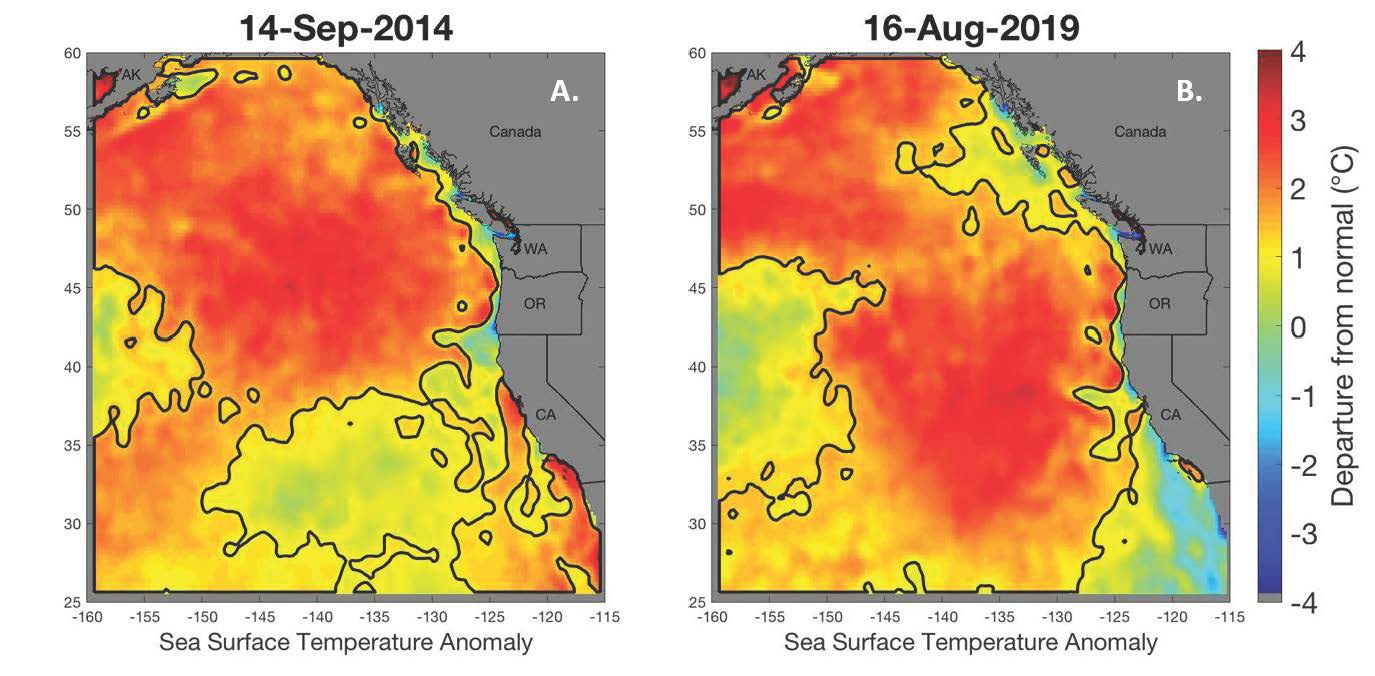
The marine heat wave known as “the Blob” at its near maximum areal extent in September 2014, at left. The 2019 blob is shown at its near maximum areal extent in August 2019, at right. (Graphic courtesy of NOAA)
This past summer, the North Pacific was hit with the second marine heat wave of the decade.
Mirroring the first so-called “Blob” of 2014, scientists measured ocean temperatures as more than 5 degrees above normal, across millions of square miles stretching from Alaska to California.
The first “Blob” decimated fisheries, caused a mass seabird die-off, and spurred toxic algal blooms up and down the coast. In the last year and a half, a second heat wave began brewing.
But then, it disappeared — at least for now.
National Oceanic and Atmospheric Administration research scientist Nate Mantua said they’re seeing surface ocean temperatures drop back to the 30 year average before the first “Blob.”
“Parts of the Bering Sea, the temperatures are a little below normal, which is nice to see for the first time for a few years,” he said. “And most of the area around the Aleutians and the coastal waters in Alaska are back to about normal — normal being the average from 1981 to 2010.”
But that’s not to say that the troubling long-term warming trend that comes with climate change has slowed. Mantua said we may see short-term warm and cold periods, but the warming trend will continue.
“It could go either way in the next few months and the next year. But the longer term, you know, next few decades, you’d expect that background warming is just going to continue to build up.”
University of Washington climate scientist Nick Bond said it’s important to note that the North Pacific never fully returned to “normal” temperatures after the first “Blob.” The second “Blob” just compounded the heat wave, warming waters at a greater depth and at higher temperatures than before.
This winter brought cold, northern winds and heavy storms to Alaska. Storms help to mix up ocean waters and release heat trapped below the surface, but Bond said deeper ocean layers are still hotter than normal.
“This winter, there has been some cooling of those subsurface temperature anomalies, but they’re still well above normal,” he said. “There’s just some concern that, even if these storms keep up, they won’t remove all that extra heat at depth.”
Kris Holderied is a NOAA scientist who studies algal blooms in Kachemak Bay. She said it’s hard to tease out what the effects of this most recent heat wave are — and what’s just a hangover from the first “Blob.”
It’s not always easy to predict where toxic algal blooms will pop up, but recent rising ocean temperatures brought them to many parts of coastal Alaska, she said.
In the Gulf of Alaska, “there were some areas that actually had fairly high blooms and more paralytic shellfish poisoning, and then some that didn’t. And what we’re finding up in the Bering and Chukchi (seas) in the Arctic is that there’s some very high levels of these … cells that cause paralytic shellfish poisoning. And that, with the really warm temperatures that they had up there, was a big concern.”
But with these somewhat colder waters, Holderied is hopeful that coastal ecosystems might start to bounce back.
“We’re going into this spring and summer with the water cooled off a bit. And you can imagine that the near-coastal waters, the shallower waters, can cool off faster because they’re not as deep. And so we’re hopeful that for the near-coastal ecosystems … that’ll be an advantage,” she said. “But it remains to be seen.”
Monitoring over the next few months and fishery surveys this year will help give a clearer picture of the ecosystem impacts of the second “Blob.” But right now, scientists say, it’s just too soon to know for certain.
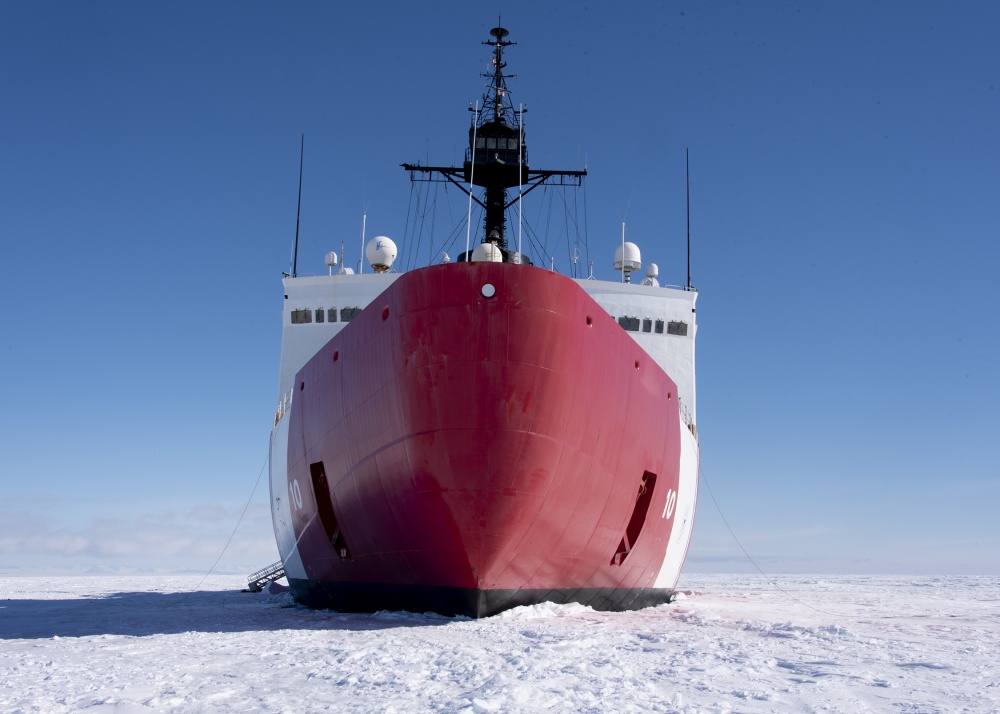
The Coast Guard Cutter Polar Star in fast ice on Jan. 2, approximately 20 miles north of McMurdo Station, Antarctica. (Public domain photo by Senior Chief Petty Officer NyxoLyno Cangemi/U.S. Coast Guard)
An Alaska state representative wants the federal government to name one of its new polar icebreakers the Polar Bear.
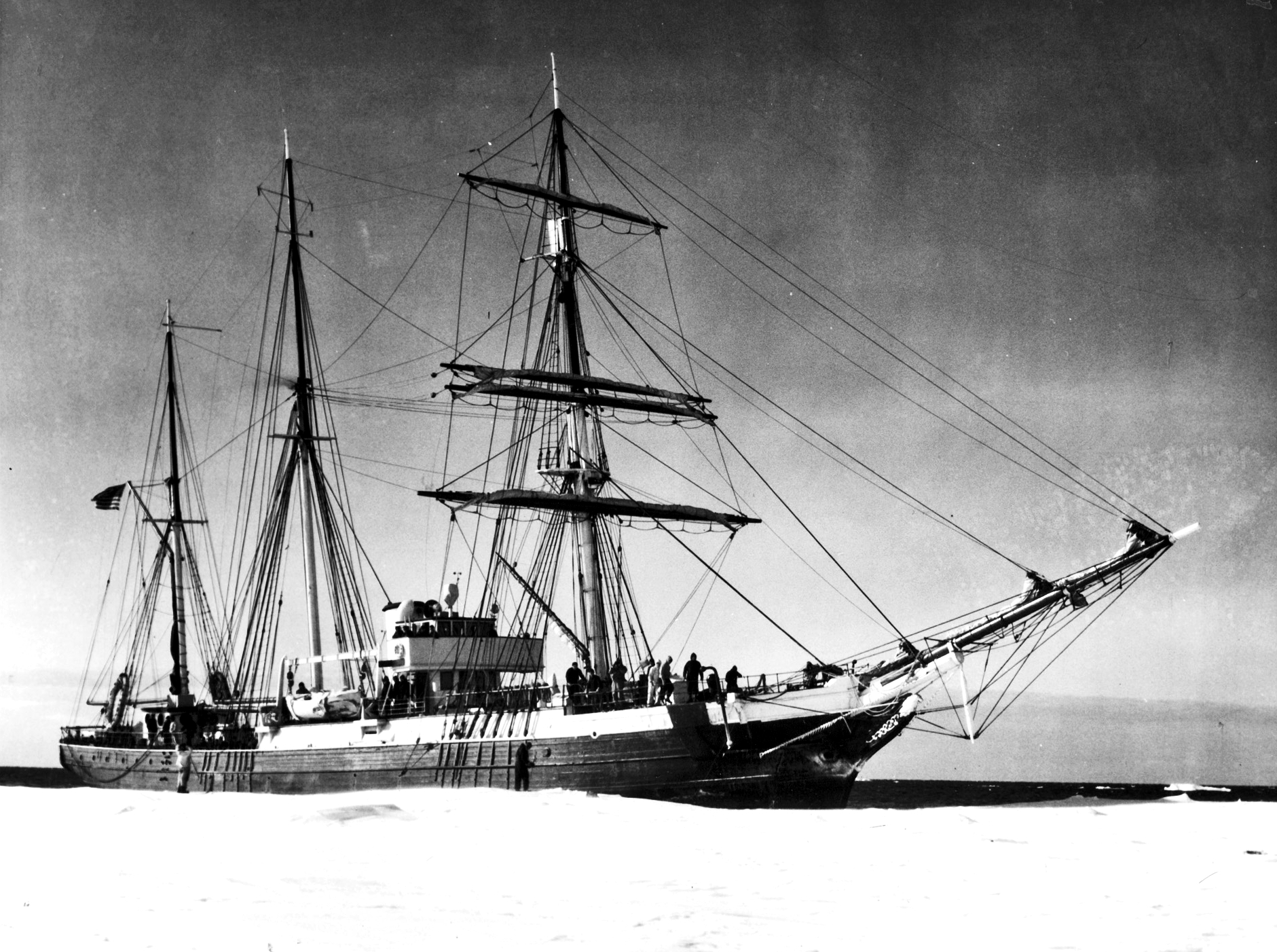
Chris Tuck, an Anchorage Democrat, introduced a formal resolution Monday calling on U.S. Coast Guard to use the name, which would honor the historic Revenue Cutter Bear. That’s a renowned ship that served in both world wars and once spared hundreds of iced-in whalers from starvation when their vessels became marooned off Alaska’s northern coast.
One of the reasons Tuck knows the history is because he once claimed a picture of the original Bear when it was being removed from the Capitol’s legislators-only cafeteria.
View of the USS Bear in the Antarctic , circa 1933-1935. (Public domain photo)
“I have the thing hanging in my office all this time. So the Bear stares at me,” Tuck said. “So it was knowing that we were having some new icebreakers on the way that I thought, ‘You know what? What better way of honoring the Bear?’” he said.
The Coast Guard is building three new polar security cutters — their term for heavy icebreakers. In April, the federal government awarded a $750 million contract for the first one’s construction to a shipyard in Mississippi.
The Coast Guard’s current icebreaking fleet consists of two vessels: a heavy icebreaker called the Polar Star and a medium icebreaker called the Healy. There’s a second heavy icebreaker called the Polar Sea, but both it and the Polar Star were built in the 1970s and are well beyond their expected lifespans — the Polar Sea broke down in 2010 and has since been used for spare parts.
The U.S. has begun playing catch-up to Arctic rivals that have far bigger icebreaking fleets. Russia, for example, has at least 46, several of which are nuclear powered. Finland has 10 and Canada has seven.
Correction: The Healy came online in the 1990s, not the 1970s, as this story initially said.
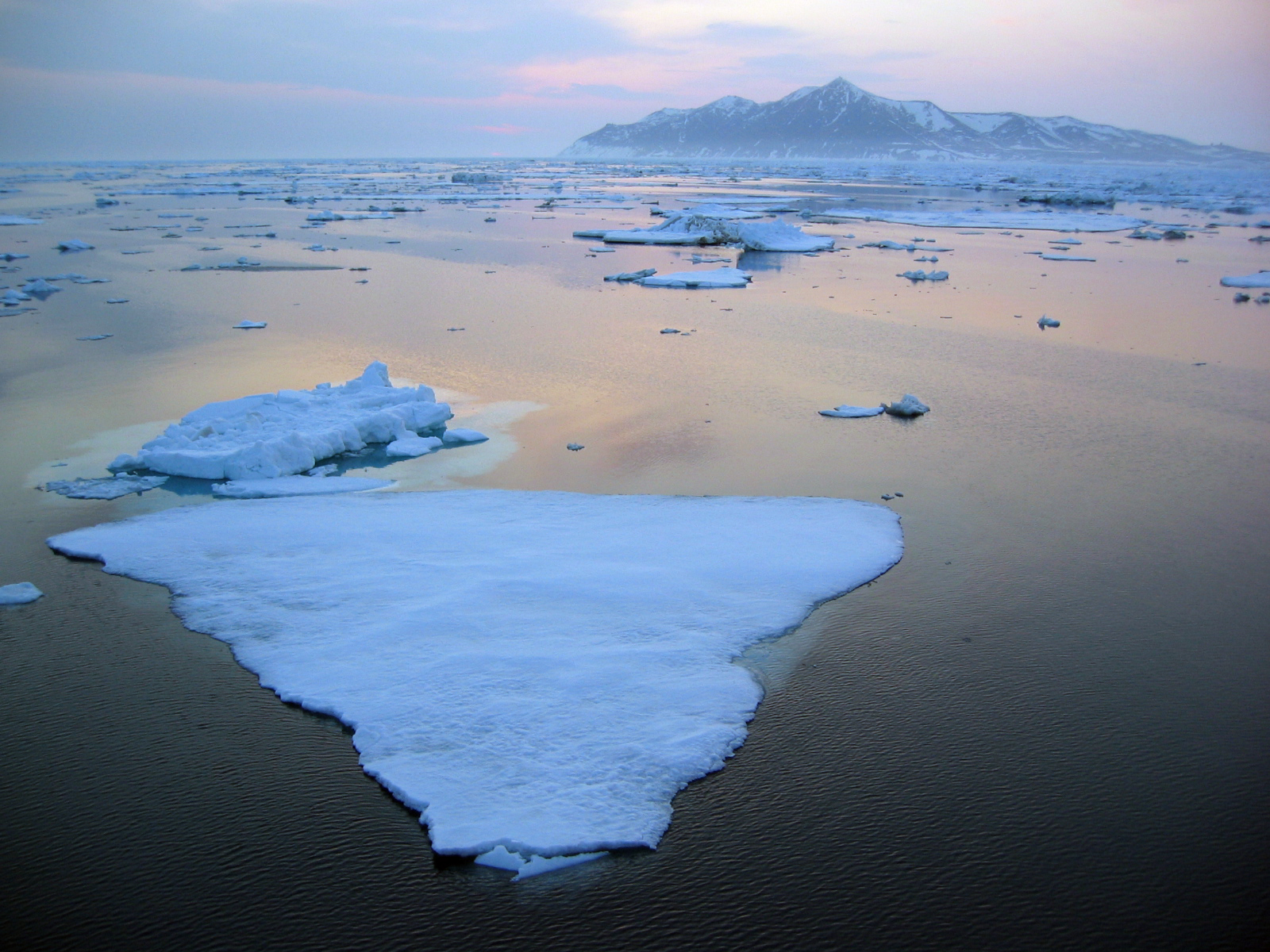
Sea ice floats in the Bering Strait off Cape Prince of Wales. (Photo courtesy of Gay Sheffield/University of Alaska Fairbanks)
Arctic Ocean temperatures are rising at rates faster than previously thought by the scientific community.
That’s the finding of a new study from the University of Alaska Fairbanks, which shows warming waters having an effect on everything from sea ice growth to marine ecosystems.
One researcher says now is a key time for studies on Arctic Ocean conditions, before the hotter temperatures become the new normal.
For UAF oceanography professor Seth Danielson, the record low sea ice and record high ocean temperatures of the last couple years came as a shock.
“It was a bit surprising, because we felt like it came a couple decades too early,” Danielson said.
Danielson is part of a team of researchers that authored a paper discussing the changes to Pacific Arctic ecosystems from warmer ocean temperatures. It lists several observations of the area, including weaker winter sea ice and an early melting period.
More open water conditions mean that there is likely to be an increase in vessel traffic through the region, which Danielson said could have an impact on subsistence. Low sea ice could also change migratory patterns.
“The time of the year that some hunting activities can take place may need to change,” Danielson said. “I think we’ve seen some indications of that already. And the species that people are hunting and fishing for may change as well.”
Katrin Iken, a professor at UAF’s College of Fisheries and Ocean Sciences, measures a brittle star. That data is part of an assessment of the seafloor community, which has shown signs of decreasing biomass in recent years. (Photo courtesy of Seth Danielson/University of Alaska Fairbanks)
Danielson said one of the findings of the paper is that new groundfish species, like Pacific cod, are showing up further north and have the potential to disrupt the native Arctic cod populations — and send ripples up the food chain.
“They’re a focal point through which energy flows to a lot of different components,” Danielson said. “For instance, they’re eaten by the seals. They’re eaten directly by people. The seals are eaten by people and polar bears.”
Danielson said that researchers expected that: As temperatures in the region got warmer, these effects could happen. He said research models show that the heat waves caused by global warming have become more prevalent in the wake of industrial advancement.
“You can be fairly confident in attributing these types of unusual events to human-induced causes,” Danielson said.
Danielson said that the rapid changes to Arctic marine ecosystems are happening in real time, as researchers are studying them. He said these changes likely aren’t going anywhere.
“It’s not gonna be too long before these extremely low-ice years that we’ve just had in the last couple years will be what we consider to be the norm,” Danielson said.
Historically, Danielson said there wasn’t a lot of scientific observation of Arctic waters four-to-five decades ago. He said the rapid warm changes to the environment mean now, more than ever, is the right time to keep tabs on Arctic waters.
“We’re at this interesting spot now, where we know things are changing incredibly rapidly, and now is the best chance for us to go out and make some additional observations,” Danielson said.
Danielson’s research was part of a coalition of scientists with the Arctic Integrated Ecosystem Research Program. The paper was published this month in the Nature Climate Change scientific journal.
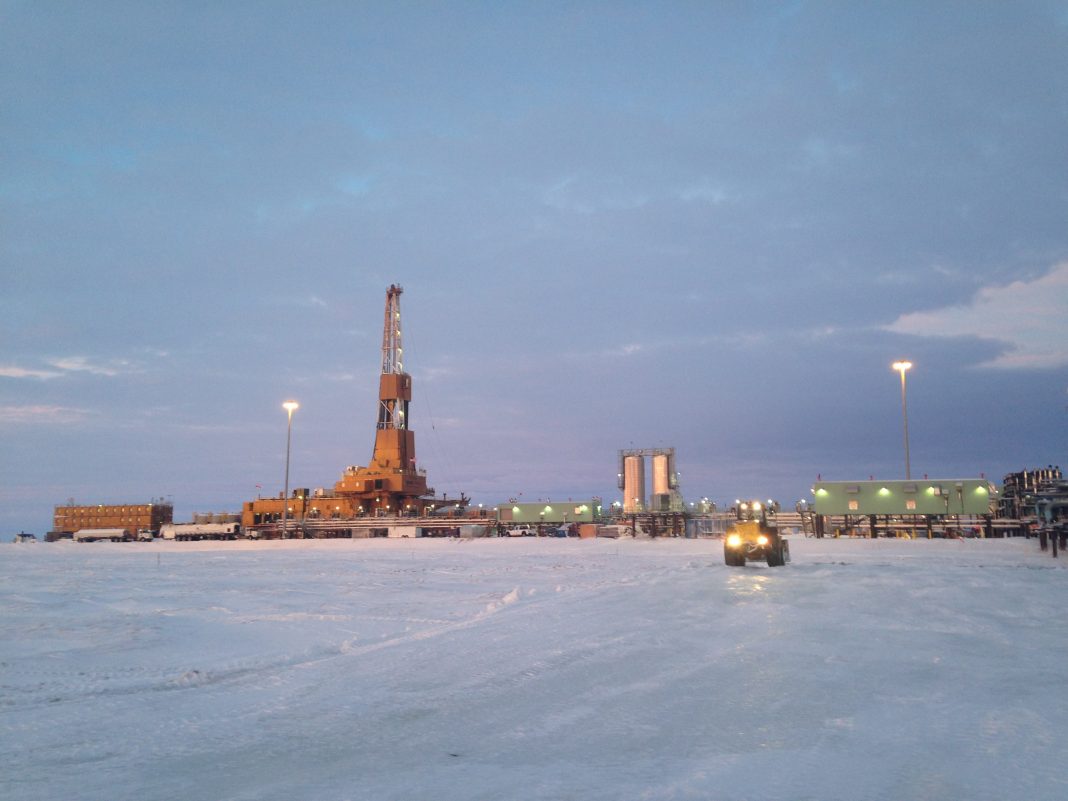
A ConocoPhillips drill site within the National Petroleum Reserve in Alaska in January 2017. (Photo by Elizabeth Harball/Alaska’s Energy Desk)
As he pitches a new North Slope liquefied natural gas project to investors, Mead Treadwell, the businessman and former Alaska lieutenant governor, is keenly aware of his project’s location.
Development in the Arctic is booming as the global climate warms and ice melts. But environmental opposition has come along with it, making some big banks more reticent about investing.
Barclays and Goldman Sachs, for example, have effectively ruled out investments in new Arctic oil and gas projects, after environmentalists raised concerns about impacts on ecosystems, indigenous people and the global climate.
Many other investors remain. But an aggressive advocacy campaign against their involvement in Arctic oil means that Treadwell’s company, Qilak LNG, and others like it face more obstacles to raise the cash they need.
Qilak has adapted to this new investment climate by playing up the fact that its LNG project would connect to infrastructure that already largely exists on the North Slope — not to new oil fields, which conservation groups say would extend the world’s dependence on climate-warming fossil fuels.
Qilak is also making the case that LNG often displaces dirty coal-fired power plants, though the environmental benefits of that change are disputed by some scientists. And it’s highlighting the jobs the project would create for indigenous residents of the North Slope and other areas of Alaska.
Mead Treadwell. (Photo by Wesley Early/Alaska Public Media)
“I still believe that we will have billions of dollars in annual investment in the Arctic. But I will say that we’re an easier target, because it’s easier to show up at an annual meeting in some place like London or Brussels wearing a polar bear suit — there’s not a similar symbol for Louisiana or Texas,” Treadwell said. “We definitely have to be aware of that, and make sure we’ve got a good story.”
Alaska’s economy is driven by the production of the fossil fuels that contribute to global warming, which makes the state especially vulnerable to the campaign to transition away from oil. And Alaska policymakers and oil executives say they’re getting increasingly concerned as advocates turn their focus to forcing big financial institutions out of the industry.
The movement has been targeting Arctic oil and gas projects in particular, with groups arguing that development in the area poses unique environmental and social risks. The release of Goldman Sachs’ new environmental policy in December — which said the bank would refuse to finance drilling in the Arctic National Wildlife Refuge and elsewhere in the Arctic — underscored the stakes for Alaska. But the campaign doesn’t end there.
Last month, 15 Democratic U.S. senators wrote to 11 more banks asking them to follow Goldman’s lead by “shifting toward a U.S. financial sector that effectively analyzes and plans for climate risks.”
A similar letter followed Thursday from more than two-dozen House Democrats. On Friday, environmental organizations touted a new policy released by a big British bank, Lloyds Bank, that rules out financing of oil and gas exploration and production in the Arctic, and in the Arctic Refuge in particular.
On Tuesday, megabank JPMorgan Chase was set to announce its own restrictions on investment in Arctic drilling.
Former Alaska Natural Resources Commissioner Andy Mack at a press conference in Anchorage on June 28, 2016. (Photo by Graelyn Brashear/Alaska Public Media)
“One position by one large company I don’t think changes a lot,” said Andy Mack, a former Alaska natural resources commissioner who helped lead the state’s push to open the Arctic Refuge to drilling. “But if you see two or three or four large companies make these types of announcements, it’s certainly something that (oil) companies will all have to take into account. And that’s why the state needs to pay attention.”
Several big Arctic oil projects are still under development on Alaska’s North Slope. But there’s a growing acknowledgment among Alaska oil industry players that environmentalists’ lobbying of financial institutions is having an effect.
“‘Arctic’ seems to have turned into a four-letter word, in the minds of a lot of these financial institutions,” said an Alaska oil executive, who asked not to be named to avoid drawing attention to his particular company.
To understand the anti-Arctic campaign’s challenge to Alaska’s oil industry, residents can look to Alberta. There, financial institutions and major insurers have distanced themselves from projects in the province’s oil sands.
One reason environmental advocates have focused their opposition on Alberta is that historically, extraction from oil sands generated more greenhouse gases than conventional oil production.
In December, The Hartford, a major insurer, said it would stop investing in and insuring companies that generate a large share of their revenues from tar sands.
Alaskans who follow the oil industry have noticed.
“Alberta is the canary in the coal mine,” said Brad Keithley, a retired oil and gas attorney who closely watches Alaska politics.
Alberta’s premier, Jason Kenney, has responded forcefully, launching a $30 million “energy war room” to rebut criticism of Canada’s oil industry.
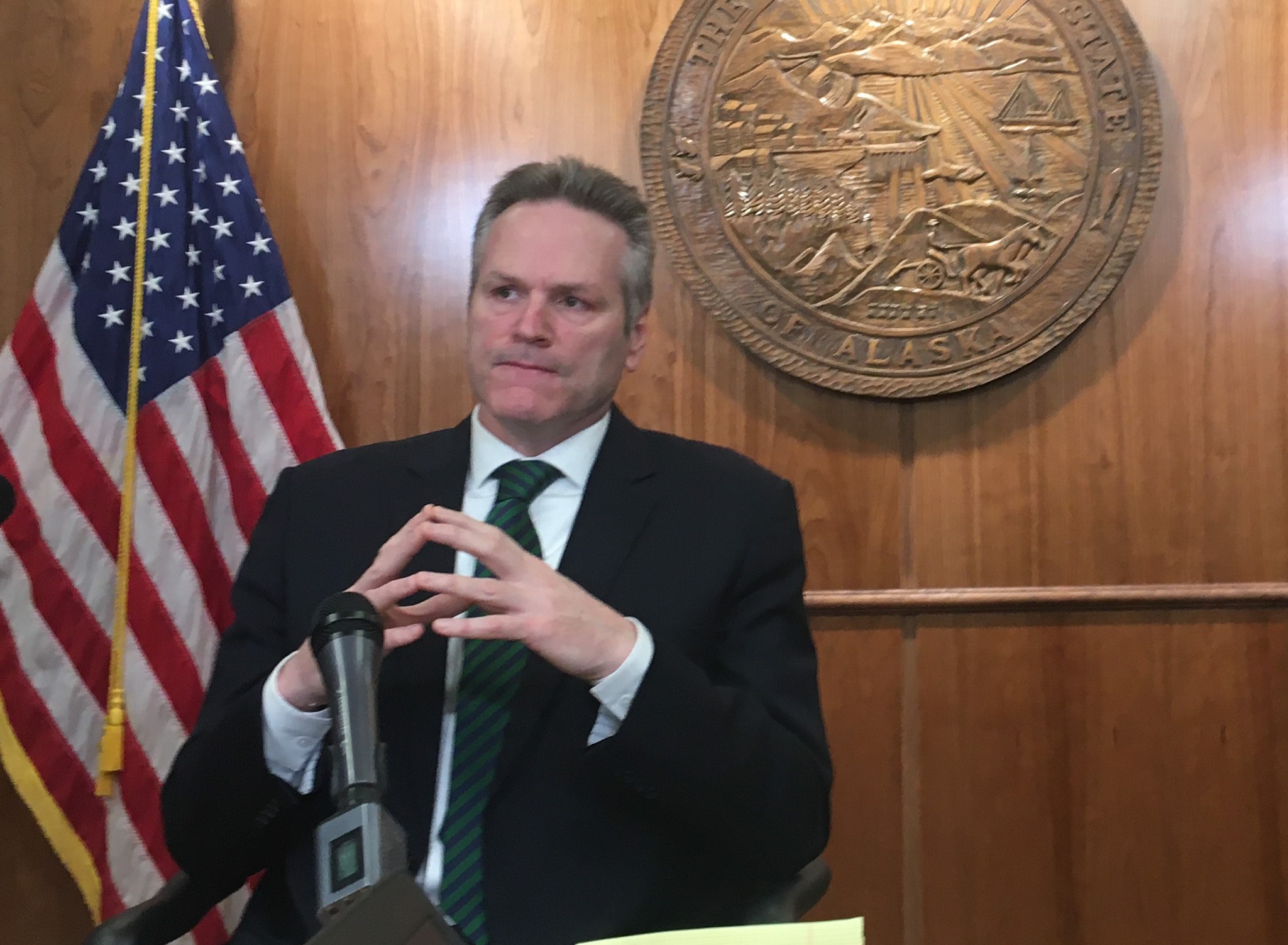
Gov. Mike Dunleavy speaks to reporters in the Capitol in Juneau, Jan. 31. (Photo by Andrew Kitchenman/KTOO and Alaska Public Media)
In Alaska, Gov. Mike Dunleavy reacted to Goldman Sachs’ announcement by firing the company from a group of Wall Street firms it had chosen to help the state borrow money. The decision could cost Goldman Sachs between $200,000 and $300,000 in compensation, state officials said.
In an interview, Dunleavy suggested another way to punish banks that refuse to invest in Alaska oil projects: cutting them off from managing the assets of the $67 billion, state-owned Alaska Permanent Fund, which was originally created with oil revenue. Goldman Sachs manages some $400 million for the fund, which paid the firm a total of $17 million in fees over the past three years.
“Some of these groups that don’t want to do business in Alaska still want Alaska business,” Dunleavy said. “They probably are going to come out a loser on that one.”
The Alaska Permanent Fund is run by an independent board. Earlier this month, Chair Craig Richards said board members were not interested in making its choices of investment managers subject to political considerations.
But Dunleavy said he thinks the subject will be unavoidable for the board.
Alaska Permanent Fund Chair Craig Richards at a state legislative committee hearing in June 2016, when he was the state’s attorney general. (Photo by Jeremy Hsieh/KTOO)
“I have to believe that the board members and those that are running the permanent fund have seen what some of these lending institutions have said about Alaska,” he said. “And I’m sure they’re having discussions in their boardroom as to how they should approach this.”
In Washington, D.C., the members of Alaska’s GOP Congressional delegation have sent their own letters to banking executives, asking them to disregard the Democratic lawmakers’ request that they avoid investing in the Arctic Refuge.
U.S. Sen. Dan Sullivan also dispatched personal letters to his Democratic colleagues saying he was disappointed that they didn’t discuss the issue with him directly before writing to financial institutions.
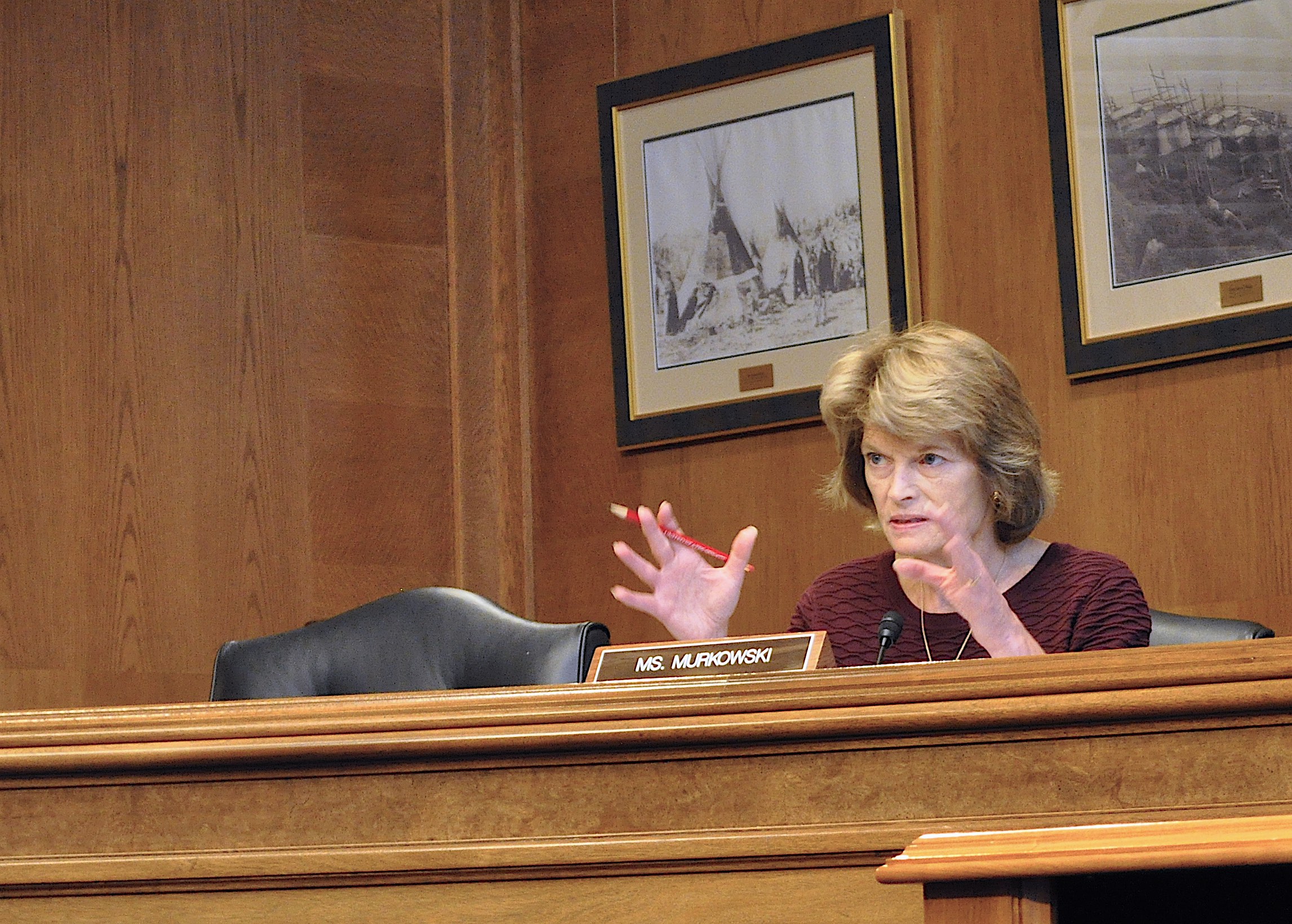
“I can tell you for a fact I have never signed on to a letter that would specifically target investment opportunities in another colleague’s state, to shut that down,” U.S. Sen. Lisa Murkowski said in an interview.
Sen. Lisa Murkowski at a Senate committee hearing. (Photo by Liz Ruskin/Alaska Public Media)
She and other Alaska politicians note that there’s support for continuing Arctic oil development among the North Slope’s indigenous Iñupiat leaders. The North Slope Borough’s mayor, Harry Brower, wrote his own opinion piece in the Wall Street Journal criticizing Goldman Sachs’ new investment policy — he called it “subtly racist,” and argued that blocking drilling would have the effect of denying modern amenities to the region’s isolated villages.
Representatives of the groups fighting Arctic oil development say their biggest focus is investment in projects in the Arctic National Wildlife Refuge — not as much on Alaska projects more broadly. And they note that their advocacy campaign around the Arctic Refuge is aligned with the Gwich’in, a different indigenous group that opposes development there because of risks to the caribou that they subsist on.
“The community has specifically been a part of the advocacy work, saying they do not want the continued drilling,” Ruth Breech, who organizes corporate accountability campaigns for the Rainforest Action Network, said in an interview. “But I do agree that there is a broader piece around Arctic oil, and there could be more engagement and discussions about what that means for the different impacts on the communities throughout Alaska.”
Keithley, the retired attorney, said there’s a new argument that Alaska leaders could use to make their case to financial institutions: The state’s oil industry uses comparatively little energy to produce its fossil fuels, according to a newly-presented analysis from the Climate Leadership Council, an international group pushing a carbon fee and dividend program as a way to reduce emissions.
Officials from the council visited Anchorage this month and told a policy group that producing oil in the state is “really carbon cheap” compared to other major oil-producing regions, the Alaska Journal of Commerce reported. That’s in part because of Alaska’s restrictions on flaring natural gas and the industry’s “consolidated and efficient infrastructure” in the state, spokesperson Carlton Carroll said in an email.
The group hasn’t released details of its analysis yet, saying it’s not complete. But if its calculations are accurate, Keithley said, Alaska’s carbon advantage is a “story that’s not being well-told.”
“And it’s a story that needs to get out there,” he said.
Those who are working to push financial institutions out of the oil industry, meanwhile, argue that Alaska’s political leaders should be doing more to prepare the state for an economic future that’s less dependent on fossil fuels.
“There’s an opportunity to plan ahead,” said Breech. “That’s why the leadership is important now.”
Rep. John Lincoln, I-Kotzebue, takes an oath during his swearing-in ceremony in the Alaska House of Representatives on Jan. 31, 2018. On Thursday, Lincoln announced via Facebook that he would not seek reelection. (Photo by Skip Gray/KTOO)
The Alaska representative who represents the Northwest Arctic and North Slope boroughs says he will not run for reelection.
In a Facebook post, John Lincoln, an independent from Kotzebue, wrote, “I’m at a stage in life – as a husband and father of young children – that makes it extremely important for me to be present and to provide for my family.”
He said he plans to return to work for NANA Regional Corp. after his term ends.
Lincoln has served in the Alaska House of Representatives since 2018, when he was appointed to replace Dean Westlake of Kiana. Westlake resigned after multiple sexual harassment allegations were made against him from legislative aides and other women.
Initially a Democrat, Lincoln dropped his party affiliation late last year. He serves in the bipartisan House Majority, and is co-chair of the House Resources Committee.
So far, Ely Cyrus of Kiana is currently the only person who has filed to run for House seat 40.
The deadline to file to run for Lincoln’s seat in June 1, 2020.
Close
Update notification options
Subscribe to notifications
Subscribe
Get notifications about news related to the topics you care about. You can unsubscribe anytime.